The journey of launching an app is undoubtedly thrilling, yet it’s often shrouded in uncertainty.
How can you be certain that your idea will resonate with users? Will it be robust enough to thrive in
the fiercely competitive market? These are the inherent challenges in the realm of app development.
To successfully navigate these hurdles, businesses require a revolutionary approach that streamlines
the development process, zeroes in on user needs, and expedites the transformation of ideas into
tangible realities. This is precisely where the MVP (Minimum Viable Product) concept comes into
play.
The MVP concept isn’t merely a trendy buzzword but a pivotal, game-changing strategy embraced by
businesses worldwide. It is a beacon of efficiency and user-centric innovation among the other top
web and mobile app
development tools.
It provides a dynamic framework that empowers businesses to pivot or persevere based on genuine user
feedback and data. Doing so ensures the creation of apps that genuinely resonate with their target
audience.
In this blog, we will delve into the groundbreaking approach of MVP and illuminate how this concept
is a transformative force within the app development landscape.
What is MVP App?
Imagine a scenario: You’ve got a brilliant idea for a new app. It’s tempting to dive headfirst into
development, crafting every feature you can dream of.
But hold on! What if there was a smarter way to go about it? That’s where the MVP app steps in.
In essence, an MVP is the bare-bones version of your app that showcases its core functionality.
It’s like a sneak peek of your grand vision, allowing you to test the waters before you fully commit.
Some of the top companies like Uber, Airbnb, Dropbox, etc have embraced the
MVP app.
So, what makes an MVP unique?
Imagine you’re building a weather app. Instead of developing complex features like location-based
forecasting, you start with the basics—daily temperature and a 5-day forecast.
Why? Because it’s simpler, faster, and less costly. It’s your chance to see if users find value in
your concept, all while conserving resources.
But, that’s not all! The MVP app comes in various flavors. You can think of it like baking a
cake—there’s more than one recipe to choose from. Let’s explore these types in brief.
Types of MVP App
Now that we’ve grasped the concept of what an MVP is let’s dive deeper into five of the most popular
and effective types of MVPs you can consider when developing your app:
-
1. Pretotype MVP
A Pretotype MVP involves creating a simplified version of your idea to gauge interest and
gather feedback. For instance, you might design a one-page website with a signup button and
a brief description to validate your concept before investing heavily in development. This
approach not only helps in testing the concept but also in creating early excitement among
potential users. -
2. Concierge MVP
In the world of concierge MVPs, you act as a concierge
for your users, manually providing the service that your app will automate in the future.
This hands-on approach helps you understand user preferences and refine your offering. By
engaging directly with users, you can personalize the experience and gain valuable insights
into what they truly need. -
3. Wizard of Oz MVP
The Wizard of Oz MVP creates the illusion of automation while much of the work happens behind
the scenes. Users interact with the “wizard” (you), thinking they’re dealing with a fully
functional app. This approach allows you to test your concept before building the complete
app, and it can be a creative way to gather user feedback while minimizing development
costs. It’s like being the magician who performs incredible tricks behind the curtain. -
4. Single-Feature MVP
Sometimes, simplicity is key. A single-feature MVP focuses on a specific, unique
functionality. For instance, you might start with a single feature like voice-activated
reminders in an app that aims to revolutionize how people set reminders. By perfecting this
core feature, you can ensure it functions flawlessly before adding more complexity to your
app. Top examples
of Single Feature MVP are Uber and Spotify. -
5. Piecemeal MVP
In today’s technology world, platforms and tools allow you to build MVPs without extensive
coding. You can use a Piecemeal approach to gradually add features to your MVP, assembling
your app piece by piece. This method provides flexibility and allows you to evolve your app
as you gather user feedback and insights. It’s like building a puzzle, ensuring each piece
fits perfectly.
Benefits of
Developing an MVP App
When it comes to app development, building a Minimum Viable Product (MVP) offers many advantages that
can significantly impact the success of your project. Let’s explore these benefits one by one,
delving deeper into why they are essential for anyone venturing into app development:
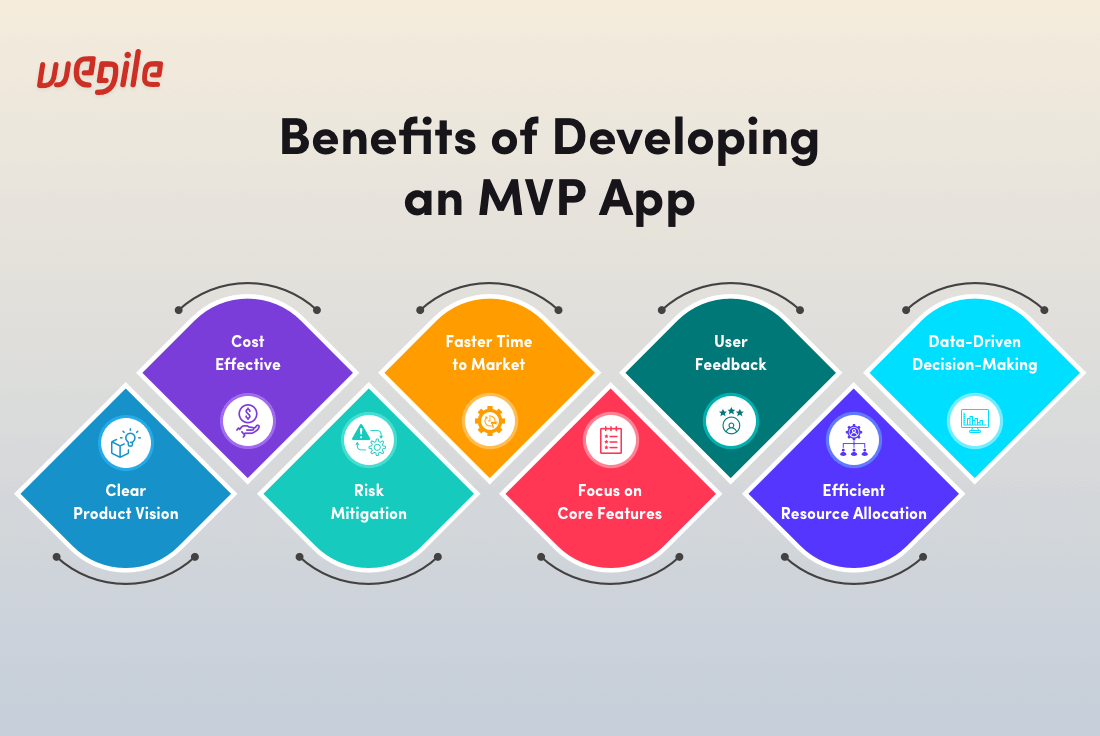
Clear Product Vision
Developing an MVP forces you to define a clear product vision. Instead of overwhelming yourself with
numerous features, you focus on a streamlined concept that solves a specific problem. This clarity
ensures that your app’s purpose is well-defined, making it easier for both your team and potential
users to understand and engage with. It’s like setting a well-lit path toward a common goal.
Cost Effective
Creating a full-scale app from the get-go can be a costly endeavor, especially if it turns out that
users aren’t as enthusiastic about it as you hoped. MVP development allows you to invest only the
necessary resources to bring the core concept to life. This cost-effective approach minimizes
financial risks, making it a prudent choice for startups and entrepreneurs who must watch every
penny. It’s akin to a financial safety net that protects your investment.
Risk Mitigation
The road to app success can be fraught with uncertainties. An MVP serves as a risk mitigation
strategy. By testing your concept with a smaller, manageable version of your app, you can identify
potential flaws, market viability, and user reception early in the process. This knowledge empowers
you to make informed decisions and pivot if needed. In essence, it’s a safety harness that ensures
you won’t freefall into unforeseen pitfalls.
Faster Time to Market
Time is of the essence in the tech world. Building a full-featured app can take months or even years.
With an MVP, you can get a functional version into the hands of users in a matter of weeks. This
rapid time-to-market allows you to gain an early competitive edge and helps you gather user feedback
sooner. It’s like sprinting ahead in a race, leaving your competitors in the dust.
Focus on Core Features
MVP development compels you to prioritize. You zero in on the core features that are essential to
your app’s functionality and user experience. This focus ensures that your app’s foundation is
robust and user-friendly, setting the stage for future growth and expansion. Think of it as laying a
solid foundation for a skyscraper; without it, the structure is bound to collapse.
User Feedback
One of the most significant advantages of MVP development is the opportunity it provides for user
feedback. Early adopters can help you identify what works, what doesn’t, and what they want to
improve. This feedback loop is invaluable for refining and aligning your app with user expectations.
It’s akin to having a group of expert advisors guiding you every step of the way.
Efficient Resource Allocation
Resources are precious, and MVPs allow you to allocate them efficiently. You invest in areas that
directly impact your app’s success rather than spreading your resources thin across various
features. This targeted allocation maximizes your return on investment. It’s like allocating
resources to the most fertile parts of a field, ensuring a bountiful harvest.
Data-Driven Decision-Making
In the world of MVP development, decisions are data-driven. Real user data guides your choices and
improvements. This approach is like using a GPS for navigation, ensuring that you’re on the right
path and adjusting your route based on actual user experiences. It’s the difference between
navigating with a reliable map and navigating blindly.
How to Build an MVP App
Creating a successful Minimum Viable Product (MVP) app is a strategic process that involves several
critical steps. Let’s explore each of these steps in detail to guide you through the journey of MVP
development:
-
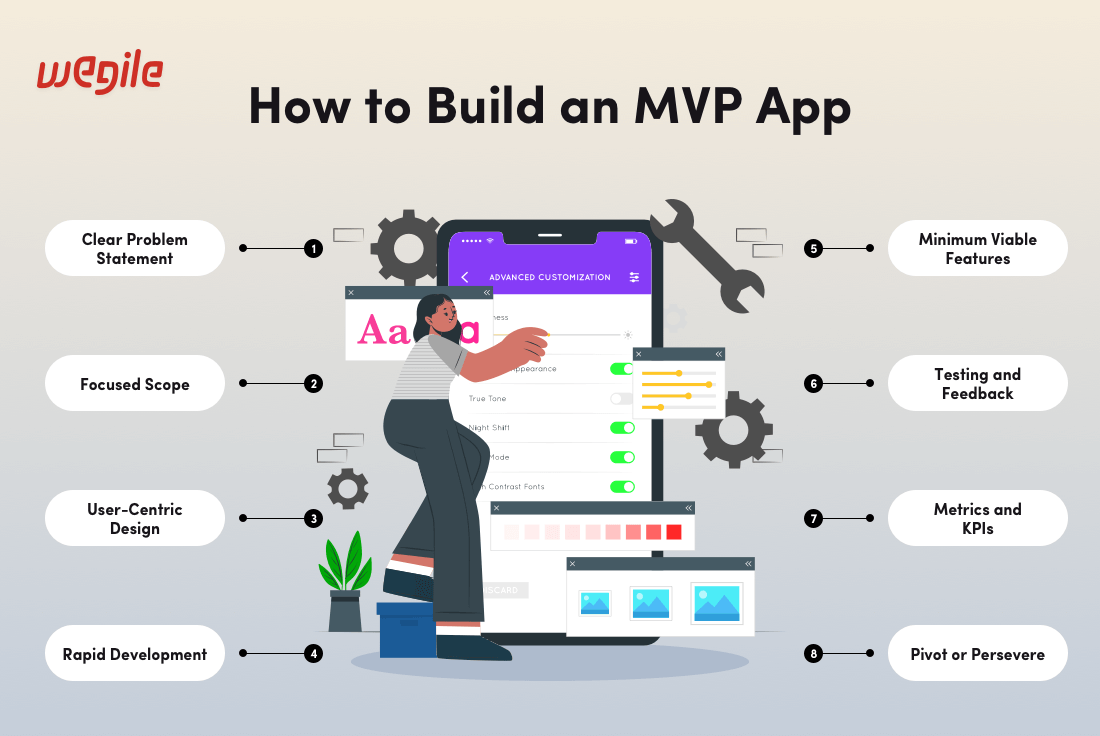
Clear Problem Statement
Start by defining the problem your app will solve. What pain point will it address? Who is
your target audience, and what are their specific needs?A clear problem statement provides the foundation upon which your MVP will be built.
It’s like setting the coordinates on your GPS, ensuring you know exactly where you’re headed.
Without a well-defined problem statement, you risk losing your way in the vast landscape of
app development.It’s crucial to understand that a precise problem statement guides your development and
resonates with potential users, making them more likely to engage with your app. -
Focused Scope
Keep your scope laser-focused. Identify the core features that directly address the problem
statement.Avoid feature bloat, which can lead to complexity and increased development time. Simplicity
is key in an MVP.By focusing on only the most essential features, you’re essentially removing distractions and
keeping your project on a clear, efficient path.Think of it as decluttering your project roadmap, allowing you to see the road ahead more
clearly.A focused scope not only accelerates development but also ensures that your app delivers a
streamlined user experience, increasing its appeal. -
User-Centric Design
Design with your users in mind. Create a user-friendly interface that ensures a seamless
experience.User-centric design means thinking about how your app will be used and making it intuitive
and enjoyable.It’s about putting yourself in your users’ shoes and tailoring every interaction to their
preferences.Your design is like the welcoming entrance to your app, setting the tone for a positive user
experience.A user-centric design can lead to higher user retention and positive reviews, as it aligns
with what users expect and appreciate. -
Rapid Development
Speed is of the essence when building an MVP. The goal is to get a functional version of your
app into the hands of users as quickly as possible.Use agile development methodologies to ensure swift progress. Think of it as a race against
time, and the faster you go, the sooner you can reach your destination.Rapid development is like catching the express train to app success. In the fast-paced world
of app development, swift progress can help you stay ahead of the competition and seize
opportunities. -
Minimum Viable Features
Determine the minimum set of features necessary to make your app functional and valuable.
These features should directly address the problem statement and provide users with a
meaningful experience.This is about stripping down to the core essentials, ensuring your app is lean and efficient.
It’s like packing only the essentials for a long journey, avoiding unnecessary baggage that
can weigh you down and slow your progress.By focusing on the most vital features, you ensure that your app addresses the core user
needs without unnecessary complexity.
Testing and Feedback
Launch your MVP to a select group of users or a small audience. Collect their feedback, observe how
they interact with your app, and make improvements based on their experiences.
This iterative process is crucial for refining your app. Think of your users as co-pilots, providing
you with directions to navigate the development journey.
Their feedback is like the wind in your sails, propelling you forward and helping you adjust your
course.
User feedback can reveal unexpected pain points and opportunities for improvement, turning your MVP
into a product that truly resonates with your audience.
Metrics and KPIs
Define key metrics and Key Performance Indicators (KPIs) to measure the success of your MVP.
These metrics could include user engagement, conversion rates, or retention rates. Regularly analyze
these metrics to make data-driven decisions.
Metrics are like road signs that indicate whether you’re on the right track or need to change
direction.
They guide you through the app development journey, ensuring you stay on course and make informed
decisions.
Establishing and tracking the right metrics is critical for understanding your app’s performance and
user behavior.
Pivot or Persevere
Based on the feedback and data gathered, you’ll need to make a critical decision: pivot or persevere.
If the feedback is positive and the metrics are on the right track, you may decide to move forward
with the existing concept.
However, if the feedback indicates a need for significant changes, be prepared to pivot and adjust
your strategy accordingly.
It’s like having a GPS reroute you when you’ve taken a wrong turn. This adaptability is crucial for
staying on the path to success and achieving your app development goals.
The ability to pivot based on data and feedback is a hallmark of successful MVP development.
It ensures that you remain agile and responsive to the evolving needs and expectations of your target
audience.
Wrapping Up
In summary, we understood how the MVP concept offers a transformative path to app development,
allowing businesses to create user-centric solutions and navigate the challenges of the digital
landscape effectively. Partner with a dedicated app development
company to harness the full potential of MVPs. Wegile, with its expertise and tailored
solutions, can be your ideal ally in the journey to create MVP apps. Reach out to Wegile today and
embark on a path to app success today!
Leave a Reply