In the vast and competitive world of online shopping, having an impactful eCommerce app is essential
for capturing and retaining
customers. The right features not only enrich user experience but also boost sales and make the
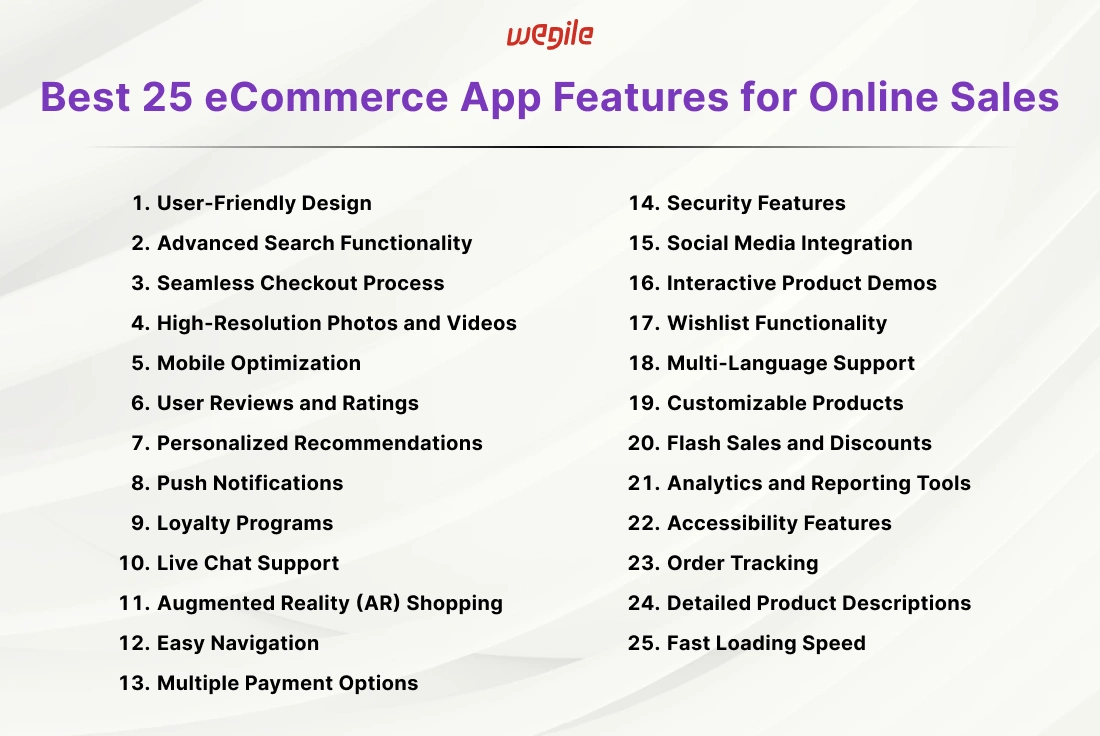
difference between an average app and a market leader. This guide explores the top 25 features that
are proven to increase online sales. They range from advanced search functionalities and
personalized recommendations to seamless checkout processes plus robust security measures. Each
feature is discussed in detail which will provide you with actionable insights and examples to help
you revamp your eCommerce app.
So, are you all set to take your eCommerce app to the next level? Then, keep reading to decode the
essential features that can help multiply your online sales.
1. User-Friendly Design
A simple and intuitive design is important in eCommerce apps as it directly impacts how easily users
can find and purchase products. A clear layout supports customers moving smoothly from browsing to
purchasing without any sort of confusion or frustration. Here are some major elements that help
curate a user-friendly design in eCommerce apps:
-
Minimalist Design: Providing a minimalist design helps reduce the cognitive
load on users. This feature makes it easier for them to navigate and make decisions. Apple’s
App Store is a leading example of this approach. It features a clean interface with
well-spaced elements and consistent typography and it further simplifies navigation and
enhances user satisfaction. -
Consistent Typography: Using uniform typography throughout the app assists
in maintaining clarity and cohesiveness. This consistency makes it easier for users to read
and comprehend information quickly which is pretty essential for a frictionless shopping
experience. -
Intuitive Navigation: The layout should be organized in such a way that
users can effortlessly find what they are looking for. You can achieve this by logical
placement of elements and clear labeling of sections. For example: The ASOS app uses a
simple color scheme and visual hierarchy to enrich the shopping experience. It guides users
effortlessly through their purchasing journey. -
Responsive Design: Making sure the app performs well on various devices and
screen sizes is essential. A responsive design adapts to the user’s device which provides a
seamless experience whether they are on a smartphone, tablet, or desktop. -
Speed and Efficiency: Optimizing images and streamlining the code can help
upgrade the speed of the app. It ultimately keeps users engaged and reduces bounce rates. -
Visual Clarity: Cluttered or overly complex designs can affect users.
Clear,
simple visuals with ample white space can make the app not only attractive but also easier
to use.
2. Advanced Search
Functionality
The search feature in an eCommerce app is a key tool for boosting sales. It further helps users find
exactly what they are looking for quickly. Artificial intelligence (AI) and machine learning (ML)
have dominant roles in enriching these search capabilities. AI can analyze user behavior to provide
more accurate search results. ML algorithms can learn from data to boost the search function over
time. Features like autocomplete enhance the user experience by suggesting search terms as the user
types and this improves both speed and accuracy.
Filters help users refine their search results according to different attributes like size, color,
and price. It further helps them find their desired product faster. Search correction also plays an
important part by fixing typos and presenting correct suggestions making sure that users can still
find products even if they initially misspell their search terms. The use of AI and ML in search
functionalities not only boosts user experience but also leads to multiplied sales by making the
search process as efficient as possible.
3. Seamless Checkout
Process
Having a smooth checkout process is important for preventing cart abandonment and enriching customer
satisfaction. Shoppers appreciate straightforwardness and speed, particularly during the final steps
of purchasing.
One-page Checkout vs. Multi-step
Checkout
Choosing between a one-page checkout and a multi-step checkout depends largely on your product range
and customer preferences. A one-page checkout allows users to enter all their information on a
single page which speeds up the transaction. This is particularly effective for stores with a
smaller selection of products or for repeat customers who value quick purchases.
On the other hand, a multi-step checkout organizes information into logical sections and pages,
which
can reduce the feeling of being overwhelmed by requests for information. It can be more suitable for
larger purchases or first-time visitors.
Importance of Guest Checkout
Options
Presenting a guest checkout option is also pretty essential. It allows shoppers to make purchases
without the need to create an account which leads to a faster checkout experience and reduces
barriers for new customers. Data shows that forced registration can lead to higher cart abandonment
rates. Retailers find that providing a guest checkout option increases conversion rates as it caters
to those looking for a quick purchase.
4.
High-Resolution Photos and Videos
You can never overstate or ignore the impact of visual content in eCommerce apps. High-quality
photos
and videos influence purchasing decisions by helping customers to have a closer look at products
which leads to increased buyer confidence and fewer returns.
Visual content is a key informer of consumer decisions. Products showcased through high-resolution
images and clear plus detailed videos tend to have higher engagement and doubled conversion rates.
These visuals help simulate an in-store experience where customers can examine products closely
which further makes them more likely to commit to a purchase.
Best Practices for Image Size and
Quality
-
Use high-resolution images that support zooming without losing clarity.
-
Have consistent image sizes and ratios across your product pages to guarantee a cohesive
look. -
Optimize images for fast loading without sacrificing quality because slow-loading images can
affect customers. -
Use alternate views and angles to present a comprehensive overview of the product.
-
Include videos that show the product in use and provide a realistic perspective that photos
alone cannot offer.
5. Mobile Optimization
Mobile optimization is a key e-commerce trend as the
craze for mobile shopping is increasing
at a great pace. An eCommerce app must deliver a superior mobile user experience. A stat elucidates
that more than 70% of online shoppers use their mobile devices for browsing and purchasing which
further highlights the need for mobile-optimized eCommerce solutions. Here are some prominent
considerations about mobile optimization:
-
Adaptive Loading: This mobile optimization technique makes sure that your
eCommerce app intelligently adjusts the content and features it loads based on the user’s
device capabilities and network conditions. This approach upgrades the overall performance
on various devices. It also improves load times and guarantees a seamless user experience
regardless of device specifications. -
Mobile-specific Features: Focus on elements such as touch optimizations and
easier navigation tailored specifically for smaller screens. It enhances the user interface
for mobile users.
6. User Reviews and
Ratings
Customer feedback plays an important role in shaping buyer decisions and establishing trust. Here’s
how reviews and ratings impact your business and strategies to encourage them:
-
Building Trust: Reviews and ratings provide social proof and they
significantly influence customer purchasing
choices. Products with a good number of credible and positive reviews tend to attract more
buyers. -
Encouraging Reviews:
-
Simplify the Process: Make sure that the review submission is
simple, especially on mobile devices. -
Offer Incentives: Reward customers with discounts or loyalty
points for writing reviews, further motivating them to share their experiences. -
Prompt Feedback: Automatically prompt customers to review their
purchases after a reasonable period. This further makes it convenient to leave
feedback while the experience is still fresh.
-
7. Personalized
Recommendations
Personalization
is a cornerstone of modern e-commerce
strategies. They majorly enrich customer experience and boost sales. These recommendations employ
data analytics to tailor product suggestions relying on a user’s browsing and purchasing history.
-
Data Analytics: Algorithms collect and analyze past behavior to indicate
what customers might like next which makes each shopping experience unique. -
Successful Personalization: Amazon excels at this by offering
recommendations that contribute to an estimated 35% of its revenue. Their system suggests
items based on previous history and purchases like items in your cart and what other
customers have viewed and bought.
8. Push Notifications
Push notifications are powerful tools for engaging users and driving sales when they are used wisely.
-
Best Practices:
-
Timely and Relevant: Send notifications that are immediate and
present value such as special discounts or quick updates on products the user has
shown interest in. -
Frequency Control: Avoid overwhelming users by controlling the
frequency of notifications to strengthen interest without any problem. -
Personalization: Customizes notifications to the preferences and
behaviors of users to level up relevance and effectiveness.
-
-
Successful Examples:
-
Flash Sale Alerts: Notifications about limited-time offers can
generate urgency and push quick purchases. -
Abandoned Cart Reminders: A gentle nudge reminding users about
items
they left in their cart can also bring them back to complete the purchase.
-
9. Loyalty Programs
Loyalty programs are a proven and solid strategy to increase customer retention and increase sales
in
eCommerce. These programs reward customers for their repeat business, further encouraging them to
continue shopping.
-
Point-based Systems: Customers earn points for each purchase which they can
redeem for discounts or some free products. This simple system is easy for customers to
understand and engage with. -
Tiered Rewards: As customers spend more, they move up through different
reward tiers further unlocking greater benefits. This method facilitates a sense of
progression and exclusivity. -
Subscription Access: Offering exclusive benefits such as special discounts
or free shipping to subscribed members can bring a steady revenue stream.
10. Live Chat Support
Effective and prompt customer service is crucial in the digital shopping environment as it directly
impacts user satisfaction and sales. It is an important feature which an e-commerce app should have.
-
Real-time Support: Live chat provides instant assistance which helps to
resolve queries or concerns as shoppers navigate your site. This immediacy can dramatically
boost the customer experience and lead to almost double conversion rates. -
AI Chatbots versus Human Support:
-
AI Chatbots: Proficient in handling a high volume of standard
queries
without human intervention. They bring quick responses and are available 24/7 which
makes them ideal for basic questions and guidance. -
Human Support: Essential for more complicated issues where a
personalized approach is necessary. Human agents can understand nuances and bring
empathetic support which can be crucial for settling complicated concerns and
maintaining customer loyalty.
-
11. Augmented
Reality (AR) Shopping
Augmented Reality (AR) has revamped the online shopping experience by helping customers visualize
products in a real-world context. This technology boosts user engagement and assists in making
informed purchase decisions.
-
Improving Shopping Experience: AR helps shoppers see how a product would
look in their real space or how apparel might fit before making a purchase. This not only
gains satisfaction but also decreases return rates. -
Examples of AR in eCommerce Apps:
-
IKEA Place allows users to place furniture in their space to see how it fits and
looks before buying. -
Sephora Virtual Artist lets customers try on makeup virtually by using their mobile
device as a mirror to use products digitally.
-
12. Easy Navigation
Effective navigation is super vital in an eCommerce app as it guides the user through the shopping
journey and eventually enhances satisfaction and usability.
-
Role in User Experience: Good navigation makes sure users find what they
need quickly and effortlessly. It can lead to increased sales and customer loyalty. Poor
navigation can further lead to frustration and abandonment of the app. -
Examples of Effective Navigation Layouts:
-
Amazon features a persistent search bar, an easy-to-use menu, and filter options.
These
features help users navigate through vast amounts of product categories efficiently. -
Zara uses high-quality images as navigation icons which further allows users to
visually
recognize the type of clothing they are searching for and makes the browsing
experience
intuitive and user-friendly.
-
13. Multiple Payment
Options
Presenting a variety of payment methods can also enhance the customer experience in your eCommerce
app. This flexibility caters to the preferences of a diverse customer base plus ensures everyone
finds a convenient way to pay.
-
Diverse Payment Methods: Include options like credit cards, debit cards,
and
PayPal. -
Digital Wallets and Cryptocurrencies: The rise of mobile and digital
payments makes incorporating Apple Pay, Google Wallet, and cryptocurrencies like Bitcoin
important as it captures the tech-savvy shopper. -
Customer Convenience: Providing multiple payment options cuts checkout
abandonment and improves conversion rates as customers love the ease of transaction.
14. Security Features
In an online world, security is indeed of immense importance, particularly for an eCommerce
application handling sensitive customer data.
-
Critical Security Features: Use strong encryption for data transmission.
Also, use secure payment gateways and regular security audits to safeguard against breaches. -
Building Trust Through Communication: Regularly update your users about the
security standards in place. This transparency builds trust and reassures customers that
their data is secure. -
Security Badges and Certifications:Display security badges from recognized
authorities on your application which further act as trust signals and show commitment to
security.
15. Social Media
Integration
Incorporating social media into your eCommerce app has multiple benefits that can strengthen user
engagement and increase traffic.
-
Ease of Sharing: Helps users to share products and purchases with their
networks. It further acts as a form of endorsement and can bring in new customers. -
Social Logins: Implementing social logins streamlines and eases the
registration and login process which further enriches user convenience and retention rates. -
Boosting Engagement: Social media can bring traffic back to your
application
through promotions, shares, and interactions. This high engagement translates into higher
sales opportunities.
16. Interactive
Product Demos
Interactive product demos such as 3D views and video tours significantly enhance the online shopping
experience. These tools allow customers to explore products in detail, which boosts their confidence
in making a purchase.
-
Benefits of 3D and Video Demos: Visual and interactive content like 3D
models and video demos help customers better understand the product. This visual interaction
leads to a higher level of engagement and can reduce doubts that photos alone might not
address. -
Increasing Conversion Rates: Interactive demos have been shown to increase
conversion rates. They provide a richer, more immersive experience, allowing customers to
see products from multiple angles and in action. It helps in making more informed purchasing
decisions.
17. Wishlist
Functionality
Wishlists are an important feature for any eCommerce app which serves not just as a tool for saving
potential purchases but also as a smart element to boost sales and decrease cart abandonment.
-
Decreasing Cart Abandonment: By letting users save items for later,
wishlists reduce the pressure of immediate purchase decisions which majorly leads to cart
abandonment. -
Increasing Sales: Wishlists notify users of items they are considering
buying, creating ongoing engagement. Sending notifications about wishlist items which
include price drops or low stock warnings can further encourage users to return and complete
a purchase. -
Features of Effective Wishlists: Effective wishlists are easily accessible,
simple to use, and integrated with reminders and updates on item availability or promotions
to encourage revisit and purchase.
18. Multi-Language
Support
In a global market, supporting multiple languages is crucial for reaching a broader audience. It
also
helps in enhancing user experience, particularly in non-English speaking regions.
-
Importance of Localization: Localizing your application in various
languages can dramatically improve its appeal and usability for international users. It
further leads to expanded market reach and enhanced customer satisfaction. -
Best Practices for Multi-Language Support: Implementing multi-language
support is more than just translation. It includes cultural adaptation to guarantee that all
content resonates with local customs and preferences. Automatic language detection relies
majorly on user location or preferences can enrich the user experience which makes your app
more intuitive and user-friendly. Regular updates and maintenance further ensure
translations remain accurate and relevant.
19. Customizable Products
Offering customizable products creates a unique shopping experience that can significantly boost
customer engagement and loyalty. This approach allows customers to tailor products to their
preferences which leads to a more personal connection with the brand.
-
Opportunities in Customization: Personalization in eCommerce caters to the
growing consumer desire for products that reflect individual styles and needs. It can set a
brand apart from competitors by offering something uniquely appealing. -
Successful Strategies: Nike’s NIKEiD and Vans’ custom footwear services
are
prime examples of successful customization. These brands allow customers to design their own
shoes by choosing colors and materials which empowers customer satisfaction and boost sales.
20. Flash Sales and
Discounts
Time-limited offers like flash sales and discounts are strong tools for increasing traffic and
boosting sales. They develop a sense of urgency that facilitates quick purchases.
-
Driving Sales: Limited-time offers can attract a large volume of traffic to
your applications. Customers rush to take advantage of the deals before they expire. -
Notification Best Practices: Using app notifications and emails to notify
users about upcoming sales makes sure that information reaches them promptly. It’s crucial
to time these notifications to catch users at their most receptive which is generally during
early evenings or weekends.
21. Analytics and
Reporting Tools
For retailers, comprehending customer behavior and preferences through analytics is essential. It
helps in making mindful business decisions and enriching the user experience.
-
Importance of Analytics: Backend analytics support retailers to monitor app
performance and understand user engagement plus identify sales trends. -
Data to Track: Key metrics include user acquisition sources and conversion
rates. It also includes other metrics such as average order value and retention rates.
Tracking these key metrics can help pinpoint what’s working and what requires improvement in
the application.
22. Accessibility
Features
Making eCommerce apps accessible to all users especially those with disabilities is not only a legal
obligation in many areas but also a moral and commercial imperative.
-
Importance of Accessibility: Accessible apps reach a wider audience and
also enrich user satisfaction, and enhance brand reputation. -
Guidelines and Benefits: Following the Web Content Accessibility
Guidelines
(WCAG) makes sure your app is accessible. It also brings other perks such as a high user
base and improved customer loyalty.
23. Order Tracking
Real-time order tracking is a key feature that enriches customer satisfaction and trust in an
eCommerce platform. When customers can see the status of their purchases at every step, it not only
reassures them but also decreases customer service queries. It further saves your business time and
resources. Successful inclusion of order tracking requires seamless communication between your
eCommerce application and logistics networks. Making sure that the user interface presents this
information in an easy-to-understand and simple manner is crucial for maintaining a positive and
interactive user experience.
24. Detailed
Product Descriptions
Product descriptions play a critical role in search engine optimization (SEO). They help to improve
the visibility and transparency of products on search engines. An effective and detailed product
description provides essential information. It incorporates keywords naturally to boost SEO while
also engaging customers. To write compelling product descriptions, focus on the benefits of the
product and not just its main features. Also, use bullet points for clarity and to highlight key
information which makes it easy for customers to scan through the details and make purchasing
decisions.
25. Fast Loading Speed
The loading speed of an eCommerce app can also influence user retention. Statistics
show that users are likely to leave a site if it
takes more than three seconds to load. To keep your app running quickly, optimize image sizes and
streamline code You can do this by removing unnecessary elements and characters. You can also go
with tools such as Google PageSpeed Insights to recognize areas of improvement for faster loading
times. Implementing efficient caching strategies and selecting a robust hosting solution are also
vital steps in enriching the performance and speed of your eCommerce app.
Final Words
Mastering the art of eCommerce app development is vital in the expansive and highly competitive
world
of online retail. The right features can exponentially elevate user experience. They enrich customer
retention, and enormously boost online sales. Our comprehensive exploration of the top 25 eCommerce
app features for boosting online sales has unveiled invaluable insights into developing a superior
shopping environment. Right from mobile optimization to using the mighty power of user reviews and
from leveraging flash sales to employing robust analytics, each feature contributes uniquely to
developing a successful and reliable eCommerce app.
As we’ve discovered, integrating these features effectively can revamp your app from just functional
to truly phenomenal. It encourages greater customer engagement and drives higher sales figures.
If you’re ready to use these insights and elevate your eCommerce platform, then partner with Wegile.
We are a reliable e-commerce app development company and we will help you curate
a standout e-commerce app that delivers exceptional results. We have specialists in e-commerce app
development who will turn your vision into actionable results. Reach out today and let us help you
construct an eCommerce app that truly stands out in the digital marketplace.
Leave a Reply