Struggling to get users hooked to your fitness app? Well, you are not alone. Many developers design feature-packed apps that appear appealing but lack user engagement. So, what’s missing? A solid user-centric design strategy! Imagine spending hours designing a feature-rich app only to have users download it once and never return. Ouch! That happens when features are prioritized over user experience. Without knowing customers’ needs, interests, and behaviors, your fitness app is just another app in the store. So, are you ready to break this cycle? Let’s explore what it takes to make a fitness app that’s usable and irresistible. This blog covers impactful insights, focusing on user experience tactics that will transform your app into a go-to fitness companion.
Understanding User-Centric Design in Fitness Apps
User-centric design puts users at the center of fitness application development. It involves designing an app that meets users’ needs, goals, and preferences and is easy to use. Imagine using a workout application that knows what motivates, challenges, and keeps you returning for more. That’s the power of user-centric design! This goes beyond aesthetics. It considers understanding how people think and behave and applying that knowledge to create a useful and delightful app. The result? More satisfied customers, higher engagement, and an edge over the competition.
The Role of User Feedback and Research
Listening to your users is like having a map that guides you to success. Actively collecting customer feedback and performing research helps you learn what your audience likes and dislikes. Surveys, in-app ratings, and app usage can provide this input. Consider it as expert advice on how to improve your app’s functionality, UI, and flow. Continuously seeking feedback and monitoring user sentiment will help you stay ahead of changing preferences and keep your app relevant and valuable.
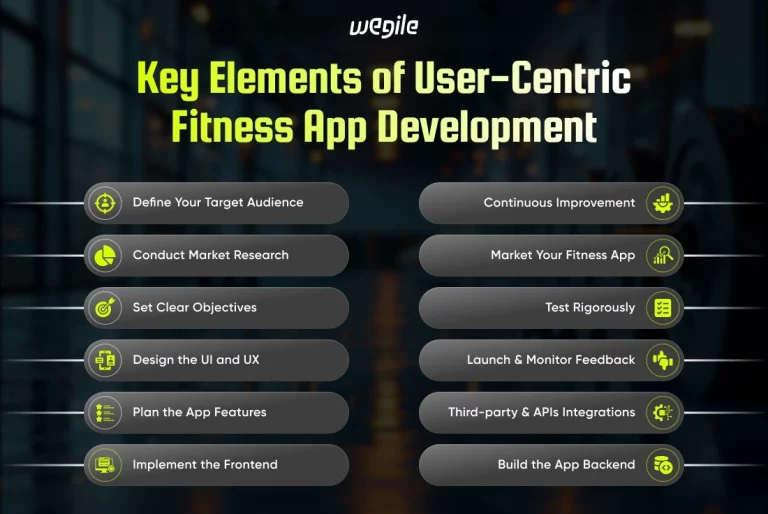
Key Elements of User-Centric Fitness App Development
1. Contextual Engagement
Contextual engagement is about connecting with your users at the right moment and in the right way. Imagine an app that gently reminds you to stretch after a hard day at work or offers an easy workout on a lazy Sunday morning. Understanding consumers’ daily habits, moods, and preferences is more important than sending notifications. The application must analyze the time of day, user location, and previous workout interactions. For example, if a user typically logs workouts in the evening, sending a “Time to get moving!” prompt in the morning won’t make sense and might even lead to frustration. Contextual engagement creates a rhythm with users, making the app feel like a fitness partner even more than software. The goal here is to keep users hooked and motivated without being intrusive.
2. Emotional Connectivity
Emotional connectivity is what turns a functional app into a trusted companion. It’s about creating experiences that resonate with users on a personal level. Users feel more devoted to an app that is compassionate and encourages them to push forward. This can be a congratulatory message after hitting a milestone or an uplifting quote after a tough workout. The user feels valued when the app acknowledges their effort and progress. Features like a personalized avatar, personal goal-setting, and a communal platform to share journeys can improve emotional engagement. Users who feel emotionally attached are more likely to stick around, endorse the app, and become loyal advocates. After all, people may forget what an app did for them, but they’ll never forget how it made them feel.
3. Adaptive Learning Algorithms
Adaptive learning algorithms are like having a personal trainer who gets smarter every time you work out. These algorithms analyze user data, including fitness levels, exercise preferences, and performance indicators, to tailor the app’s content to suit the individual’s needs. For instance, the app may advise shorter, more diverse cardio exercises if a user misses cardio but does weight training to ease them in. The software learns what works best for each user, providing more personalized and effective training ideas. This keeps users engaged and helps them achieve their goals faster. Any software that predicts user behavior and tailors its recommendations to meet their needs feels more like a coach than an exercise app. The result? Users feel more motivated, supported, and connected to their fitness journey.
4. Integration with Non-Fitness Data
Fitness is a whole lifestyle and not just simply a workout habit. Integrating non-fitness variables like sleep, stress, and diet can provide a more complete picture of a user’s health. Consider an app that detects poor sleep and proposes stress-relieving exercises like guided meditation instead of high-intensity workouts. With data from wearable devices, health trackers, and your schedule, the app can provide more valuable insights and suggestions. This integration enables the app to analyze the user’s daily activities and curate fitness plans that match their physical as well as mental health enhancement goals. Remember, an app that goes beyond fitness and considers the holistic well-being of the person becomes a wellness companion, making it more valuable and relevant to users.
5. Anticipatory Design
Anticipatory design simplifies the user experience by predicting their needs. It’s like having an app that offers an energizing morning routine because it “knows” you skipped breakfast or one that develops a workout plan based on your schedule. This proactive approach reduces friction and saves time, making the experience easier. The app may potentially change its interface based on user habits or time of day. For example, if a user practices yoga in the evening, the app may suggest nighttime routines. The goal is to prevent decision fatigue and keep people focused on fitness goals. A good anticipatory design makes users feel that the app is ahead of them, making their fitness journey easier and more enjoyable.
Challenges in User-Centric Fitness App Development
1. Addressing Diverse User Needs and Expectations
Fitness app users have diverse aims, tastes, and expectations. Some seasoned athletes may want advanced tracking options, while beginners may want simple coaching and inspiration. Attempting to satisfy everyone’s demands is like balancing on a tightrope. Beginners could be overwhelmed by too many features, while experts could be turned off by a lack of depth. So, the app should have a flexible framework with adjustable choices and predefined plans. Different fitness levels, flexible routines, and personalized goal-setting can benefit this diverse audience. Also, businesses can improve their services by collecting feedback and watching user interactions to ensure the app appeals to the most users without losing its core aspect.
2. Ensuring User Engagement and Retention
Getting users to download a fitness app is just the first step. The real challenge lies in keeping them engaged and motivated over the long term. Many fitness enthusiasts struggle to stay consistent during their journeys. To address this, it’s important to focus on creating an engaging and supportive environment. Gamification elements like rewards, challenges, and leaderboards add a fun twist, while community features like group workouts and forums foster a sense of belonging. New content and fitness challenges help keep things interesting and avoid monotony. Users are more likely to remain around and make the app part of their daily routine if they feel invested in it. Aspects such as personal accomplishments or social interaction promote a sense of belonging.
3. Balancing Functionality with Simplicity
It’s tempting to add more and more features, but more isn’t always better. Fitness apps with too many complicated choices might confuse or frustrate users. So, finding a balance between powerful functionality and a simple, user-friendly interface is difficult. You might want to pack in all the important features, but they should be simple to use. The app should provide a seamless experience, guiding users through their fitness journey without overwhelming them. Using clear images, simple navigation, and useful tips helps keep things simple without losing functionality. When these aspects work well together, users feel in charge, making the app their go-to fitness tool.
4. Data Privacy and Security Concerns
Fitness apps capture sensitive data like health metrics, location data, and personal information, making data privacy and security essential. Users want to feel confident that their data is protected and won’t be misused. Strong encryption, authentication, and transparent data management are needed to address these issues. Ensure privacy settings are clear and easy to navigate. This allows users full control over what they share and with whom. Regular security audits and compliance with regulations like GDPR can further build trust. Giving importance to data privacy shows users that you respect and value their trust. Security is equally important, as it builds trust and reliability, which is crucial nowadays.
Wrapping Up
Like the perfect workout, building a fitness app requires balance, flexibility, and, most crucially, audience knowledge. User-centric development means creating an app that recognizes users’ needs, inspires them to strive more, and keeps them coming back. Intuitive navigation, tailored experiences, and motivational aspects make your app a fitness companion that empowers users. A well-designed fitness app keeps users engaged and, most importantly, satisfied, whether it’s about measuring progress or setting new benchmarks.
At Wegile, we specialize in turning these user-centric ideas into reality. As a top fitness app development company, we combine innovation and empathy to make your app look and feel great. Our expertise can help you create a fitness app that stands out and resonates with your audience. Ready to make your fitness app a powerhouse of user engagement? Let’s design success together!
Leave a Reply