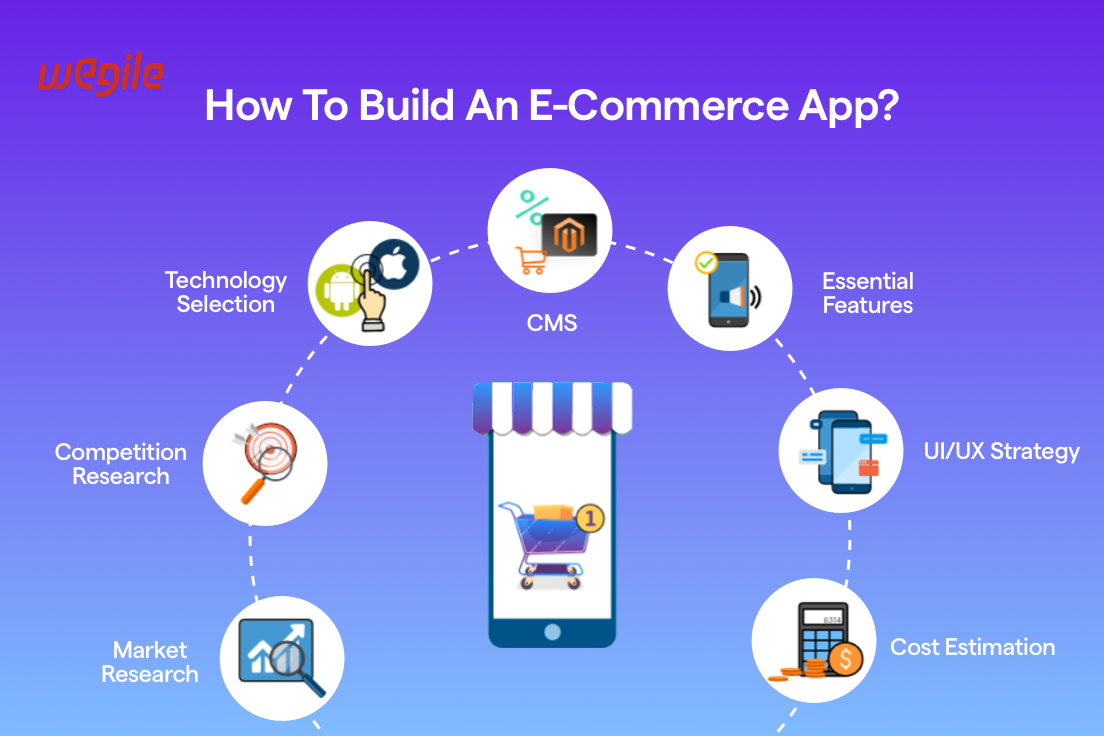
Do you want to learn how to build an e-commerce app to establish an online presence or sell your
products or services? If so, you are in the right place.
E-commerce mobile apps are one of the best ways to increase your ROI as it gives you direct access
to
your users. So, where do you begin?
This guide breaks down the essential steps to creating an e-commerce app, from setting goals to
choosing the right development agency.
Whether you’re a small startup or a large company, this easy-to-follow guide will help you create an
e-commerce app that shines in the online market!
What’s An Ecommerce App?
An e-commerce app is like a digital shop where businesses sell things online to people. These apps
serve as virtual storefronts where customers can browse, purchase, and manage orders from their
computers or mobile devices. E-commerce apps like Amazon and Shopify allow businesses to sell
products online to reach more customers globally.
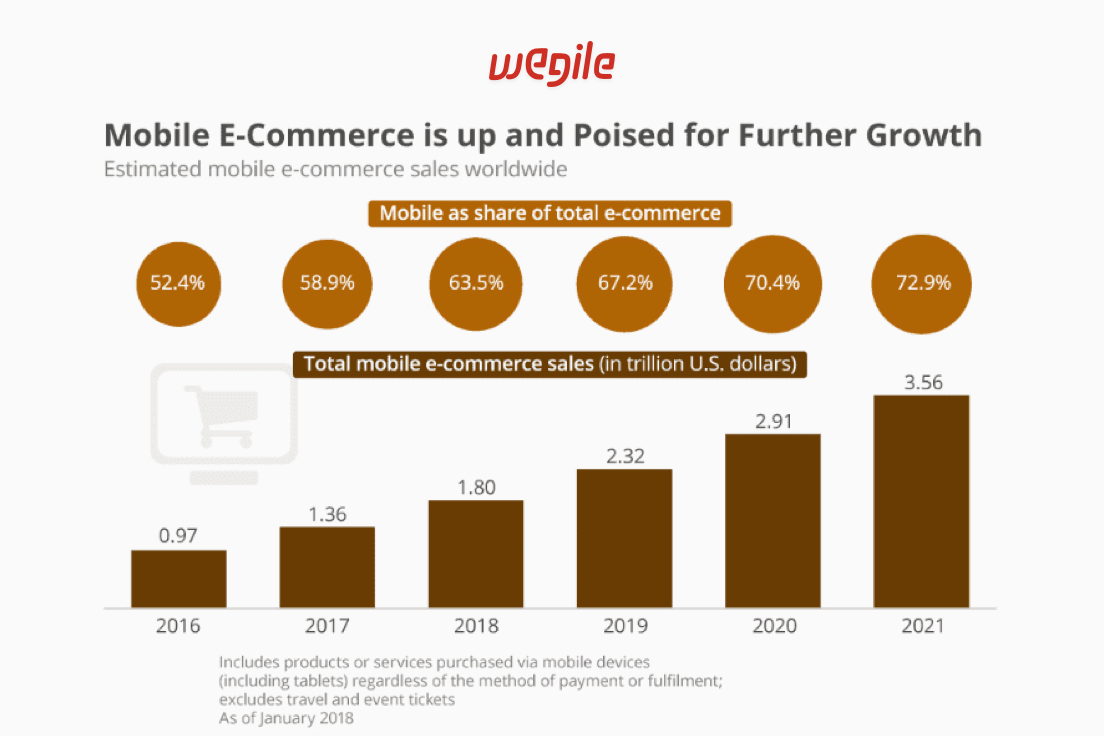
Stats suggest that the e-commerce market is growing a lot, and is expected to be worth
$6.3 trillion in 2024, up from $5.8 trillion last year. This growth means businesses have many opportunities to do well and reach more customers.
Things
to Consider Before Building an E-commerce App
Building an e-commerce app is a big job that needs careful planning. If any business rushes into it
without thinking about key factors like goals, technical needs, costs, and timelines, they might
face problems later on. So, it’s important to take the time to plan everything out carefully before
starting.
-
1. Avg Cost required
When it comes to making an e-commerce app, the big question is: “How much does it cost to
make an e-commerce app?” Well, it depends on a few things:Factors Influencing the Cost of
Developing Ecommerce App:-
A. Features and Functionality
The more features you want to add to your app, like showing products, letting people
buy them, and suggesting other things they might like, the more it’ll cost. -
B. Design Complexity
Complex designs with numerous impressive effects cost more than simple,
straightforward ones. -
C. Development Approach
It’ll cost more if you want everything custom-made from scratch. However, it’s still
better than using the ready-made approach, as you get precisely what you want in
your app. -
D. Third-party Integrations
If you want to incorporate more services, like payment systems or shipping
companies,
that’ll add to the bill.It’s hard to say exactly how much it costs to make an e-commerce app without a
comprehensive understanding of all the relevant factors. Expenses can fluctuate
depending on the complexity of the app and the required resources. For instance:- Basic app: $10,000 – $50,000
- Mid-range app: $50,000 – $150,000
- Complex app: $150,000 – $500,000+
These are rough estimates, and actual costs may differ. Getting a detailed estimate
from our development team before starting would be helpful for you to make an
informed decision.
-
-
2. Time to Develop and Deploy the App
Another question people often ask is, “How long should it take to build an e-commerce app?”
Well, it depends on certain aspects again:Factors that affect time:
-
A. Scope and Complexity
The extent of functionality you desire for your app will have an impact on the time
required for its development. A basic app could be developed within a few months,
whereas a more advanced one may require a year or longer. -
B. Design and Development
ProcessEstablishing custom designs and features requires more time than utilizing pre-made
options. Using ready-made tools is more efficient than starting from scratch. -
C. Testing and Iteration
Testing the app to ensure it functions properly and addressing any issues further
extends the overall development timeline. This step is crucial, so it’s essential to
dedicate sufficient time to ensure it is done correctly.Once the app is completed, it must be made available on the app stores for users to
download. Every app store has its own set of rules and review processes, which may
require a few days or weeks to complete. Therefore, it is crucial to carefully
consider and allocate sufficient time before releasing the app to your users.
-
-
3. App’s complexity
When considering the level of complexity of your e-commerce app, take into account the
following levels:-
A. Simple Apps
These apps are basic and require minimal effort. They offer a comprehensive range of
tools and features that enable seamless online selling, including product showcasing
and secure purchasing options. They are suitable for beginners and are inexpensive. -
B. Medium Complexity Apps
These apps offer more functions, such as product recommendations and the ability to
share content on social media platforms. They require more time and investment than
basic apps. -
C. Complex Apps
These apps are highly advanced and offer a wide range of impressive features, such
as
virtual clothes try-on functionality and an extensive choice of sellers, all in one
place. They are the most time-consuming to create and cost the most.So, how do you find the right balance?
Consider your app requirements and budget carefully. You need to have an app that
offers sufficient functionality without incurring unnecessary costs and should be
made within a reasonable timeframe.
-
Steps to Build
an E-commerce App
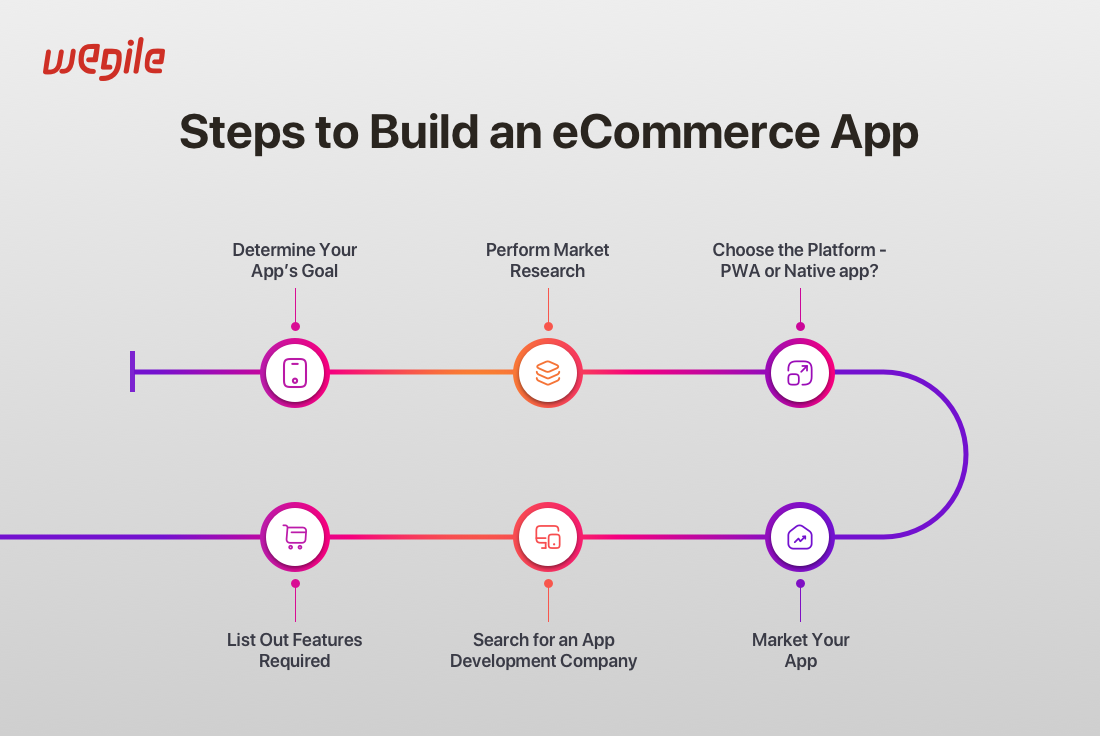
Developing an e-commerce app requires a series of steps to transform your concept into a functional
application that lets users conveniently shop online. If you’re wondering, “How do I create my
ecommerce app,” these steps will help you. Follow every step of the e-commerce app development
process, from initial planning to generating ideas.
-
Step 1. Determine Your App’s Goal
Before you start building your e-commerce app, it is crucial to have a clear understanding
of
your objectives and the desired features. First, understand your objectives, such as
increasing sales or expanding your reach.Further, you need to understand your target audience, including their age and preferences,
enabling you to enhance the app to cater to their needs more effectively. Set clear
objectives for your app, such as the desired number of sales or user engagement. Ensure that
your app’s objectives align with your business’s overall objectives.By having a clear vision for your app’s functionality from the start, you can develop it to
align with your objectives. -
Step 2. Perform Market research
Once you have determined the desired functionality of your e-commerce app, the subsequent
task is to analyze the market. This allows you to gain insights into your customer base,
stay informed about the competition, and stay up-to-date with industry trends.You’ll need to determine the buying preferences of your target audience. Consider factors
such as their age and purchasing habits to ensure that your app caters to their specific
requirements.Additionally, consider exploring alternative apps that share similarities with yours. Assess
their strengths and weaknesses. This will assist you in enhancing your app to outperform
your competitors.Stay informed about the latest developments in the industry, such as technological
advancements or shifts in consumer preferences. This will assist you in maintaining a
dynamic and captivating app.Finally, engage with individuals who could potentially benefit from your application. Know
what they think about your offerings and the features they want in an e-commerce app. -
Step 3. Choose the platform – PWA or
Native app?Feature PWA Native App Development Cost Generally lower, single codebase for all platforms Higher often requires separate codebases Performance Good, but can be limited by browser capabilities Excellent, optimized for specific platforms Installation No installation is needed, it is accessed via a browser Must be downloaded and installed from app stores User Access Accessible on any device with a web browser Limited to specific platforms (iOS, Android) Offline Usage Limited, depends on service workers Full, designed for offline functionality Updates Instant updates deployed on the server Requires user to download updates Hardware Access Limited access to device features Extensive access to the device’s hardware User Experience Consistent across platforms but may feel less integrated Highly optimized, feels integrated with the device When deciding on the platform for your e-commerce app, you’ll come across two primary
choices: Progressive Web App (PWA) or Native App. Let’s break down the pros and cons of each
so you can make an informed decision.Progressive Web App (PWA)
PWAs are web-based apps that work well on devices like phones and computers. These apps
follow the cross-platform approach to deliver a consistent experience across different
devices and platforms.Pros
-
They are compatible with various devices, ensuring accessibility for a larger user
base. -
They can work offline, even in the absence of an internet connection, which is quite
convenient. -
Updates are quick and easy, without users needing to download anything.
Cons
-
Some device features, such as push notifications, may not be accessible to them.
-
They may not be as efficient as native apps, especially when performing complex
tasks.
Native App
Native apps are built specifically for one type of device, like an iPhone or Android phone.
Pros
-
They’re usually faster and can access all the device’s features.
-
They offer a smoother and more intuitive experience for users.
Cons
-
Creating apps for different devices can be costly and time-consuming.
-
Before users can download them, they must undergo a thorough app store review
process.
Consider your intended audience and the app’s desired goals. If you require specific device
features and optimal performance, a native app would be the most suitable choice. However,
if you are looking for widespread accessibility and seamless updates, a PWA might be the
ideal choice.In addition to this, you may want to explore a hybrid approach such as React Native or
Flutter, which blends elements of both PWA and native apps. -
-
Step 4. List Out Features Required
Before you initiate the development process, it is crucial to have a clear understanding of
the requirements for your e-commerce app. Consider these key features in your app:-
Push Notifications
Keep users engaged with updates and promotions.
-
Easy Checkouts
Simplify the purchasing process for hassle-free transactions.
-
Wish Lists
Let users save desired items for quick and convenient shopping.
-
Multiple Payment Options
Offer flexibility with various payment methods.
-
Custom Branding and Design
ElementsEnhance brand identity and user experience.
-
Review/Rating System
Enable customers to share feedback to make informed decisions.
-
-
Step 5. Search For an E-commerce App
Development CompanyDetermine your budget first. Understanding how much you can invest in your e-commerce app
will assist in narrowing down your choices and directing your search toward agencies that
align with your financial constraints.However, you shouldn’t compromise on the quality of your app while looking for cheaper
options. Research potential agencies next. Find companies that have expertise in developing
e-commerce apps and a successful history of delivering top-notch projects.Further, you need to provide the necessary details regarding your app requirements,
timeline,
and budget to get accurate estimates. Assess the experience and expertise of each agency in
e-commerce app development by reviewing their portfolio, client testimonials, and case
studies. This will help you determine if they are a good fit for your project.However, if you’re tired of the hassle of searching for companies for your project, you can
choose us! As a top e-commerce app development company, Wegile is well aware of the unique
challenges associated with developing e-commerce apps. We’ll collaborate with you to
discover innovative solutions and make your app vision a reality.Ultimately, it is crucial to prioritize value when choosing a development agency. Select a
company that provides a superior blend of excellence and, dependability, and
cost-effectiveness to ensure a fruitful partnership and successful delivery of your
e-commerce application. -
Step 6. Market Your App
Promoting your e-commerce app is key for attracting users and boosting sales. Follow the
steps below to market your app effectively:-
1. Enhance App Store Visibility
Use captivating descriptions and eye-catching visuals to make your app stand out in
app stores. -
2. Leverage Social Media
PlatformsUtilize platforms like Instagram and Facebook to connect with potential customers
and
build brand awareness. -
3. Implement Targeted
AdvertisingIncrease app downloads through strategic advertising campaigns that target your
ideal
user base. -
4. Collaborate with Influencers
Partner with influencers who can help extend your reach to a broader audience,
enhancing visibility and credibility. -
5. Offer Exclusive Promotions
Provide special deals and exclusive promotions to incentivize downloads and boost
sales. -
6. Utilize Email Marketing
Maintain regular communication with your existing customers through email marketing
to keep them engaged and informed about new offers and features.These steps are designed to increase the visibility of your app, attract new users,
and ultimately expand your business.
-
Conclusion
To sum up, developing an e-commerce app requires careful consideration and implementation. Through
careful financial planning, thorough market analysis, platform selection, defining app
specifications, and partnering with a suitable agency, you can embark on the journey of creating
your ideal e-commerce app.
Wegile is a reliable e-commerce app development
company with a team of dedicated e-commerce app developers committed to turning your app
concept into a fully functional mobile application, all within the agreed-upon timeline. Contact us
today to develop your ideal e-commerce app and enhance your online business presence to new levels.
Leave a Reply