Alright, buckle up! We’re about to dive headfirst into the world of online business, and trust us;
it’s a world you want to understand inside out. Picture this: the global dropshipping market, and
yes, we’re talking about that fantastic way of doing business where you don’t need a warehouse the
size of a football field, was valued at a whopping USD
225.99 billion in 2022. That’s right, a billion with a ‘B’! But wait, there’s the classic
ecommerce too! You know where you buy, store, and ship your products yourself. Think of it as the
traditional brick-and-mortar store’s digital cousin, with all the thrills and spills and USD
5.2 trillion worth of e-commerce sales.
Of course, dropshipping is just a drop in the ocean of e-commerce, but what are the difference
between dropshipping and e-commerce, and why should you care about taking your
business online? Well, that’s exactly what we’re here to chat about. You see, understanding
the differences between dropshipping and good ol’ e-commerce isn’t just an option; it’s like having
the treasure map to online success. So, hang on to your devices, folks! We’re about to journey
through the online retail jungle and emerge with all the knowledge you need to make the right choice
for your business. Ready? Let’s roll!
List
of Difference Between Dropshipping and
E-commerce
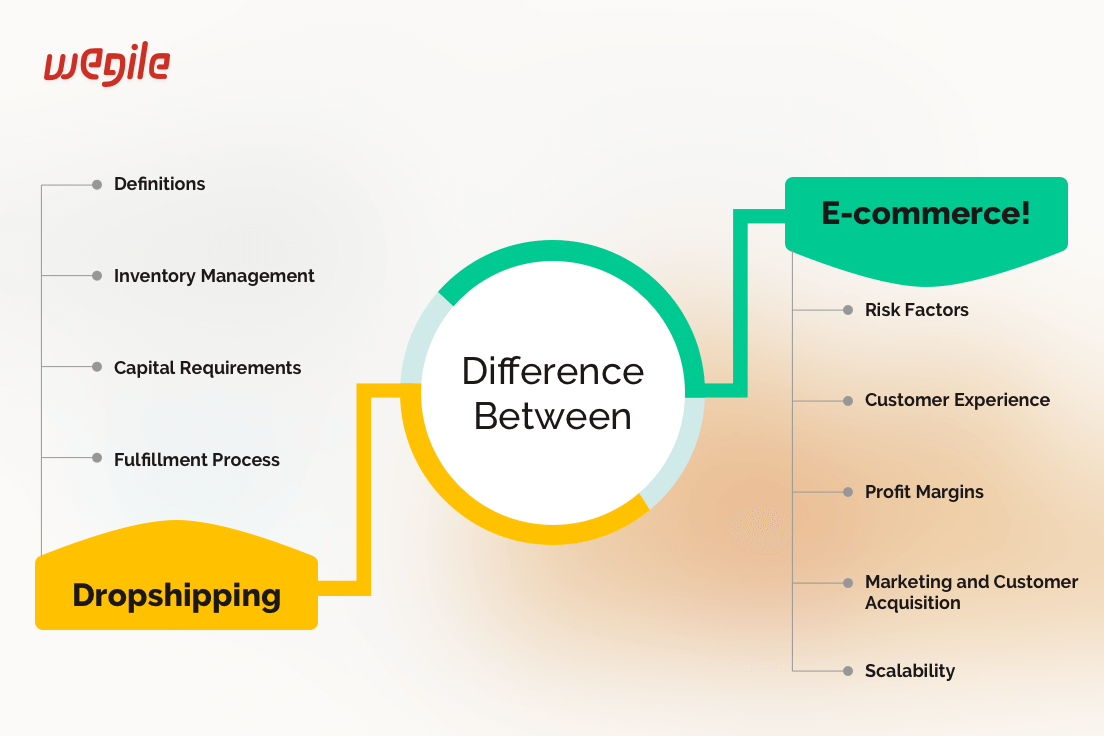
Definitions
| Dropshipping vs. E-Commerce
Clearly Define App’s Functionality, Features, and User Experience:
-
A. Dropshipping Definition:Dropshipping represents a distinct
business model wherein an online retailer doesn’t maintain
an inventory of the products it offers for sale. Instead, the retailer procures these
products from an alternative vendor or wholesaler and arranges for their direct shipment to
the customer. Effectively, the drop-shipper assumes the role of an intermediary connecting
the supplier and the customer, overseeing order management and shipping logistics, all while
abstaining from the possession of any stock. -
B. Ecommerce Definition:The difference between dropshipping
and e-commerce is that e-commerce is the buying and
selling of goods and services through online channels. Within this domain, an e-commerce
business can encompass virtually any form of transaction conducted via a website,
encompassing product sales, subscription services, booking systems, and online payment
mechanisms, among others. Crucially, the underpinning of e-commerce relies on the
availability of products within the retailer’s inventory, typically overseen by a
third-party warehouse or E-commerce fulfillment center, to facilitate seamless transactions
in the digital realm.
Inventory Management | Dropshipping vs.
E-Commerce
-
A. Dropshipping Inventory Management:Difference between
dropshipping and e-commerce is that dropshipping eliminates the need to
manage inventory or handle cumbersome shipping logistics. Instead, products are directly
shipped from the supplier to the customer. As a drop shipper, your role is to attract
customers to your store and provide customer service. It’s a hassle-free and convenient
approach to launching a business, as inventory management practically becomes non-existent. -
B. E-commerce Inventory Management:Conversely, if you lean
towards
a more conventional approach in your online business
endeavors, e-commerce may align better with your objectives. Much like brick-and-mortar
retail establishments, e-commerce fulfillment necessitates hands-on inventory management.
This implies that you assume the responsibility of purchasing and maintaining stock,
ensuring appropriate storage, and managing the shipping process for customer orders.
Capital Requirements | Dropshipping vs.
E-Commerce
-
A. Dropshipping Capital RequirementsDropshipping requires
minimal
upfront capital investment and no inventory purchasing or
storage costs. The difference between dropshipping and e-commerce is that dropshipping
businesses engage in this method by working with suppliers to list products on their
platform, taking orders, and then passing these purchase orders onto the supplier, who then
ships them directly to customers. This enables drop shippers to operate with a small staff
and limited resources, as well as avoiding major risks associated with storing stock. -
B. E-commerce Capital RequirementsThe difference between
dropshipping and e-commerce is that e-commerce often involves a higher
initial investment than dropshipping due to the costs associated with site development (if
not using a third-party platform) and other factors such as digital marketing campaigns.
Alongside this, selling physical products means businesses are required to purchase
inventory and store it until it’s sold, which can be costly if demand unexpectedly changes.
Additionally, businesses may be stuck with surplus stock if there are fluctuations in
consumer trends.
Fulfillment Process | Dropshipping vs.
E-Commerce
-
A. Dropshipping Fulfillment ProcessThe difference between
dropshipping and e-commerce is that dropshipping operates as a
fulfillment model wherein a retailer refrains from maintaining a stock of goods. Instead,
the retailer relays customer orders and shipping particulars to a third-party supplier, who
subsequently dispatches the products directly to the customer. In this arrangement, the
retailer remains unburdened by the necessity of handling physical inventory or overseeing
shipments, as the supplier efficiently manages all these responsibilities. -
B. E-commerce Fulfillment Process:E-commerce fulfillment, in
contrast, transpires when an online retailer offers products from
their existing inventory to customers through their website or app. In this e-commerce
business model, the retailer assumes inventory management and shipping roles, either
independently or by entrusting order fulfillment to a third-party logistics provider (3PL)
such as DHL
Supply Chain International Logistics Services. The retailer retains overall control
over the ordering process and e-commerce fulfillment while overseeing their inventory.
Risk
Factors | Dropshipping vs. E-Commerce
-
A. Dropshipping Risk FactorsOne of the primary challenges with
dropshipping pertains to its dependence on external
suppliers and the availability of stock. Given that control over inventory is relinquished,
a notable risk surfaces – the potential for products to go out of stock or even face
discontinuation. This inherent uncertainty can result in customer dissatisfaction and missed
sales opportunities. Moreover, due to the involvement of third-party providers, achieving
complete mastery over product quality and shipping timelines can prove to be challenging. -
B. E-commerce Risk Factors:The difference between dropshipping
and
e-commerce is that operating an e-commerce business
introduces inherent risks concerning inventory management, specifically the possibility of
overstocking undesirable products. The consequences of excess inventory can encompass a
range of issues, including inflated stocking costs, slow-moving products, and financial
setbacks arising from markdowns or return expenses. Furthermore, given that e-commerce
businesses increase control but assume more responsibility for product quality and shipping
times, they must create stringent processes to uphold and ensure customer satisfaction.
Customer Experience | Dropshipping vs.
E-Commerce
-
A. Dropshipping Customer Experience:While the dropshipping
approach offers small businesses increased access to products and
streamlined operations, customers may experience potential delays in delivery times due to
external shipping processes. Additionally, brands have less control over packaging and
branding, as this process is generally handled by their suppliers. -
B. E-commerce Customer Experience:For businesses that want
greater
control over branding and customer experience, e-commerce is
the way to go. The difference between dropshipping and e-commerce is that with e-commerce
platforms, business owners have direct control over all aspects of the order process,
including shipping and handling times, packaging, and branding. This allows businesses to
tailor their customer experience for maximum satisfaction and retention.
Profit
Margins | Dropshipping vs.
E-Commerce
-
A. Dropshipping Profit Margins:Dropshipping offers a way to
lower
your business costs because you don’t have to worry about
storing products or handling shipping logistics. However, it’s important to be aware that
due to strong competition and the costs of sourcing products, dropshipping often results in
slimmer profit margins compared to other e-commerce approaches. Businesses that choose
dropshipping typically aim for high-volume sales. -
B. E-commerce Profit Margins:The difference between
dropshipping
and e-commerce is that, e-commerce usually involves
retailers holding their own inventory and having control over product pricing. This can
potentially lead to higher profits and better profit margins per item sold. This is
especially true if they specialize in niche items and can capture more of the market share
for those products.
Marketing and Customer Acquisition |
Dropshipping vs. E-Commerce
-
A. Dropshipping Marketing and Customer
Acquisition:Dropshipping
constitutes a business model predicated upon an extensive reliance on digital
marketing and advertising to get customers to an online retail platform. It offers a
cost-efficient modality for online business operations by avoiding upfront expenditures
associated with sticking inventory or a store. Nevertheless, due to the absence of
face-to-face interactions with customers, cultivating and consolidating customer loyalty and
trust may require a more concerted effort. -
B. E-commerce Marketing and Customer Acquisition:E-commerce
sellers typically use a multifaceted approach encompassing both online and offline
channels for promoting their products and services. Offline strategies, including direct
mail marketing, word-of-mouth referrals, and in-store promotional activities, are leveraged
to reach out to prospective customers and fortify brand loyalty. The distinctive capability
of e-commerce businesses to engage in direct interactions with customers gives them a
competitive edge in terms of forging robust customer relationships and delivering superior
customer service.
Scalability
| Dropshipping vs. E-Commerce
-
A. Dropshipping ScalabilityDropshipping offers a swift entry
point
into the business world, allowing entrepreneurs to
commence operations with relative ease. Scaling up a dropshipping business can also be
accomplished rapidly due to the absence of the need to manage physical inventory. This
agility is particularly advantageous for businesses aiming for rapid growth. In the
dropshipping model, the complexity associated with inventory management is notably reduced.
Since the business doesn’t stock products, there is no need to grapple with issues such as
storage space, stock levels, or the potential obsolescence of inventory. -
B. E-commerce ScalabilityWhile offering substantial growth
potential, E-commerce can be more intricate to scale due to
the need for comprehensive inventory management. Scaling an e-commerce operation
necessitates careful strategic planning. Businesses must effectively forecast demand, handle
stock levels, optimize supply chain logistics, and navigate the challenges of overstocking
or understocking.Looking to hire an E-commerce
website developer? Wegile has got your back (for real). Contact us, and we’ll build the best
e-commerce website your eyes have ever seen.
How Does Dropshipping Work?
Imagine a retail store where you can operate without the burden of stocking any inventory yourself.
This is the essence of dropshipping – a method that allows you to seamlessly collaborate with
wholesale suppliers who handle all the inventory-related tasks on your behalf.
From holding stock to directly shipping orders to your customers, dropshipping presents the
convenience of having a virtual personal assistant catering to your every need. Your role is
simplified to establishing the connection and communicating your requirements. It’s akin to having
an endless inventory warehouse right at your fingertips. This implies that regardless of the sales
volume, concerns about inventory depletion or storage congestion become obsolete.
Dropshipping is the ideal solution for upcoming entrepreneurs who wish to embark on a business
venture without the constraints of a physical storefront. It’s almost like managing a lemonade stand
– no substantial upfront investments, no substantial inventory commitments. Just establish the
setup, foster supplier relationships, and commence your sales journey.
Is
dropshipping 100% profitable?
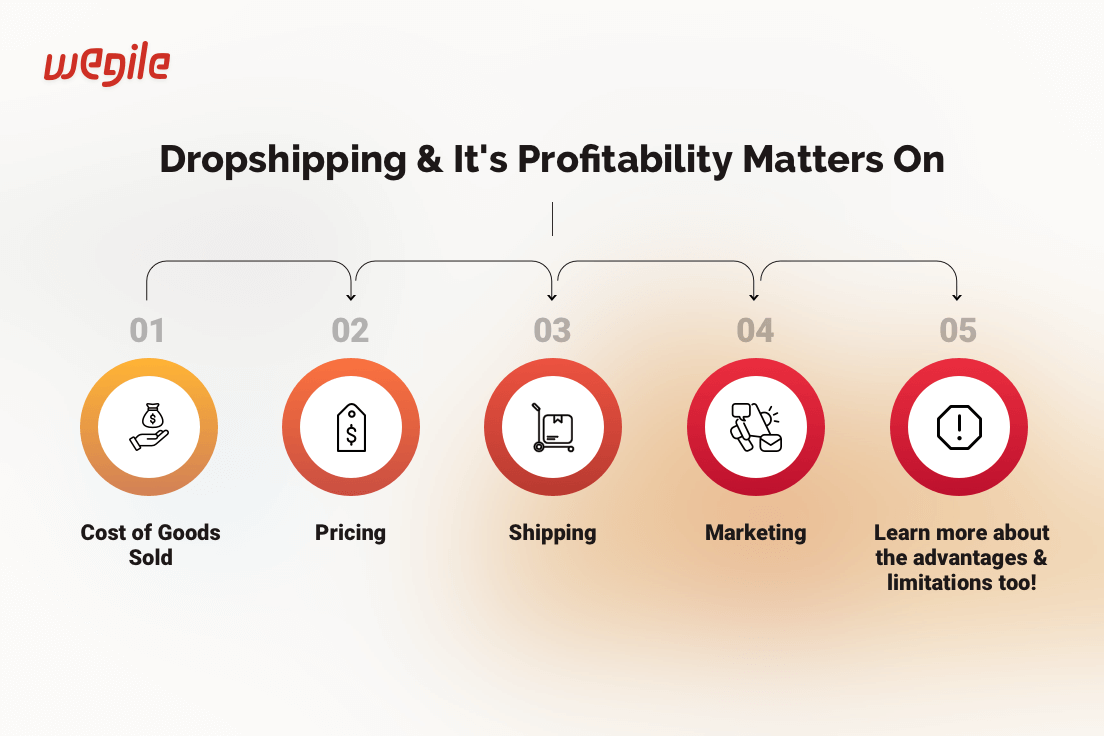
Is dropshipping a guaranteed ticket to the money train? Well, it’s kind of like having a pet unicorn
– it sounds amazing, but let’s sprinkle a dash of reality on the glitter. Dropshipping is like
baking a cake – there’s a recipe for success, but it’s not always 100% fluffy and perfect.
Ingredients That Matter:
-
1. Cost of Goods Sold (COGS): Imagine you’re at a flea market, haggling prices with suppliers.
Your ability to nab products at a good price can determine whether your profit dance is a jig or
a snooze. -
2. Pricing Balancing Act: Think of it as setting the price of that unicorn ride – too high, and
no one hops on; too low, and you’re not even covering the glitter glue costs. -
3. Shipping Shuffle: Shipping costs? They’re like surprise party expenses. They sneak up on you
and can hog a slice of your earnings cake. -
4. Showtime, Marketing!: Just like planning a backyard BBQ, you need some budget to spread the
word. That’s your marketing picnic basket.
Sprinkles of Positivity:
-
1. Low Inventory Hassles: You’re not playing Jenga with stacks of boxes in your living room. No
warehouse is needed! -
2. Flexibility Frolic: Dabble in the mystical arts of trend-spotting. Pivoting to new products
is like trying on different wizard hats. -
3. Sky’s the Limit: Space is no longer your nemesis. Stock an entire kingdom without a square
inch of storage trouble.
But Wait, There’s More – Challenges Ahead:
-
1. Slimmer Slices: Profit margins can sometimes feel like diet versions. It’s all fun and games
until you check the calorie count. -
2. Supplier Surprises: Imagine ordering a pizza and getting a salad. That’s what a bad supplier
can do to your magical unicorn dreams. -
3. Market Mayhem: Dropshipping is like a dance-off – the competition can get intense, and it’s
not just about the best moves but the most dazzling disco ball, too. -
4. Customer Quest: The unicorn caretaker’s role falls on you. Returns, refunds, and customer
queries need your expert touch.
So, Is dropshipping 100% profitable?
Is dropshipping a rainbow-filled path to treasure? Well, it’s more like owning a unicorn – enchanting
but with some unexpected prancing. Profit’s not guaranteed, but with the right sprinkles of strategy
and a dash of resilience, you can find the magical balance and make it sparkle. Just remember, every
unicorn ride has its bumps, but with the right saddle, you’ll still have a heck of a time!-
Leave a Reply