Introduction
Personalization and Customization in e-commerce are two terms that are often confused and are
interchangeably used when it comes to e-commerce. However, they actually describe two distinct
approaches to tailoring the user experience. In Personalization vs Customization, personalization
refers to the process of providing a personalized experience based on data collected about a
customer or website visitor. This could include providing customized product recommendations based
on previous purchases or suggesting content-related articles based on the user’s browsing habits. On
the other hand, customization lets customers modify existing products to their own specifications.
That could mean adding custom touches like extra decorations or changing the shape or color of the
item.
Understand which approach is best suited to your e-commerce business – they can both yield great
results! Personalization can help you build customer loyalty, while customization opens up
opportunities for customers to create something truly unique – leading to more sales and repeat
customers.
What Is Personalization in
E-commerce & Example
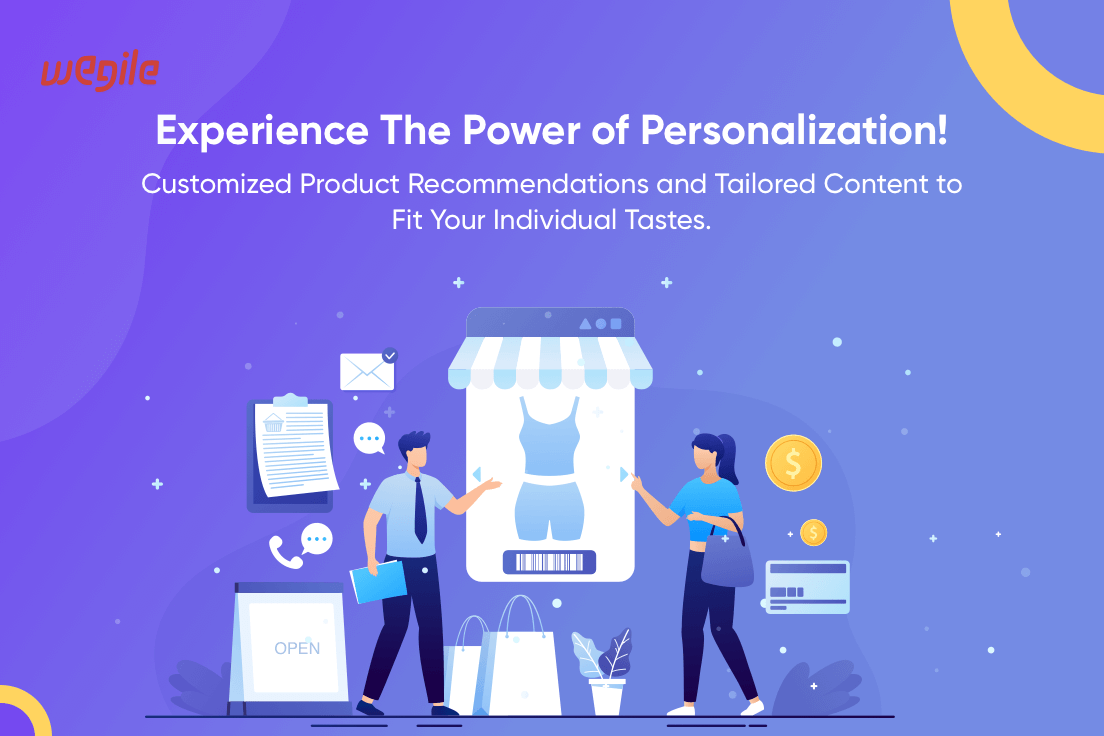
Personalization refers to the use of data points to create individualized experiences for customers.
In the e-commerce context, personalization can encompass anything from tailored content in a website’s user
interface to product recommendations that are based on individual consumer behavior or
preferences. Companies typically rely on data points such as consumer purchase history, past
engagements, user profiles, and frequently searched terms to gain insights into individual
customers’ preferences and better tailor their experiences.
By using personalization, companies can create highly targeted experiences for their customers. For
example, a sports retail store could display a user’s favorite teams upon logging in or send out
tailored emails with special offers relevant to the customer’s shopping history. Personalization can
also go beyond a single customer’s demographic or purchase history; it can be used to present users
with tailored content, such as articles related to their interests or videos featuring topics they
recently searched for.
Additionally, companies can leverage personalization to suggest product recommendations based on the
user’s recent activity, previous purchases, or browsing patterns. This kind of personalization helps
users discover new products that they might be interested in and increases the chance of them
completing a purchase.
Personalization vs. Customization
UX: Personalization Example

AWS Lambda is a serverless computing
service that lets you run code without managing infrastructure
For Personalization vs customization examples, let’s start with an example for personalization in
ecommerce, personalization plays an increasingly important role in e-commerce. A great example of
successful personalization is Sephora, a popular beauty retailer. When customers log into Sephora’s online store, they are presented with a
personalized home page featuring products selected specifically for them based on their past
purchase histories and browsing behavior. Sephora also offers a Beauty Insider program which rewards
customers with points for every purchase they make. These points can be used to redeem products,
discounts, and experiences. The program also offers personalized product recommendations tailored to
each customer’s preferences and past purchases.
Overall, by leveraging data and advanced technologies such as Augmented Reality, Sephora has
established a powerhouse of personalization to both reward its customers and drive loyalty. By
tailoring products and experiences for each individual consumer, Sephora has created an unparalleled
shopping experience that increases the customer retention rates for the company.
In order to make sure you’re providing the best UX possible for your website users, you should
prioritize personalization and customization options that allow for more control over how visitors
view, interact with, and respond to your content and products. With the right website redesign,
you’ll be able to create a unique, engaging user experience tailored specifically to each individual
visitor.
Investing in a website redesign is the best way to make sure that your visitors get the most
out of their experience on your website.
What Is Customization in E-commerce
& Example
Customization is a term that gets confused a lot in the world of ecommerce. It can mean different
things to different people – but broadly, customization refers to the ability for users to tailor
physical products or digital services to their own specific needs. In the personalization vs
customization context, one of the main ways users can customize their experiences is through
configuring product features and specifications. For example, a customer may want to order a dress
shirt with four buttons instead of two — something they can do without any effort directly on the
product page making the whole process effortless and smooth.
Additionally, customers may be able to entirely create their own product, choosing every detail —
think custom sneakers with their own unique logo, or a PC that’s been built from scratch to meet
their exact requirements. This type of deep level customization gives users the flexibility and
power to tailor their digital journey and receive the exact item they’re looking for — something
only an online retailer can offer. Ultimately, by offering customizable products and services,
businesses can provide users with an unforgettable and rewarding experience as they create their own
unique designs.
Personalization vs. Customization UX:
Customization Example
Customization in e-commerce is taking the world by storm. One company leading the charge is dbrand, a company that offers custom skins for a wide range of
tech gadgets and appliances. Through their website, customers can browse hundreds of different
textures, colors, and designs that can be tailored to the exact specifications of the customer’s
device. With personalized products like this, customers can have a unique device that truly reflects
their own style and personality. They even tend to send free custom gifts to there customers on
random if asked by the customers(nicely).
This example demonstrates the potential of personalization in e-commerce. By offering customized
products that are tailored to the customer’s exact needs, companies such as dbrand can build loyalty
and drive more sales by creating a “wow factor” for customers. By providing options to bolt on
additional customization to their product offering, companies can also show their commitment to
customer service, further improving the perceived value of their products. Ultimately,
Personalization vs customization UX confusion can be come to a halt, by acknowledging that
customization in e-commerce can be a great way to provide customers with a unique and satisfying
shopping experience.
Difference between Personalization
and Customization in E-commerce
Purpose: Personalization focuses on delivering relevant and personalized experiences to individual
users, while customization allows customers to choose products or services that meet their specific
requirements.
Approach: Personalization algorithms take customer data and preferences into account when choosing
items, while customization relies on customer input to customize the product.
Level of control: Personalization’s control is limited by the algorithms used, while customization
allows complete control of the product or service to the customer’s exact desires.
Scalability: Personalization algorithms can be implemented at scale and do not require manual changes
per consumer, while customization necessitates manual changes, which breeds a lack of scalability.
Implementation: Personalization requires minimal implementation, as it is easy to set up customer
data profiles and make adjustments quickly, while customization requires detailed design and
implementation for each custom product.
Conclusion
Personalization and customization are two important pillars of a successful e-commerce business. It
should not be about Personalization vs. Customization, but you should be able to leverage the power
of both; businesses can create individualized experiences for their customers that will bring mutual
benefits for all.
From increased revenue to enhanced customer loyalty, personalizing and customizing your services will
help you build an effective, long-lasting brand in today’s competitive landscape. With
personalization and customization as part of your strategy, you’ll be well on your way to success!
For this reason, it’s important to work with an experienced website development team
like Wegile, which specializes in crafting custom e-commerce solutions.
Leave a Reply