Introduction
In recent years, eCommerce has become increasingly popular. Ecommerce website design is not a
one-size-fits-all solution. The design of an eCommerce website must be tailored to the specific
requirements of the business that will be using it. Companies of all sizes turn to the internet to
sell their products and services. However, businesses should be aware of a few critical differences
between B2B and B2C eCommerce websites before making the switch.
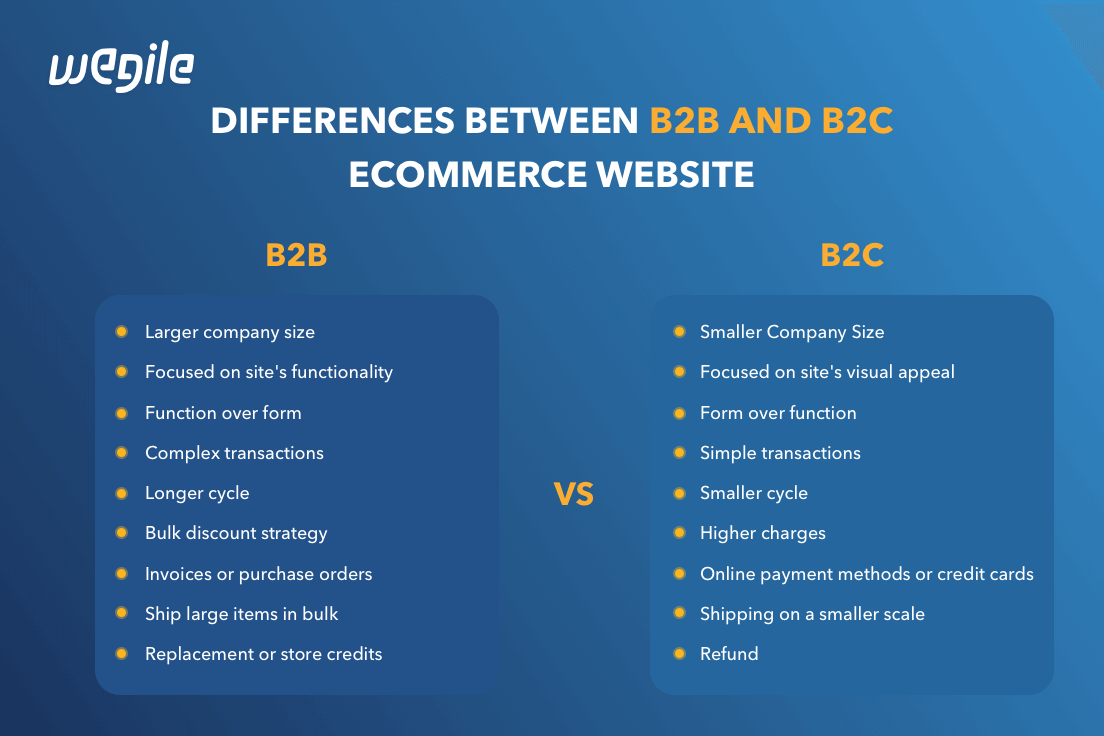
Here are the top 10 differences between B2B and B2C
eCommerce websites:
It’s no secret that app development is on the rise, and with good reason! Not only are app developers
in high demand, but they also have a lot of skills and experience that can be put to good use. So if
you’re looking to hire an app developer in the future, here are some tips that will help you get
started:
-
1. Company Size
There are two types of eCommerce companies- those that cater to businesses (B2B) and those
that cater to consumers (B2C). The primary difference between B2B and B2C business models is
the target customer. B2B eCommerce is focused on selling products and services to other
businesses, while B2C eCommerce is geared towards selling directly to consumers.Another significant difference between B2B and B2C eCommerce is company size. B2B eCommerce
companies are typically much larger than their B2C counterparts. This is because they must
have the infrastructure in place to support a large number of business customers. In
contrast, B2C eCommerce companies can be smaller since they only need to focus on selling to
individual consumers.A larger company is needed to support a B2B eCommerce website because there are usually more
transactions involved. Each transaction is generally for a higher value than those in a B2C
model, so the company needs to have more staff and resources to handle them. Additionally,
business relationships are often more complex than between businesses and consumers -
2. Customer Needs
Regarding website design, there are a few critical differences between b2b and b2c eCommerce
customer needs. For one, b2b customers are typically more concerned with a site’s
functionality than its aesthetic appeal. This is because they usually look for a site that
will be easy to use and navigate to find the information they need quickly and efficiently.In contrast, b2c customers are often more interested in a site that is visually appealing and
easy to use. This is because they typically look for a site they can use for leisurely
activities such as shopping or browsing.Another key difference between b2b and b2c eCommerce customer needs is that b2b customers
often have a higher level of understanding about the product or service being offered. -
3. Decision Makers
Regarding website design, there are distinct differences between b2b and b2c eCommerce
decision-makers. Understanding these differences is critical for businesses that rely on
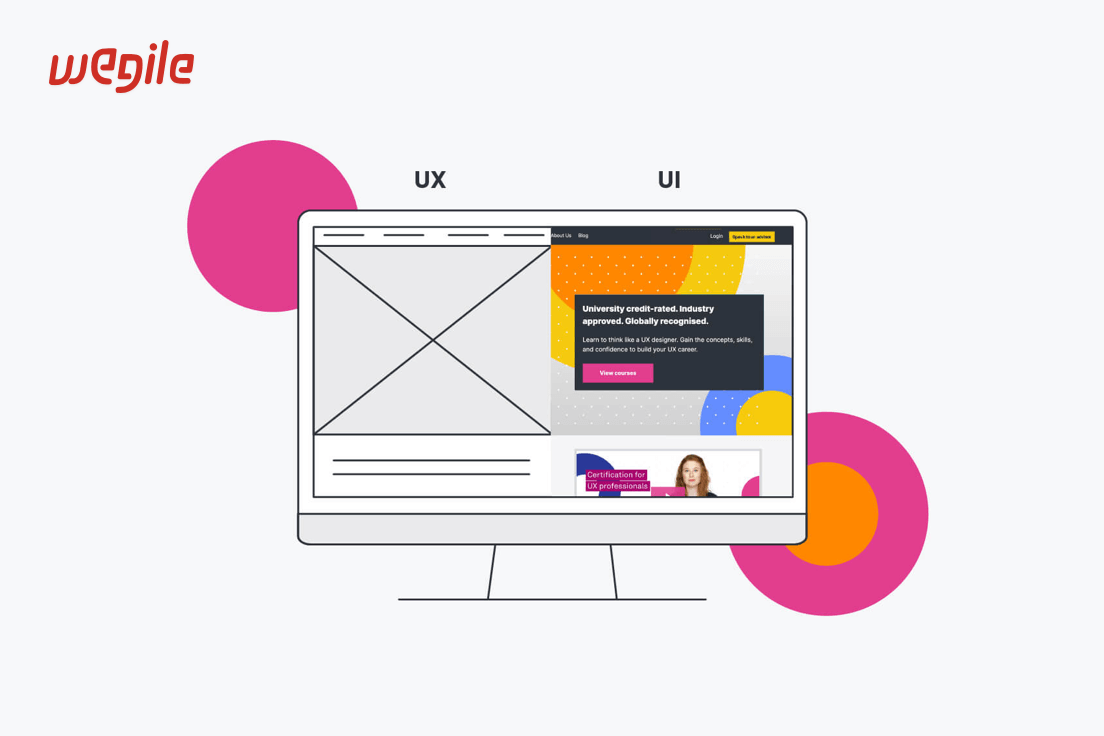
eCommerce to create an effective online presence.B2B decision-makers are typically focused on function over form. They want a website that is
easy to navigate and provides all the information they need to make a purchasing decision.
In contrast, B2C decision-makers are more likely to be influenced by aesthetics. Therefore,
a well-designed website can go a long way in converting B2C customers.Both b2b and b2c eCommerce customers place a high value on security and privacy. In order to
build trust with website visitors, companies must ensure that their site is secure and their
customer data is protected. -
4. The Buying Process
The difference between B2B and B2C eCommerce buying processes is that B2B transactions are
generally much more complex than B2C transactions. This is because businesses must consider
various factors when making purchasing decisions, such as the needs of their employees, the
availability of products, and the price. In contrast, consumers typically purchase items
based on their personal preferences.Another key difference between B2B and B2C eCommerce buying processes is that businesses
often have longer decision-making timelines than consumers. This is because businesses must
carefully consider all of the potential implications of a purchase before making a decision.
In contrast, consumers can usually make purchasing decisions relatively quickly.Finally, businesses typically have larger budgets than consumers when making purchases. This
is because businesses must often buy in bulk to get suppliers’ discounts. -
5. Sales Cycle
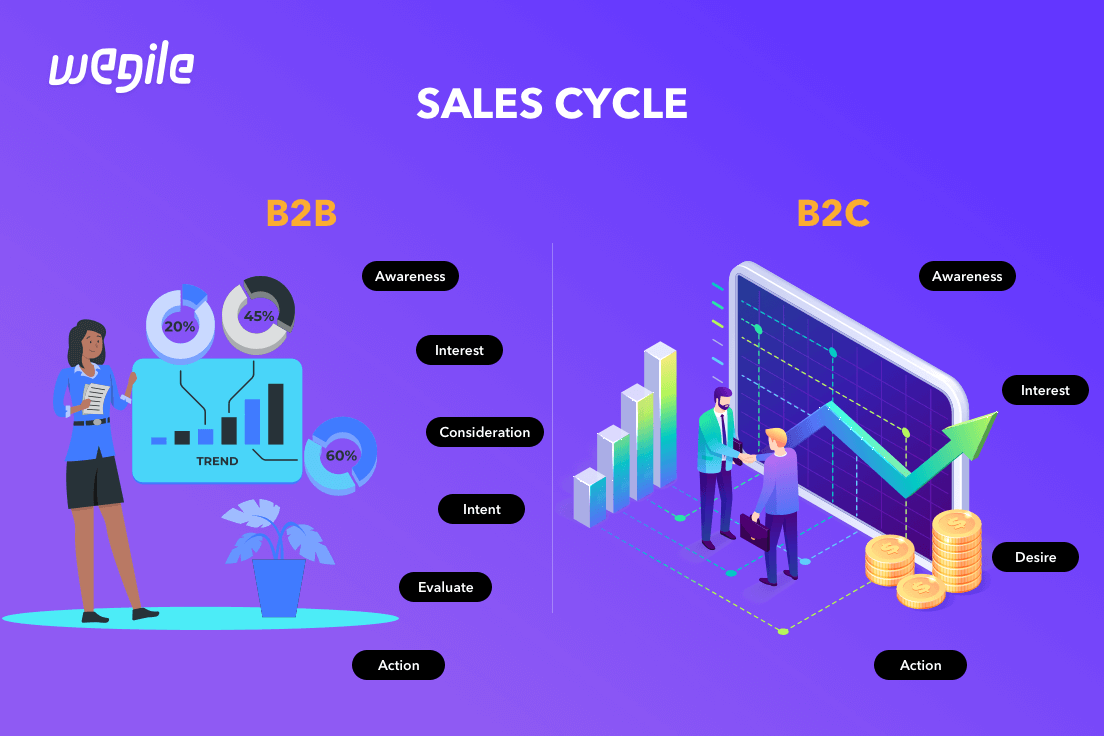
The sales cycle is the process that businesses use to identify and qualify potential
customers, build relationships, and close deals. B2B and B2C eCommerce sales cycles can be
differentiated by the length of time each type takes to complete.B2B sales cycles are normally longer than B2C sales cycles because businesses have a more
complex decision-making process than consumers. In addition, businesses have more
stakeholders involved in the decision-making process, which can lengthen the timeline.The average B2B sales cycle lasts anywhere from several weeks to several months, while the
average B2C sales cycle lasts days or weeks. However, there are exceptions to every
rule—some B2B sales cycles can be shorter or longer depending on the product or service
sold. -
6. Pricing Strategies
Pricing is one of the most significant aspects of any business, yet it is often the most
difficult to master. There are many different pricing strategies, and knowing which is right
for your business can take time and effort. There is a big difference in pricing strategies
in terms of B2B and B2C eCommerce businesses. Here are a few examples:B2B businesses typically charge more for their products or services than B2C businesses. This
is because B2B businesses have higher overhead costs and need to make a profit to survive.
Additionally, B2B businesses usually offer discounts for bulk purchases. For example, if a
company needs 500 widgets, it will get a lower price per widget than if it only needed ten
widgets. -
7. Payment Methods
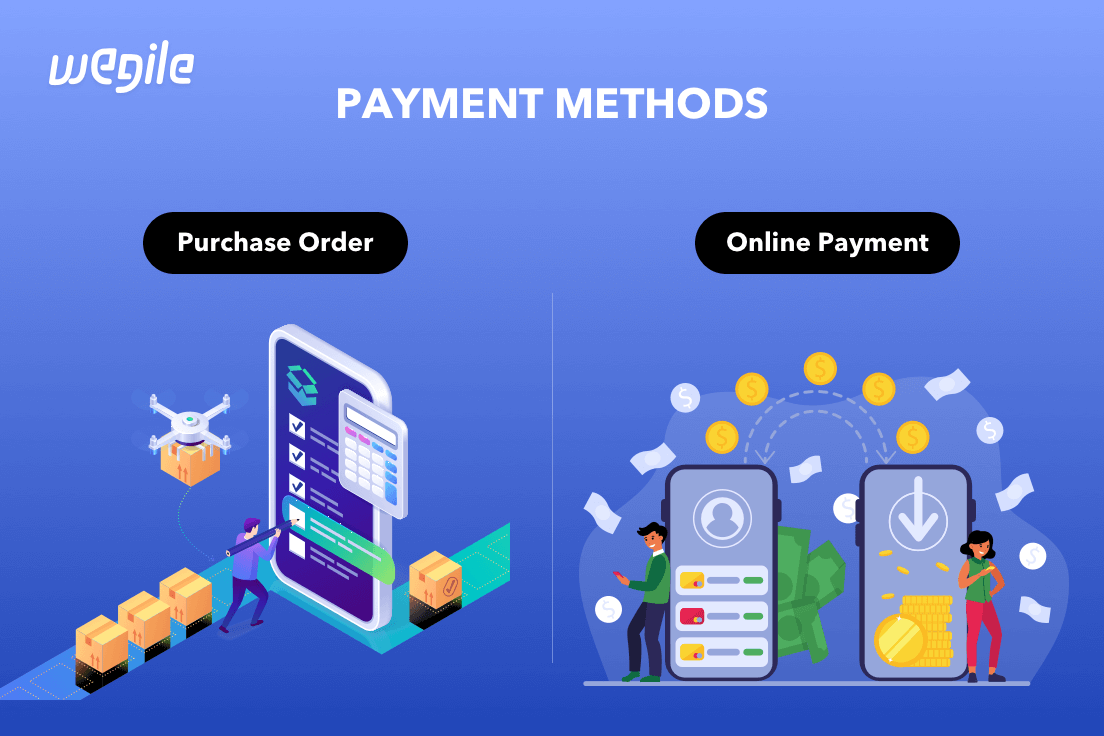
Businesses have two main options for processing payments: B2B and B2C eCommerce. Both have
advantages and disadvantages, so it’s essential to understand the difference between them
before choosing a payment method.B2B payments are typically made through invoices or purchase orders. This payment type is
often used for more significant transactions, allowing businesses to spread the cost over
time. The main disadvantage of B2B payments is that they can take longer to process, which
can delay shipments.B2C payments are usually made with credit cards or other forms of online payment. This type
of payment is generally faster and easier for customers, which makes it a popular choice for
small transactions. However, B2C payments can be more expensive for businesses due to
transaction fees. -
8. Shipping Options
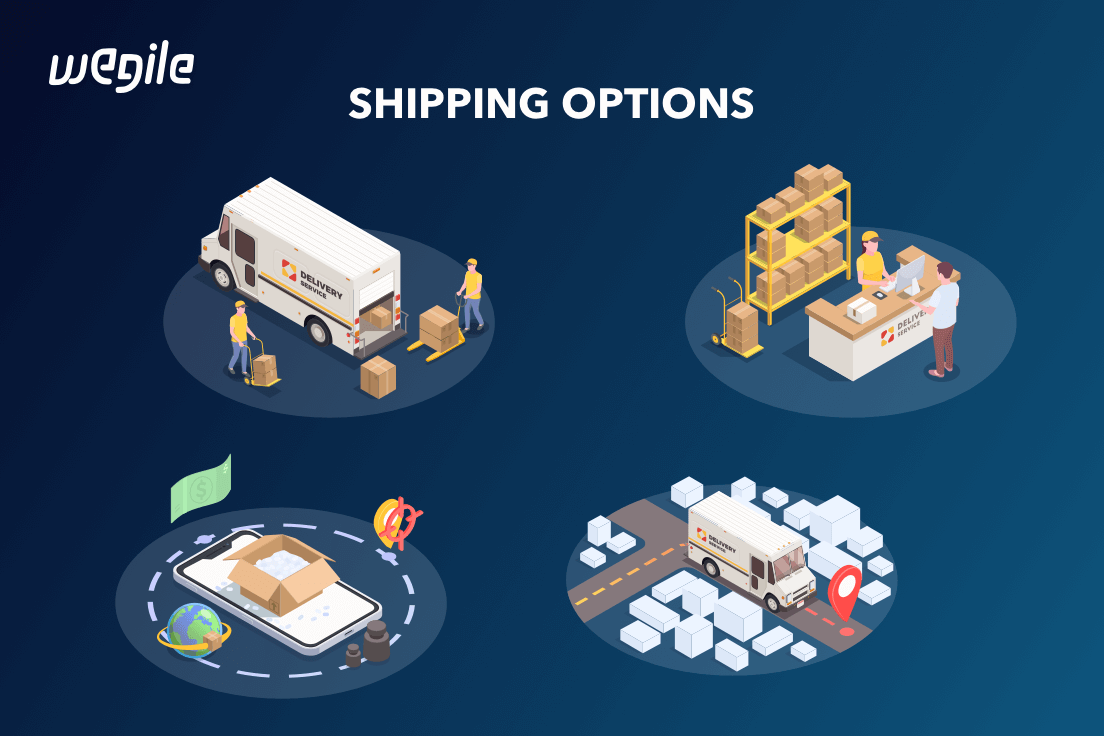
The shipping process is one of the most crucial aspects of any business model, yet there is a
major difference between B2B and B2C shipping options. Here we will take a closer look at
the differences between these two types of shipping.When it comes to B2B shipping, businesses typically have to ship larger items in bulk. This
means they need to find a shipping option to accommodate their larger packages. In contrast,
B2C shipping is often much smaller in scale. This means that businesses can often find
cheaper and more convenient shipping options for their products.Another difference between B2B and B2C shipping is the time frame involved. With B2B
shipping, businesses typically have to ship their products much sooner than B2C shipping.
This is because businesses need to get their products to customers as quickly as possible. -
9. Service Policy
There are a few key differences between B2B and B2C return policies. For starters, B2B
businesses generally have a longer return window than B2C businesses. This is because
businesses need time to inspect the products they receive and decide if they want to keep
them or not.Additionally, B2B businesses often have stricter return policies than B2C businesses. This is
because businesses must protect their bottom line and cannot afford to lose money on
returned products. Finally, B2B businesses typically offer replacement or store credit for
returns, while B2C businesses often offer refunds. Again, this is because businesses need to
ensure they are not selling defective products to their customers. -
10. After-Sales Service
There is a big difference between B2B and B2C after-sales service. B2B companies have to deal
with returns, replacements and refunds differently than B2C companies. Here are some of the
key differences:Returns: In B2B eCommerce, returns are typically not accepted unless the product is
defective. This is because businesses need to be able to rely on the products they receive
from suppliers. On the other hand, B2C companies often accept returns, even if the product
isn’t defective. Again, this is because customers expect top-notch customer service from
retailers.Replacements: Replacements are handled differently in B2B and B2C eCommerce. In B2B
eCommerce, replacements are typically only given for defective products. This is because
businesses need to be able to rely on the products they receive from suppliers.
Conclusion
In conclusion, the main difference between B2B and B2C eCommerce is the type of customers each
serves. While B2B eCommerce focuses on selling products and services to other businesses, B2C
eCommerce focuses on selling products and services to individual consumers. Both B2B and B2C
eCommerce have their own unique challenges and opportunities.
Leave a Reply