Introduction
Automated ordering systems have revolutionised how businesses manage their operations, streamline
processes and improve customer experiences. These systems use advanced technology such as artificial
intelligence and machine learning to automate various aspects of the ordering process, from
receiving customer orders to processing payments and fulfilling deliveries.
This article will delve into the benefits of an automated ordering system, how it works, and its
impact on the food and retail industries. We will also discuss the future of automated ordering
systems and their potential to transform the way businesses will operate in the years to come.
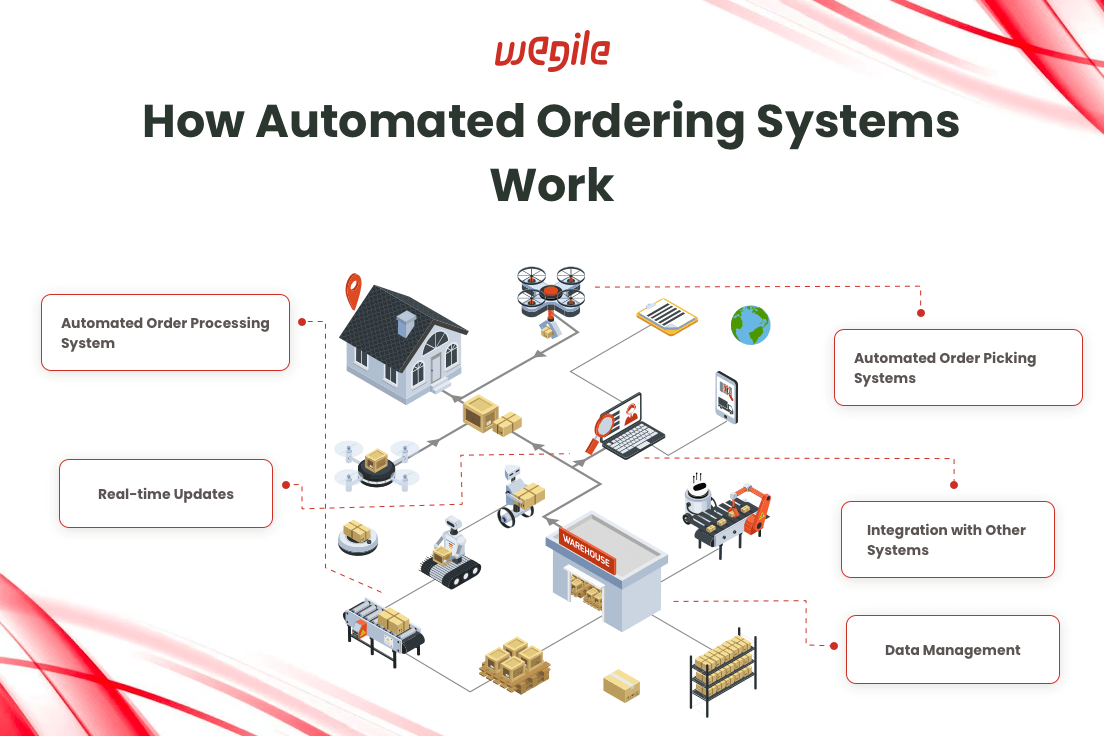
Automated Order Processing System
Automated order processing systems employ artificial intelligence and machine learning technologies
to automate many portions of the ordering process, such as accepting client orders, processing
payments, and completing deliveries. This results in enhanced efficiency and precision and a lower
danger of human mistakes.
-
1. Automated Order Picking Systems
Automated order-picking systems employ barcode scanning and real-time inventory tracking to
select and pack orders precisely. This decreases the possibility of inaccurate orders and
speeds up the order fulfilment process. -
2. Integration with Other Systems
Automated ordering systems may be integrated with other systems like inventory management,
customer relationship management, and e-commerce platforms. Customers and workers benefit
from a unified and integrated experience. -
3. Real-Time Updates
Automated ordering systems may offer real-time order progress, inventory levels, and shipment
information. This results in more openness and improved customer communication. -
4. Data Management
Data on consumer behaviour, sales patterns, and inventory levels may be collected and
analysed through automated ordering systems. This information may be utilised to make sound
company decisions and drive growth.
Benefits of Implementing an
Automated Ordering System
Automated Ordering Systems are
highly beneficial in the given terms:
-
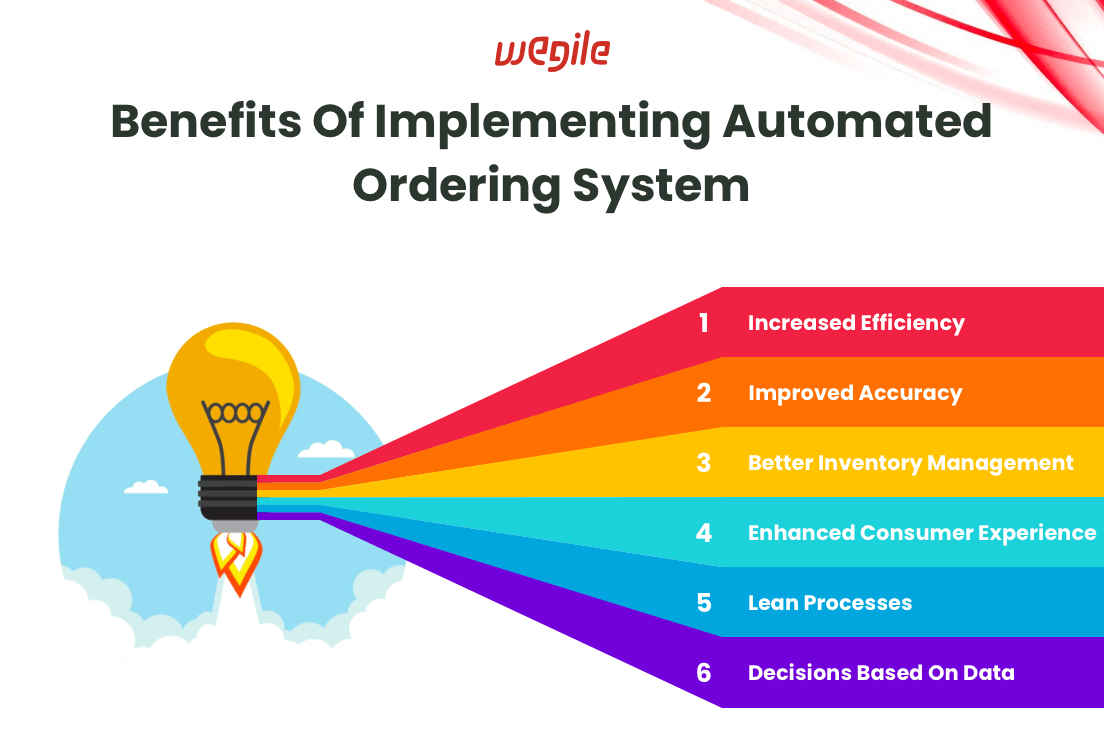
1. Increased Efficiency
Automated order processing systems may drastically reduce manual labour, eliminate human
error, and shorten order processing times. This leads to enhanced workplace efficiency and
productivity. -
2. Improved Accuracy
Automated order-picking systems employ barcode scanning and real-time inventory management to
assure accuracy and limit the risk of wrong orders. -
3. Better Inventory Management
Automated order management systems assist firms in keeping track of their inventory levels,
reordering items in a timely way, and reducing the danger of stockouts. -
4. Enhanced Consumer Experience
By enabling online ordering, real-time updates, and tailored recommendations, an automated
ordering system may improve the customer experience. -
5. Lean Processes
If you ask if an Automated ordering system is good for a lean process, then surely it is! It
may help lean processes by decreasing waste and simplifying operations. This can result in
lower costs, higher quality, and higher customer satisfaction. -
6. Decisions Based on Data
Automated ordering systems give useful data and insights that can be utilised to make
educated business decisions, optimise operations, and drive growth.
Impact of Automated Ordering
Systems on the Food and Retail Industries
Automated
Ordering Systems have a huge impact on the Food and Retail Industries. Some of the key
points are as follows:
Not only can ChatGPT
automate mundane tasks, but its sophisticated algorithms can also provide valuable insights in
real-time and support multiple languages. This opens up many potential opportunities for businesses
of all sizes, such as improved customer satisfaction, increased growth, and better overall
performance.
-
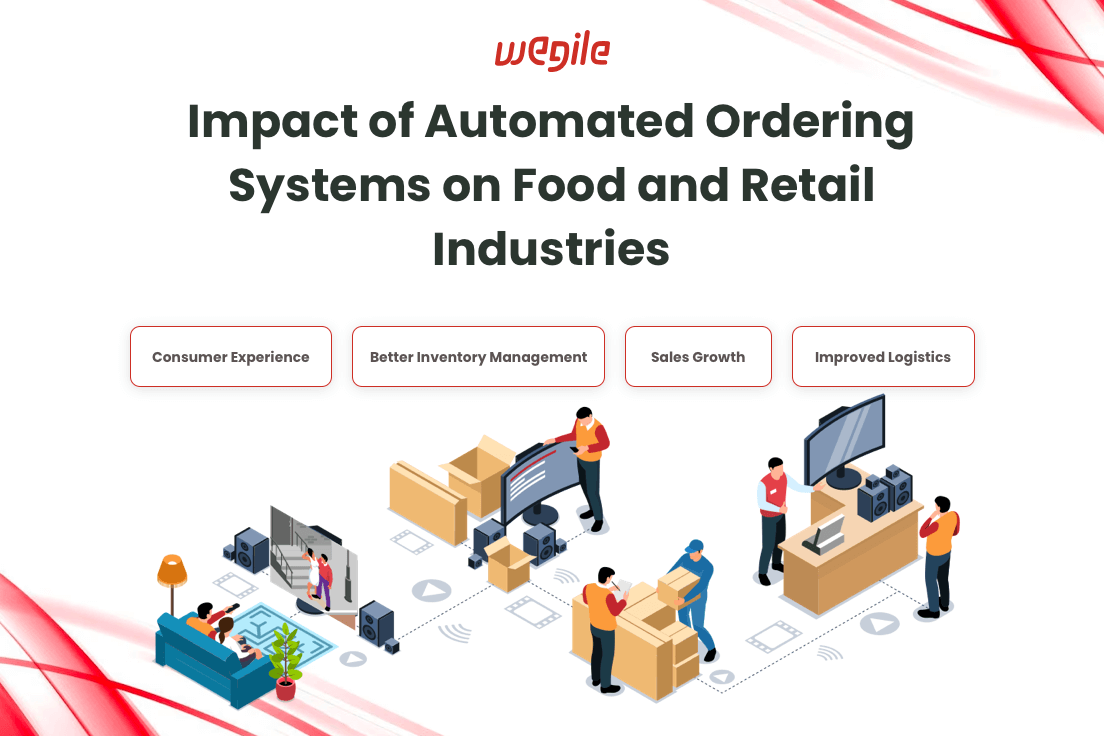
1. Consumer Experience
By enabling online ordering, real-time updates, and customised recommendations, automated
ordering systems have improved the customer experience. This has improved consumer loyalty
and has helped firms draw in and keep customers. -
2. Better Inventory Management
By monitoring inventory levels, lowering stockouts, and promptly placing product reorders,
automated order management systems have improved inventory management. -
3. Sales Growth
Automated ordering systems have boosted sales in the food and retail sectors by giving
customers a seamless and integrated ordering experience and by giving them real-time updates
on order status, inventory levels, and shipment details. -
4. Improved Logistics
Automated order picking systems have accelerated order fulfilment and decreased the
likelihood of erroneous orders, which has improved logistics. This has assisted companies in
cutting expenses.
The Future of Automated Ordering Systems
-
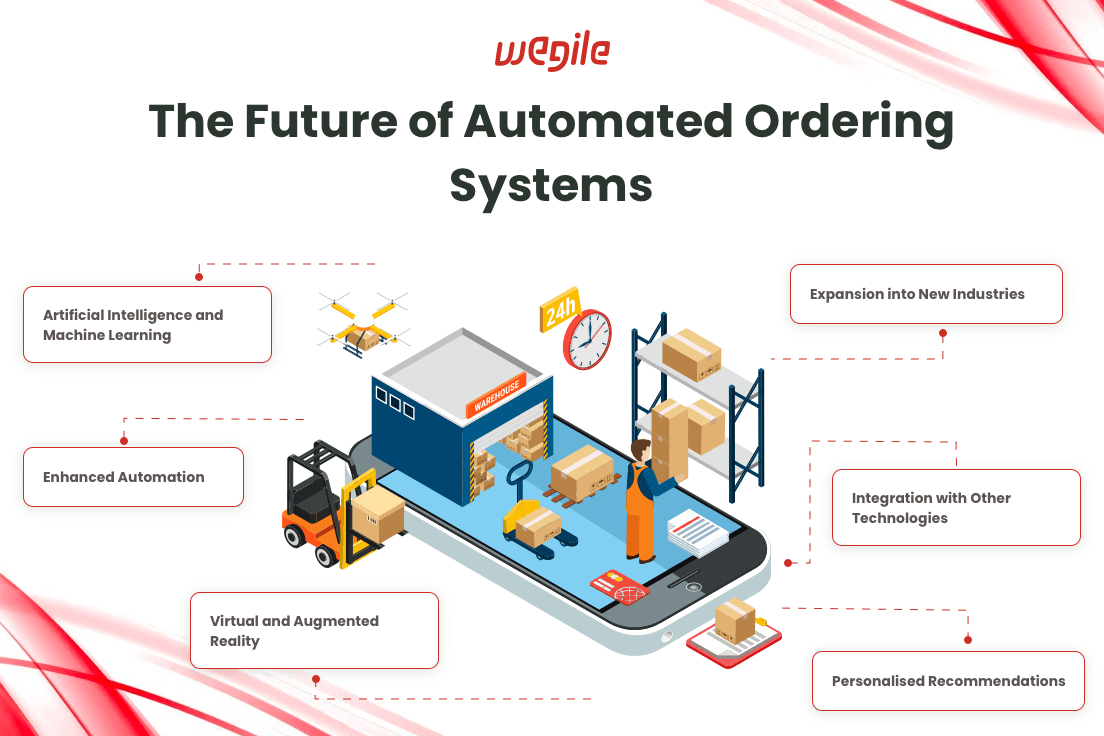
1. Artificial Intelligence and Machine Learning
As automated ordering systems include cutting-edge technology like artificial intelligence
and machine learning, they are likely to become increasingly sophisticated. As a result,
accuracy will increase, customer experiences will improve, and decision-making will become
even more data-driven. -
2. Virtual and Augmented Reality
Virtual and augmented reality technologies are anticipated to be included in automated
ordering systems in the future, allowing customers to experience products in a more
immersive and engaging way. -
3. Integration with Other Technologies
Automated ordering systems will interface more and more with different technologies, such as
blockchain and the Internet of Things (IoT). This
will result in better security, more openness, and even more effective operations. -
4. Personalised Recommendations
It is projected that automated ordering systems will deliver even more personalised
recommendations based on user behaviour, preferences, and previous purchases. -
5. Enhanced Automation
It is anticipated that automated ordering systems will become even more automated, with more
functions being automated and fewer manual processes needed. -
6. Expansion into New Industries
It is projected that automated ordering systems will spread into new industries, creating new
potential for organisations to streamline operations, improve consumer experiences, and
drive growth.
Challenges of Automated
Ordering Systems
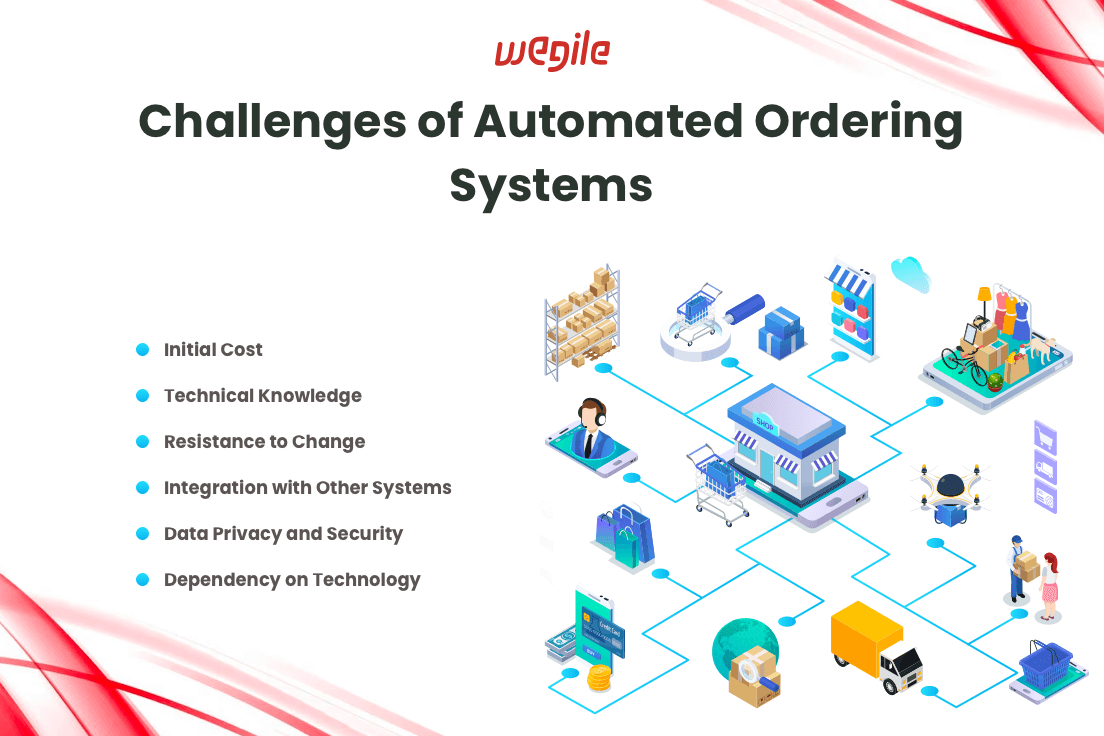
Apart from the benefits, there are certain challenges in using automated ordering systems.
-
1. Initial Cost
The hardware, software, and training costs might make implementing an automated ordering
system expensive. -
2. Technical Knowledge
Setting up and maintaining automated ordering systems requires technical knowledge, which can
be difficult for companies with minimal IT resources. -
3. Resistance to Change
Implementing an automated ordering system may be met with resistance from some staff and
consumers, necessitating change management strategies and training. -
4. Integration with Other Systems
Integrating an automated ordering system with different platforms for e-commerce, inventory
management, and customer relationship management can be complicated. -
5. Data Privacy and Security
To prevent data breaches and cyberattacks, automated ordering systems must be equipped with
robust security mechanisms that collect and retain sensitive consumer and corporate data. -
6. Dependency on Technology
Automated ordering systems depend on technology, which is prone to failures, glitches, and
cyberattacks. To lessen the effects of technological disruptions, businesses must have
backup plans in place.
Conclusion
Finally, automated ordering systems have several advantages for firms, such as enhanced productivity,
better customer satisfaction, and better inventory control. However, these systems also have
drawbacks, such as high upfront costs, resistance to change, a requirement for technical expertise,
and strict security measures. Despite these difficulties, automated ordering systems have a
promising future ahead of them, thanks to emerging technologies and expansion possibilities.
Leave a Reply