Understanding AI terminologies like “Generative AI” and “Large Language Models” can seem like solving a complex code. However, knowing these two terms is crucial to fully adopting the capabilities of AI. So, what do they really mean? Are they any different? Many wonder if these notions are just different names for the same tech or if they possess any unique benefits. This confusion can make it hard to decide which is the strongest contender in the “Generative AI vs. Large Language Models” debate or the best approach for specific applications. Not knowing the difference can often lead to missed opportunities in understanding AI’s potential. Let’s break it down simply! In this blog, we’ll compare Generative AI with Large Language Models, outlining their functions, uses, and differences in a style that’s easy to understand. Let’s address the confusion!
Understanding Generative AI vs. Large Language Models
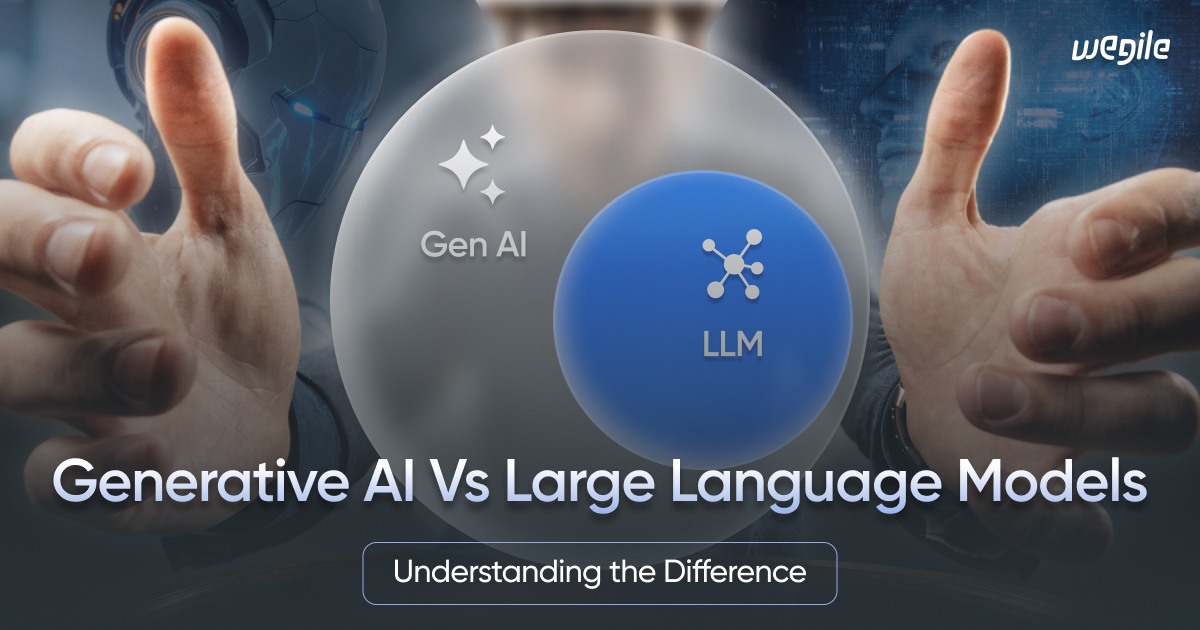
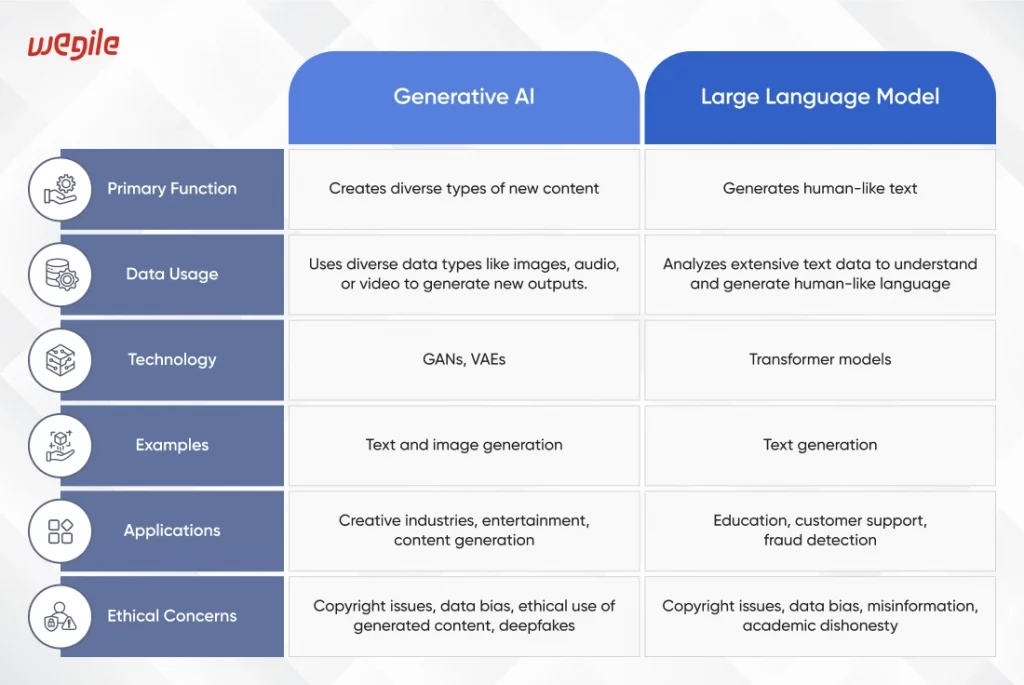
People often ask, “What is the difference between Generative AI vs Large Language Models?” Though similar, these technologies serve different purposes. Generative AI includes algorithms that discover patterns from datasets to create new data in the form of text, graphics, video, and music. LLMs, on the other hand, use vast language data to interpret and generate human-like content. While Generative AI strives for broad creativity across various mediums, LLMs emphasize mastering language and providing accurate responses and information. Their differences are why each of them is best for specific tasks: Generative AI excels in design and simulation, while LLMs excel at conversational interfaces and text-based analysis. Recognizing these differences helps startups, investors, and enthusiasts understand how to leverage these technologies. Let’s understand each one in detail.
What is Generative AI?
Generative AI is a subset of Artificial Intelligence. It creates fresh content based on existing data patterns. Similar to a digital artist or writer, it pulls inspiration from a massive library of knowledge to create realistic visuals, music, and text. From design automation to developing marketing copy, this helps entrepreneurs resolve real-world challenges. Generative AI has plenty of benefits, such as cutting down expenses, speeding up content development, and modernizing outdated businesses. For instance, it can help healthcare businesses develop synthetic medical data or support e-commerce companies in developing customized products. It also helps businesses to come up with creative solutions by learning from existing data, making it easier to tackle tasks that would usually take a lot of human effort.
Applications in Various Fields
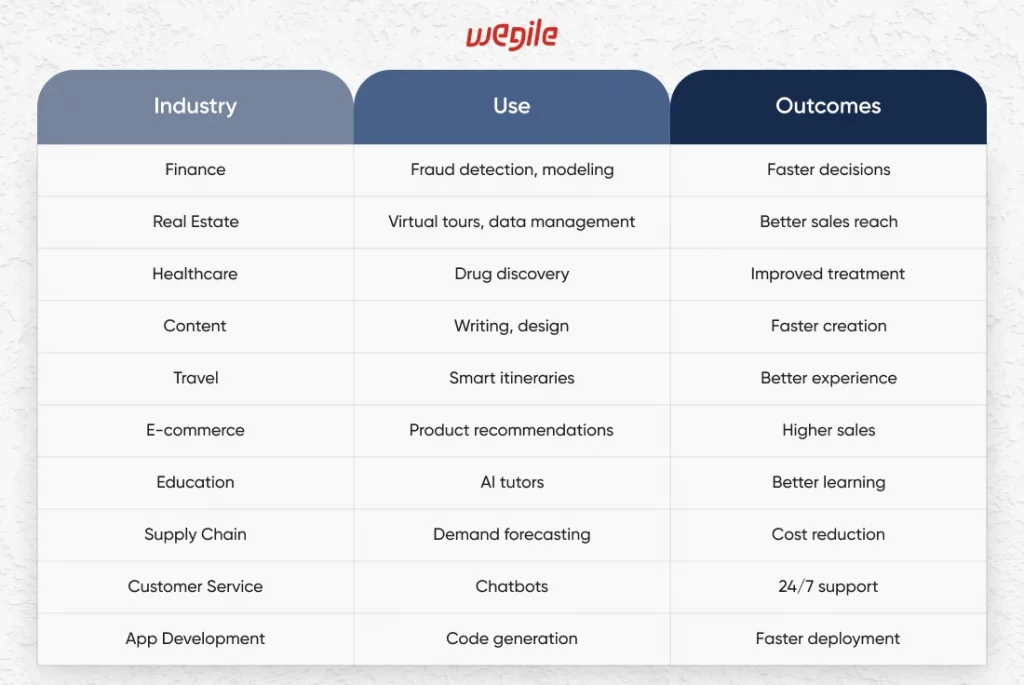
Generative AI’s versatility makes it useful in many areas. It opens up various possibilities, from tasks such as process optimization to creating new user experiences. Let’s understand how different sectors are using Generative AI to innovate and improve efficiency.
1. Finance
The use of generative AI has revolutionized the accuracy of financial services. It automates complicated financial modeling, assists analysts in spotting trends, and makes data-driven choices faster. AI detects anomalous transaction patterns in real-time, improving fraud detection. It also provides customized investing advice based on client preferences and market situations, which boosts trust and engagement.
2. Real Estate
Generative AI simplifies real estate database management by streamlining tasks such as organizing and retrieving property, market, and client data. It also improves the buying process by allowing virtual property tours from anywhere. This saves real estate brokers time and makes it easier to showcase listings, letting them reach the right clients faster.
3. Healthcare
Generative AI is totally changing how things work in drug discovery, making it easier and less expensive to come up with new treatments. AI analyzes vast datasets to detect potential medicinal compounds and predict how they interact with biological targets. In addition, it helps doctors forecast patient outcomes and customize treatment approaches. This personalized approach improves patient care by identifying health concerns and effective treatments.
4. Content Creation
Generative AI enriches human creativity by offering new perspectives and unlimited possibilities. It provides a required creative boost while writing articles, sketching, and producing music, especially when you run out of ideas. Also, AI tools allow writers, designers, and musicians to experiment with new styles, concepts, and high-quality material that resonates with their audience.
5. Travel
Generative AI simplifies travel planning by providing user-specific recommendations. AI offers tailored vacation suggestions to travelers considering their needs. It proposes hidden gems, customizing itineraries, and much more. AI chatbots are great for answering questions and providing quick help with booking changes or travel tips. This simplifies travel and allows explorers to enjoy the adventure rather than the logistics.
6. E-commerce
Generative AI improves e-commerce by recommending products based on client preferences. It uses user behavior, purchase history, and browsing habits to recommend things that match customers’ preferences, making shopping more engaging. Plus, it supports dynamic pricing models that adjust prices based on demand, competition, and customer behavior, allowing firms to have a competitive edge and maximize income. This personalized approach helps customers get what they’re looking for in no time.
7. Education
Generative AI is powerful and effective for education, creating personalized learning materials for students. It creates bespoke quizzes, interactive simulations, and study guides to simplify hard concepts. Further, AI-powered virtual tutors give instant feedback and support, keeping students on track. This tailored method improves learning and engages students, deepening their understanding.
8. Supply Chain
Generative AI optimizes logistics and demand forecasts to improve supply chain efficiency. It improves inventory management by predicting demand spikes and supply shortages. AI analyzes real-time shipping routes, weather, and market movements to guarantee items move smoothly from point A to B. This foresight lowers delays, costs, and helps organizations meet consumer requests quickly, making the supply chain smoother and more resilient.
9. Customer Service
Generative AI chatbots and virtual assistants have revolutionized customer service. These tools can respond to questions, fix common problems, and offer 24/7 support. Chatbots make customers feel heard and valued with natural language understanding. When needed, they can escalate difficult issues to human agents to ensure every customer gets the right support. This way, problems can be resolved faster, and customer satisfaction increases.
10. App Development Process
Generative AI streamlines UI/UX design, planning, and strategic launch preparation for app development. It can recommend user-friendly layouts and design components to increase app usability. AI analyzes market data to determine consumer wants and refine features during the planning stage. By studying market trends and user input, AI can optimize strategies before launch, ensuring a successful rollout.
What is a Large Language Model (LLM)?
LLMs are powerful AI models that understand and generate text inputs that resemble humans. They understand context, nuances, and even the intricate details of human speech by analyzing vast amounts of written language. This makes LLMs effective at tasks such as composing emails, translating languages, and answering complex inquiries. They can respond coherently and have real conversations by identifying data patterns. They also offer human-like engagement at scale in fields such as customer service, content development, and research, adjusting to varied themes and circumstances.
Generative AI vs. Large Language Models: Examples
Here’s a look at how Generative AI and LLMs are applied in different real-world scenarios, highlighting where each excels:
1. Generative AI Examples:
- Creating Art: AI tools can generate digital art based on input prompts, offering new designs for creative industries.
- Music Composition: Musicians use AI to compose background tracks or create unique soundscapes.
- Synthetic Data Generation: Companies generate realistic synthetic data for testing software models without compromising privacy.
- Virtual Worlds: Video game developers use Generative AI to build expansive, unique game environments automatically.
- Product Design: AI helps in generating new prototypes for products by analyzing existing design patterns.
2. LLM Examples:
- Customer Support: Chatbots powered by LLMs provide real-time responses to customer inquiries, offering seamless assistance.
- Content Summarization: LLMs can read long documents or articles and summarize key points, saving time for users.
- Language Translation: These models translate text between multiple languages, making global communication easier.
- Code Generation: Developers use LLMs to generate snippets of code based on described functionality, boosting productivity.
- Sentiment Analysis: LLMs analyze social media posts or customer reviews to gauge public opinion and market trends.
3. Comparing Generative AI with Large Language Models
Here’s a side-by-side look at how Generative AI vs Large Language Models (LLMs) differ, making it easier to understand where each shines:
| Feature | Generative AI | Large Language Models (LLMs) |
| Purpose | Creates new content, such as images, music, or synthetic data | Understands and generates human-like text |
| Core Capability | Learning patterns from diverse datasets to produce new outputs | Analyzing language data to understand context and generate text |
| Input | Can work with various media (text, images, sound) | Primarily trained on large sets of text |
| Output | Produces creative outputs like art, simulations, and designs | Generates responses, summaries, translations, and more |
| Optimal Use Cases | Product design, creative industries, data simulation | Customer support, content creation, and language translation |
| Customization | Can adapt to specific artistic styles or creative needs | Fine-tuned for domain-specific conversations and analysis |
Generative AI vs. Large Language Models: Which One is Right for You?
Choosing between Generative AI and LLMs relies on your objectives and challenges. Generative AI can help businesses create innovative designs or simulate challenging scenarios. It’s ideal for uses like making digital art, making synthetic data for testing, or developing compelling virtual worlds.
Alternatively, LLMs are quite good at reading and responding to human spoken language. LLMs have linguistic abilities to automate customer service, create intelligent chatbots, and translate content effortlessly. They’re ideal for businesses that need to quickly process large amounts of text or communicate clearly with their consumers.
For investors, consider the industry focus: Generative AI is better for creative industries like media, design, and simulation, whereas LLMs are good for text-heavy ones like content marketing, education, and legal tech. Make a well-informed decision by discovering more about your unique requirements and how different types of AI fit into your overall plan.
Wrapping Up
To sum it up, Generative AI vs Large Language Models bring several exciting perks that can really change how businesses function. While generative AI innovates, LLMs understand and analyze massive amounts of text. Getting the right mix of these technologies can really make a difference for your business needs.
If you want to create custom generative AI solutions to improve your business efficiency and stay ahead, contact Wegile. Our generative AI development company is here to assist you in leveraging the power of AI to streamline your operations and achieve your goals. Let’s create something amazing together!
Leave a Reply