What Is Cloud Transformation
The adoption of a cloud transformation strategy is a contemporary approach to managing IT
infrastructure, which is changing the way organizations manage their technology. It’s no longer
limited to traditional methods like server-based architecture or client-server models, as cloud
technology breaks away from these constraints and offers more flexibility and scalability for
businesses across industries. With a comprehensive cloud transformation strategy, organizations can
shape their own future by taking advantage of improved agility, cost savings, and efficiency gains
that come with moving to the cloud. But what is “cloud transformation?” In its simplest form, it
means transitioning existing mission-critical applications into an environment where they are hosted
in the public cloud instead of on-premise hardware or private clouds.
This requires a well-thought-out plan which takes into account all data center dynamics, such as
total cost considerations (TCO), workload profiles analyzed business requirements due diligence
initiatives before committing any resources – human capital costs being one less visible element in
this process; starting off right is key! From there, gradually implementing processes designed
around desired outcomes & influence long-term competitive advantages must also be taken into
consideration!
To understand the future of Cloud Computing, take a look at our blog: The Future Of Cloud Computing:
What’s Next?
Benefits of Cloud Transformation
At Wegile, our priority is to equip you with top-quality insights on cloud transformation. It’s
important for you to understand the benefits of cloud transformation strategies. Here are some
advantages you can expect
-
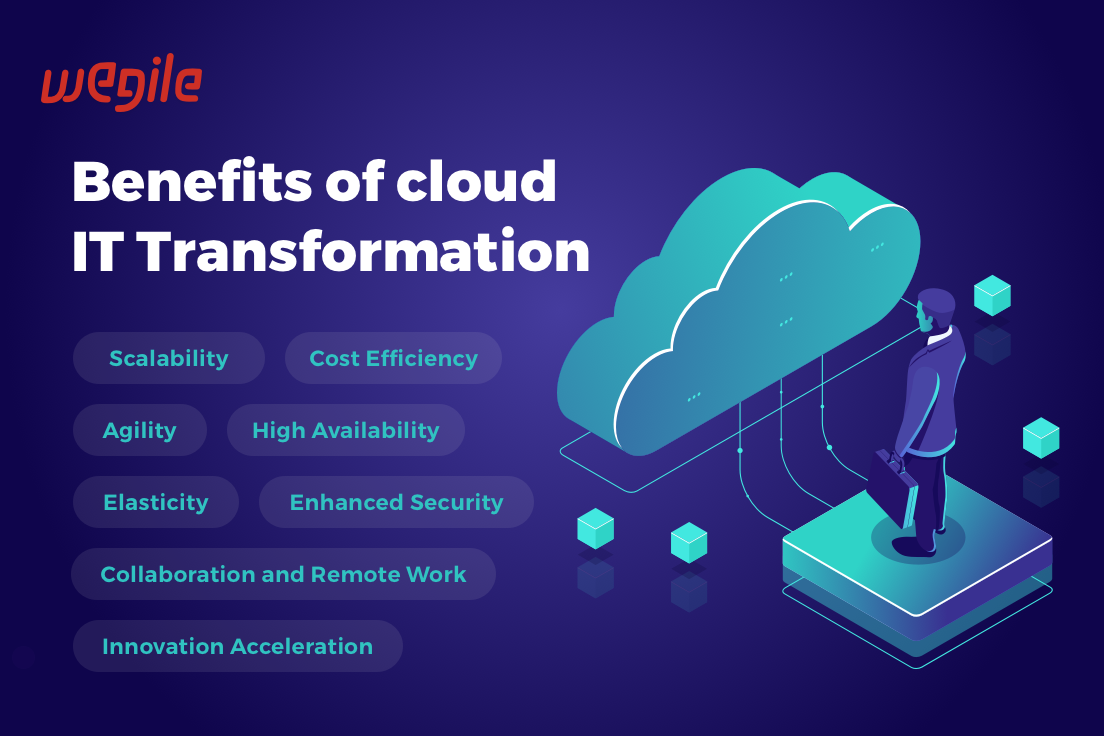
1. Scalability
Cloud transformation enables organizations to effortlessly scale their resources up or down,
allowing them to meet varying demands and optimize resource allocation. -
2. Cost Efficiency
With the cloud, organizations can reduce capital expenditure on hardware and infrastructure,
as they only pay for the resources they use. This eliminates the need for costly upfront
investments and enables cost optimization through flexible pricing models. -
3. Agility
Cloud transformation empowers businesses to rapidly deploy new applications, services, and
updates across their entire infrastructure, enabling faster time-to-market and improved
responsiveness to changing market conditions. -
4. High Availability
Through redundant infrastructure and automatic failover mechanisms provided by cloud service
providers, organizations can achieve enhanced system availability, minimizing downtime and
ensuring continuous operations even in the face of hardware failures or disasters. -
5. Elasticity
The ability to dynamically adjust resource allocation based on demand is a major benefit of
cloud transformation. Organizations can seamlessly scale their computing power, storage
capacity, and network bandwidth to handle peak workloads efficiently while avoiding
over-provisioning during periods of low activity. -
6. Enhanced Security
Properly designed cloud environments offer advanced security measures such as encryption at
rest and in transit, identity management systems, access controls, regular security updates,
and compliance certifications. This helps organizations improve their overall security
posture compared to traditional on-premises solutions. -
7. Collaboration and Remote Work
Cloud technologies facilitate seamless collaboration among geographically dispersed teams by
providing centralized access to shared files, real-time co-authoring capabilities, video
conferencing tools, and remote desktops that allow employees to work from anywhere with
internet connectivity. -
8. Innovation Acceleration
By leveraging cloud-native technologies such as containers and serverless computing
platforms, organizations can iterate quickly on ideas without worrying about underlying
infrastructure complexities. This fosters a culture of innovation by enabling
experimentation, rapid prototyping, and faster time-to-value for new services and
applications.
Best Practices for Cloud
Transformation
Struggling to figure out the best way to approach cloud transformation? Well, look no further than
our blog section: Cloud transformation best practices. Being the top industry expert and thought
leader; Wegile is committed to providing thoughtful insights into best practices for cloud
transformation for successful implementations of cloud technology.
-
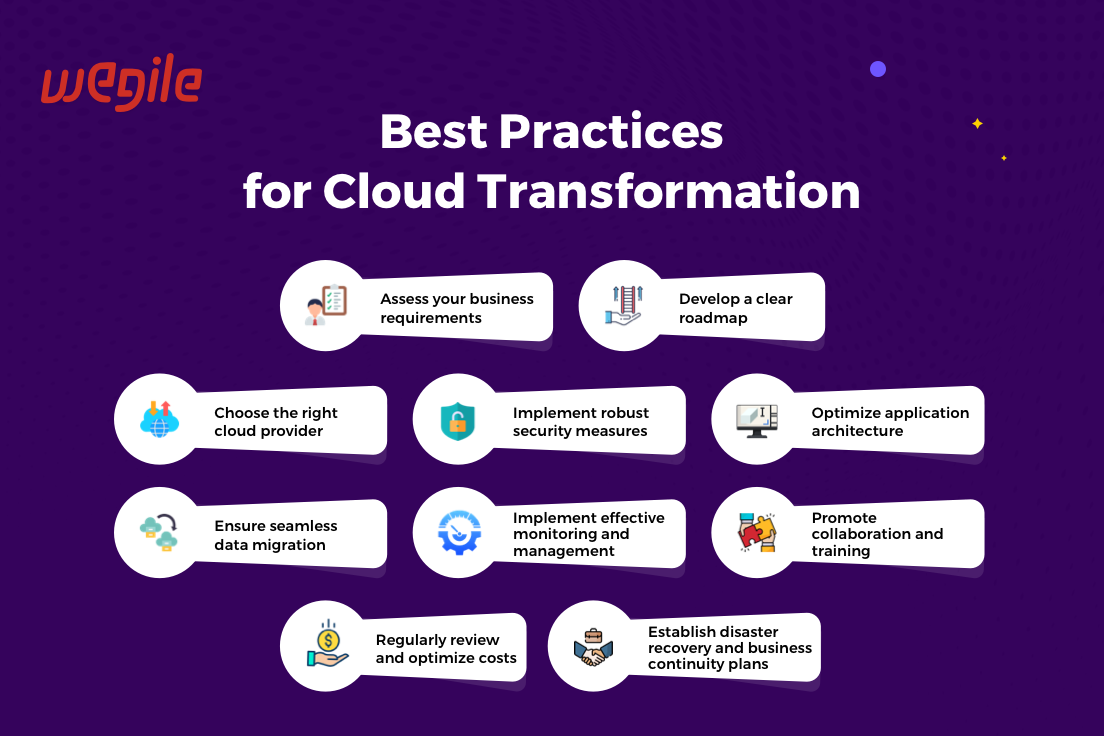
1. Assess your business requirements
Cloud transformation best practices begin with assessing your business requirements; conduct
a comprehensive analysis of your organization’s current infrastructure, applications, and
data to determine your cloud transformation strategy’s specific goals and needs. -
2. Develop a clear roadmap
Define a well-defined plan that outlines the steps needed to migrate to the cloud. This
should include timelines, objectives, resource allocation, and potential risks. -
3. Choose the right cloud provider
Assess various cloud providers according to their product offerings, pricing plans, security
protocols, performance metrics, and dependability. Opt for the provider that is most aligned
with your needs making it one of the cloud transformations’ best practices. -
4. Implement robust security measures
Prioritize security throughout the entire cloud transformation process. Implement robust
access controls, encryption mechanisms, and regular vulnerability assessments to safeguard
sensitive data. -
5. Optimize application architecture
Redesign or refactor applications to take full advantage of cloud-native features and
capabilities. Leverage microservices architecture, containerization technologies like
Docker or
Kubernetes and
serverless computing models for
improved scalability and flexibility. -
6. Ensure seamless data migration
Develop a data migration plan that minimizes downtime and ensures data integrity during the
transition process. Consider using tools and techniques like database replication or
ETL (Extract Transform Load) processes to
facilitate smooth migration. -
7. Implement effective monitoring and management
Deploy robust monitoring tools to track performance metrics, resource utilization, and user
experience within the cloud environment. Set up automated alerts for proactive issue
identification and resolution. -
8. Promote collaboration and training
Encourage collaboration between IT teams and other stakeholders involved in the cloud
transformation process. Provide comprehensive training programs to equip employees with the
necessary skills required to operate effectively in the new cloud environment. -
9. Regularly review and optimize costs
Continuously monitor resource usage patterns to identify areas of optimization within your
cloud infrastructure. Utilize cost management tools provided by your chosen provider to
optimize spending without sacrificing performance. -
10. Establish disaster recovery and business
continuity plansDevelop robust disaster recovery and business continuity strategies to minimize the impact of
unforeseen events. Regularly test these plans to ensure they are effective and updated.
Remember, each organization’s cloud transformation strategy may differ based on unique requirements.
It is crucial to regularly evaluate and adapt your approach to leverage new technologies and follow
the cloud transformation best practices that suits you well.
Conclusion for Cloud
Transformation Strategy
Organizations today understand the significance of cloud transformation strategy in achieving their
goals and staying competitive. It is crucial to acknowledge that each organization’s journey is
unique, and its cloud transformation strategy should align with its specific requirements. Regular
evaluation and adaptation are key to leveraging new technologies and following the best practices
that suit them best.
By embracing cloud transformation, businesses can unlock a multitude of benefits such as increased
scalability, improved agility, enhanced security, and cost optimization. With careful planning and
implementation of cloud transformation best practices and the help of Wegile, organizations can pave
the way for long-term success in the ever-evolving digital landscape. Contact us today!
Leave a Reply