The fitness and health app industry is experiencing fierce growth as more people seek accessible ways to stay active and prioritize wellness. Right from those interesting and personalized workouts to diet tracking and mental wellness tools, fitness apps are literally changing how people engage with their health.
In the report by Grand View Research, the fitness app market size was USD 9.25 billion in 2023 and is estimated to reach USD 23.35 billion at a CAGR of 14.08% during the period 2024-2030. This is due to the ever-growing need for Digital Health Solutions with a potential market of over two billion. So, where there is stiff competition, just how profitable can a simple fitness app be? Specifically, this article will illustrate key profitability factors and revenue generation models, as well as growth trends in this industry, and how developers can benefit from the emerging market.
Why are Fitness and Health Apps Profitable?
Let us now break down a few reasons behind the impressive profitability of fitness and health apps:
- High User Engagement: Users check fitness apps daily, creating opportunities for monetization through various features like tracking and social sharing.
- Global Reach: Health and fitness concerns are universal, making these apps appealing to a diverse and international audience.
- Subscription-Based Models: Most apps offer tiered subscription models that generate recurring revenue.
Key Revenue Models in Fitness and Health Apps
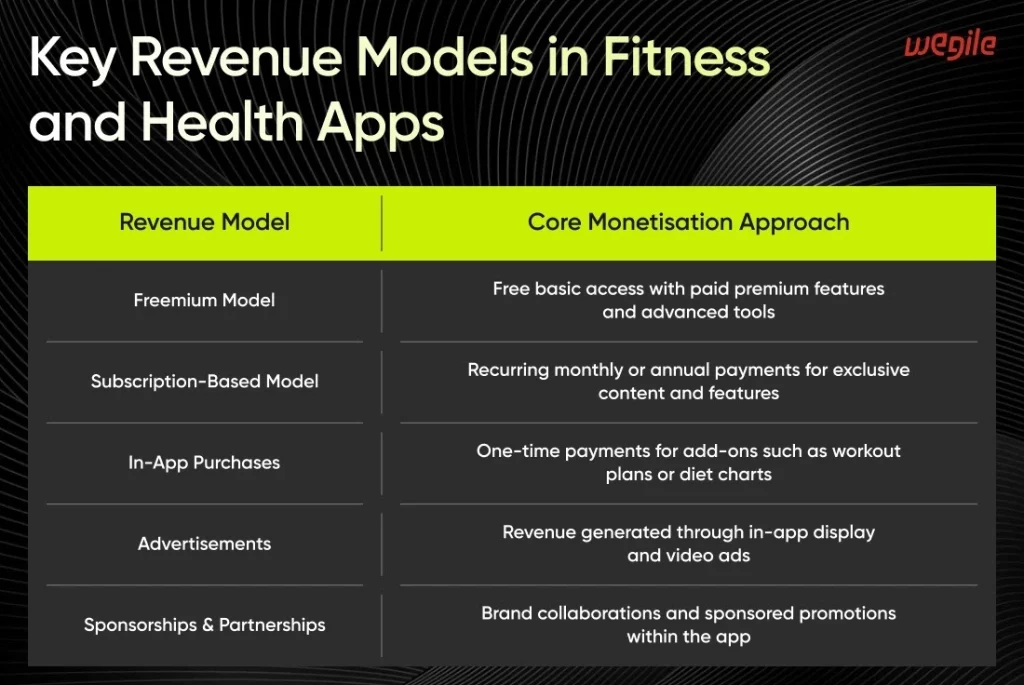
Here are the most popular revenue models in fitness and health applications:
- Freemium Model: The freemium model offers users basic app features for free, creating a gateway to attract a large user base. Premium features, such as personalized coaching and detailed progress tracking, are available behind a paywall. Advanced analytics are also a key part of premium features that come with freemium models. This model engages users with essential functionalities and provides a revenue stream by encouraging upgrades for enhanced features.
- Subscription-Based Model: Monthly or annual subscription plans are highly effective for generating steady revenue. Apps like Calm exemplify this model by providing users access to premium content, such as guided meditations and sleep stories. Subscription models foster a recurring income stream and give users access to continuous and evolving content.
- In-App Purchases: In-app purchases are ideal for specific, one-time enhancements. Users can pay for exclusive workout plans, personalized diet charts, or features like special fitness challenges. This model allows users to customize their experience based on their needs and creates an additional revenue channel beyond subscriptions.
- Advertisements: Free versions of fitness apps can generate significant revenue through ads, targeting users with relevant products and services. However, it is essential to balance ad frequency, as too many ads can negatively impact the user experience, prompting users to abandon the app or seek ad-free alternatives.
- Sponsorships and Partnerships: Fitness apps can collaborate with brands to promote relevant products or services within the app, adding value to users and generating sponsorship revenue. Partnerships with wellness brands or fitness gear companies, for example, can multiply both brand visibility and app profitability.
Cost Considerations for Developing a Fitness App
Initial Investment:
The basic cost of developing a fitness app can range from $20,000 to $150,000. These costs largely depend on app complexity and features. Basic apps with simple functionalities, such as step tracking or workout logging, cost significantly less. On the flip side, advanced apps with AI-driven features, like personalized workout suggestions or real-time performance tracking, require a higher investment.
Maintenance and Updates:
Regular updates are essential to keep the app functional and secure. This mainly includes bug fixes, security patches, and feature enhancements. Ongoing maintenance helps retain users and satisfies changing user demands, adding to the cost of app ownership over time.
Marketing Costs:
Marketing is critical for gaining visibility and acquiring users. Marketing and user acquisition costs can be substantial, including social media advertising, influencer partnerships, and large-scale content marketing. A well-planned marketing strategy can improve user retention and enhance profitability by building a strong and engaged user base.
Essential Features of a Profitable Fitness App
User Profile Customization:
One of the most important features of a successful fitness app is the ability to tailor experiences to individual users. The app can deliver a highly personalized experience by allowing users to set up detailed profiles that track personal health data. These profiles are curated by combining factors such as age, weight, fitness goals, and activity level. This customization not only enhances user satisfaction but also increases engagement, as users receive recommendations and insights that are well-connected to their unique fitness journey. Also, AI integrations are the most recommended choice for building successful Fitness apps.
Progress Tracking and Analytics:
Any profitable fitness app must include tracking and analysis features, such as charts, graphs, or badges that denote progress toward fitness goals. Providing information about calories burned, distance traveled, or muscle groups worked motivates users to stay committed. Without this feature, users are likely to leave after reaching their goals, making it crucial for long-term engagement.
Push Notifications:
Notifications serve as constant reminders that encourage users to stay on track. Informative notifications remind users to complete daily goals, log meals, or start workouts. However, it’s essential to use notifications judiciously to avoid overwhelming users. Understanding user preferences or app usage frequency helps retain users and boosts app usage.
Social Sharing and Community:
Social features help maintain and expand the app’s audience. The ability to share progress, achievements, or challenges with friends or within the app creates a sense of community involvement. Group challenges and leaderboards enhance engagement, making the app more enjoyable and likely to attract new users through recommendations.
Integration with Wearables:
Integration with popular wearables, such as Apple Watch, Fitbit, or Garmin, allows users to sync workout, sleep, and heart rate data with the app. This feature adds value for users with wearable devices and offers a continuous stream of data, enhancing the app’s analytics and recommendations.
Challenges in Fitness and Health App Development
High Competition:
The fitness app market is crowded, with numerous apps covering various health and fitness functions. To succeed, new apps need innovation, a unique user experience, and a focus on niche segments ignored by competitors. Differentiation is critical for carving out a proprietary niche in fierce competition. Apps that provide specialized or personalized options are more likely to engage users.
Data Privacy and Compliance:
Fitness and health apps handle personal information, so security and privacy are critical. Legal standards such as the General Data Protection Regulation (GDPR) in Europe and the Health Insurance Portability and Accountability Act (HIPAA) in the U.S. govern health data use. Violations not only lead to legal consequences but can also compromise user trust. Developers must ensure full compliance and data protection.
User Retention:
Retaining users is a significant challenge due to the high turnover rate of freemium app users. If users don’t see progress quickly or find the app unhelpful, they may leave. Developers can improve retention through gamification (e.g., goals, badges, streaks) and by setting unique, personalized targets for participants. Building a loyal user base is essential, given the market’s intense competitiveness.
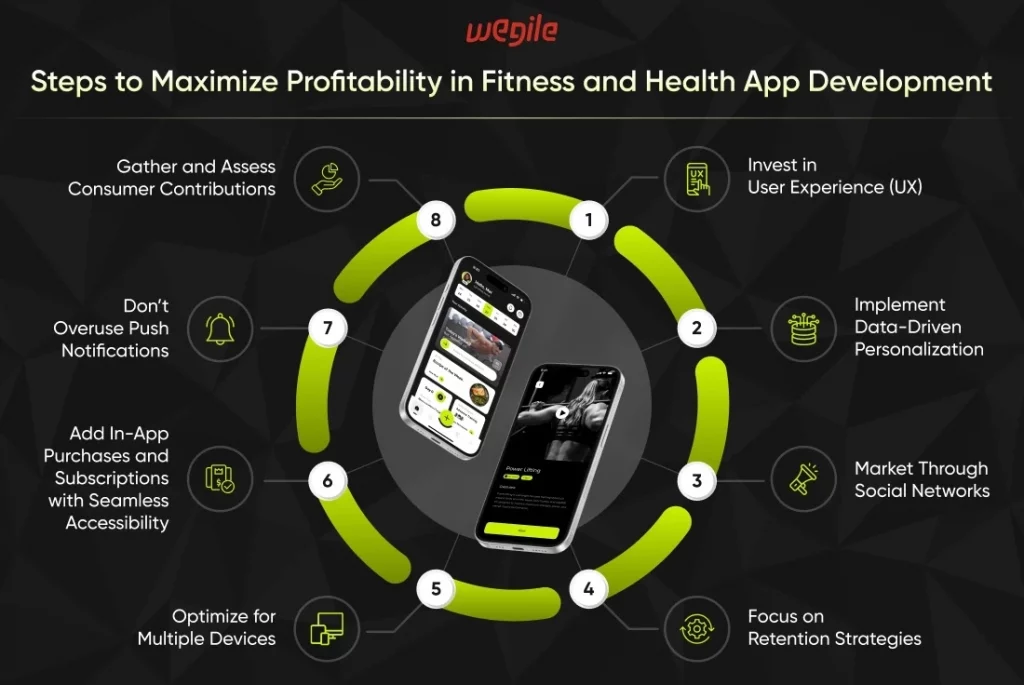
Steps to Maximize Profitability in Fitness and Health App Development
1. Invest in User Experience (UX)
User experience (UX) is the cornerstone of creating a successful Healthcare application. Intuitive navigation, a beautiful and easily usable interface, and good management make a positive attitude about the system. Emphasizing an easy-to-understand layout allows the user to concentrate on accomplishing their health-related objectives rather than struggling with annoying interfaces, which results in more usage and, thus, greater retention.
2. Implement Data-Driven Personalization
Customization based on AI and fluid results functionality makes it possible to offer appropriate content to the user. Tailored to the user’s workout history, objectives, likes, dislikes, exercise regimes, nutrition advice, and health tips, this enhances client satisfaction and increases daily app usage.
3. Market Through Social Networks
Social media marketing is a unique way to popularize your application and expand its audience. Posts about ordinary people, their transformations, victories, and how they achieved their goals using the app, along with transformation pictures, stickers, polls, memes, stories, live sessions, brief motivational videos, and health advice on Instagram, Facebook, TikTok, or other popular social networks, help build audience confidence. Three strategies that help ensure material credibility are user-generated content (UGC), targeted advertising, and influencer marketing.
4. Focus on Retention Strategies
To encourage users to revisit the app, it should include features like rewards and game-like quests. Key activities and rewards build a sense of achievement. Tasks with incentives that users can earn or share on social networks help keep users engaged and loyal to the app.
5. Optimize for Multiple Devices
Being available on smartphones, tablets, or even smartwatches appeals to users’ flexibility for workouts. Compatibility across devices, especially wearables, satisfies users who like to monitor health statistics on the go, making the app more functional and valuable.
6. Add In-App Purchases and Subscriptions with Seamless Accessibility
Subscription-based services, where users can choose monthly, bi-monthly, weekly, or yearly plans, can increase revenue by providing a system of payments for premium content. Options like custom workouts, additional diet plans, or personal trainer services enhance the value of paid tiers, encouraging users to subscribe. Offering trial periods for premium features can also encourage commitment without forcing users to pay upfront.
7. Don’t Overuse Push Notifications
Notifications are used to prompt users with respect to their health objectives. However, too many notifications can lead users to uninstall the app or block notifications. Utilize notifications to give timely reminders of new challenges or missed goals. Targeted and well-timed notifications bring users back without being intrusive.
8. Gather and Assess Consumer Contributions
Direct user input is essential for ongoing app enhancement based on user needs. Surveys, customer reviews, and in-app analytics can provide insights into user behavior and preferences. By continually updating the app to address key pain points and adding desired features, you’ll keep users engaged, attract more users through positive word-of-mouth, and improve app store rankings.
The Bottom Line
The industry’s robust growth projections emphasize the profitability of fitness and health app development. Developers have a substantial opportunity to tap into a market that values innovation and user-centric solutions, with the global fitness app market expected to reach USD 23.35 billion by 2030.
Developers can achieve financial success by focusing on delivering personalized experiences and leveraging data analytics. They can implement effective monetization strategies and contribute positively to users’ health and wellness journeys. Investing in fitness and health app development presents a promising avenue for both profitability and societal impact as the demand for digital health solutions continues to rise.
So, are you all braced up to turn your fitness app development ideas into reality? Partner with Wegile to build a high-performing, user-centric fitness app that engages and retains users. Let’s create a digital fitness experience that drives results. Contact us today!
Leave a Reply