What Is API First Strategy?
Adopting an API-first approach is a product development technique that emphasizes creating
Application Programming Interfaces (APIs) prior to constructing the user interface or any
other part of the product. The API first approach for product development centers around creating a
stable foundation for the product’s functionalities by crafting well-built and reliable APIs that
can be easily combined with other systems and services.
The main purpose of an API-first approach is to provide developers with a simplified route to
construct applications that can effectively communicate with the product’s backend without having to
confront the intricacy of the technology behind it. By devoting time to developing APIs upfront,
developers are able to promptly and effortlessly integrate the product with external systems, such
as third-party service providers or internal databases.
What Are The Benefits Of API First
Approach?
Imagine if you had the power to create apps at lightning speed and with incredible flexibility.
That’s what the API First approach offers – a chance to develop applications quickly and easily,
with every component seamlessly connected. No longer would cumbersome integration processes slow you
down; no more clicking around trying to link disparate parts of your application. API First approach
combines cutting-edge technologies and innovative architecture to revolutionize how developers work.
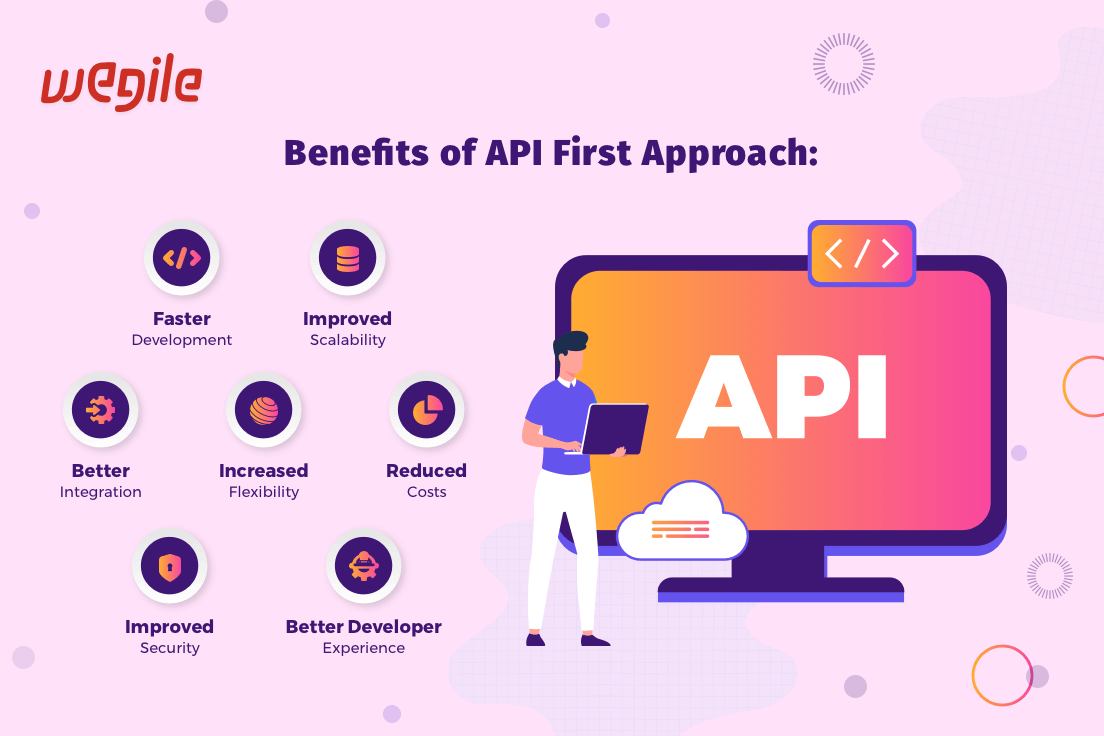
Here are the API first approach benefits:
-
1. Faster Development
As APIs provide the necessary data in the required format, developers can save time and
effort when developing applications as they don’t need to manually convert data into
different formats. This reduces development time and accelerates the delivery of new
products. -
2. Improved Scalability
An API-first approach helps businesses scale faster, as changes to the APIs are typically
handled at the back end, making product updates faster and easier. -
3. Better Integration
By using API first approach for product development, businesses can easily integrate existing
data sources, external services, and third-party APIs into their own application without
putting unnecessary load on their core infrastructure. -
4. Increased Flexibility
APIs allow businesses to quickly add new features or functionalities without having to build
them from scratch. -
5. Reduced Costs
As an API-first approach significantly reduces development time, the associated cost of
product development gets reduced as well. -
6. Improved security
APIs keep data secure by setting up access control and authentication. This helps ensure that
only authorized users can access sensitive data. -
7. Better Developer Experience
APIs help developers quickly access the data they need by keeping the data URLs organized and
easily retrievable. This further improves the developer experience and encourages innovation
from within. -
8. Improved collaboration
By using APIs, teams can collaborate in real-time, sharing components of applications easily
and quickly. This leads to faster delivery of applications and services. -
9. Better Testing
As APIs allow developers to test how their code interacts and behaves with a greater scope of
functionalities by using test stubs and mock data, better and more reliable tests can be
built with less effort. -
10. Enhanced User Experience
By using an API-first approach, businesses can provide personalized user experiences with
dynamic content that is tailored to fit each user’s needs, as APIs make it easier to
retrieve data from disparate sources and create custom user experiences.
What Is The Process of Designing,
Building, and Testing API First Approach for Product Development?
An API is essentially a doorway that software and devices use to access applications, data, and
services stored on remote servers. Rather than build applications without knowing what kind of user
experience is required, an API First approach designs, builds, and tests the API upfront to
determine the best strategy while also considering user needs.
The process of designing an API begins with understanding the type of user experience that is needed.
This involves asking questions such as what kinds of interactions will users need to have with the
application and what type of data will be stored or accessed through the API first approach. Once
these questions are answered, developers can start designing the architecture, or structure, of the
API with features that include security, search functions, charts and graphs, user registration, and
other elements. Once the architecture is complete, developers can create the code and create the
actual API.
For testing, the API first approach focuses on proving that the system works while also improving
user experience by emphasizing performance testing and UX. This means running test scripts that use
various interaction scenarios to ensure the desired user experience is achieved. Things like loading
times, data access speeds, and error messages should be tested before the API is released.
By taking an API-first approach for product development, developers are able to create an API
solution that fits their user’s needs. APIs are complicated, and it’s important that developers take
the time to think things through before beginning development. This API-first approach benefits by
saving a lot of time in the long run, leading to fewer defects and a better user experience.
What Are The Tools And
Technologies Used In API First Approach for Product Development?
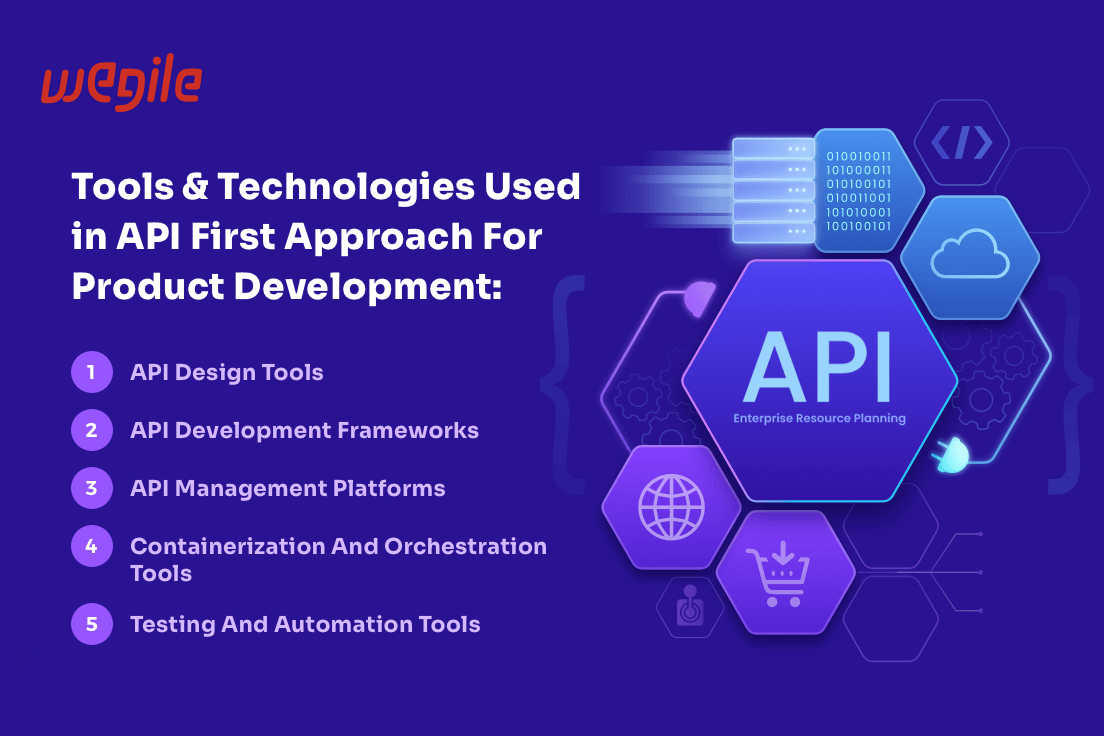
API design tools: API design tools are used to create a well-defined API specification, enabling
developers to create a truly maintainable and optimal API experience. Swagger
and
RAML tools provide
resources such as API design UML, API traffic monitoring, and API versioning.
API development frameworks: API development frameworks provide a structure for creating APIs,
enabling developers to easily design and produce reliable, high-quality applications. These
frameworks typically contain APIs in formats such as REST, SOAP, and GraphQL while also featuring
features related to authentication and authorization, client management, and more.
Express.js and
Spring Boot
are framework examples of API development frameworks.
API management platforms: Platforms such as Apigee and
Kong allow organizations to effectively manage the entire
lifecycle of their APIs in order to ensure a consistent experience for users, maintain secure
connections, and improve scalability. Features typically found within these platforms include
analytics, security controls, access limitation, and rate limiting.
Containerization and orchestration tools: Tools such as Docker
and Kubernetes allow are
used to package applications and associated dependencies into containers in order to enhance
portability, reduce deployment complexity and allow for continuous runtimes.
Testing and automation tools: Tools such as Postman enable
developers to use automate the process of testing APIs in order to detect and fix errors quickly
while ensuring consistent accuracy. These tools provide the ability to define tests, validate inputs
and outputs, simulate application usage, and generate detailed reports.
Conclusion
API-first approach for product development is an important element of modern software architecture.
It puts control in the hands of developers and reduces implementation time. By utilizing the right
tools and technologies, such as SDKs for popular languages and customizable frameworks, you can
create interfaces that meet your needs quickly and efficiently, making the most out of API first
approach benefits.
With API first development, organizations can iterate faster and bring their products to market with
speed and agility. So make sure to utilize the power of APIs when building your next product – it’s
the key to success!
Leave a Reply