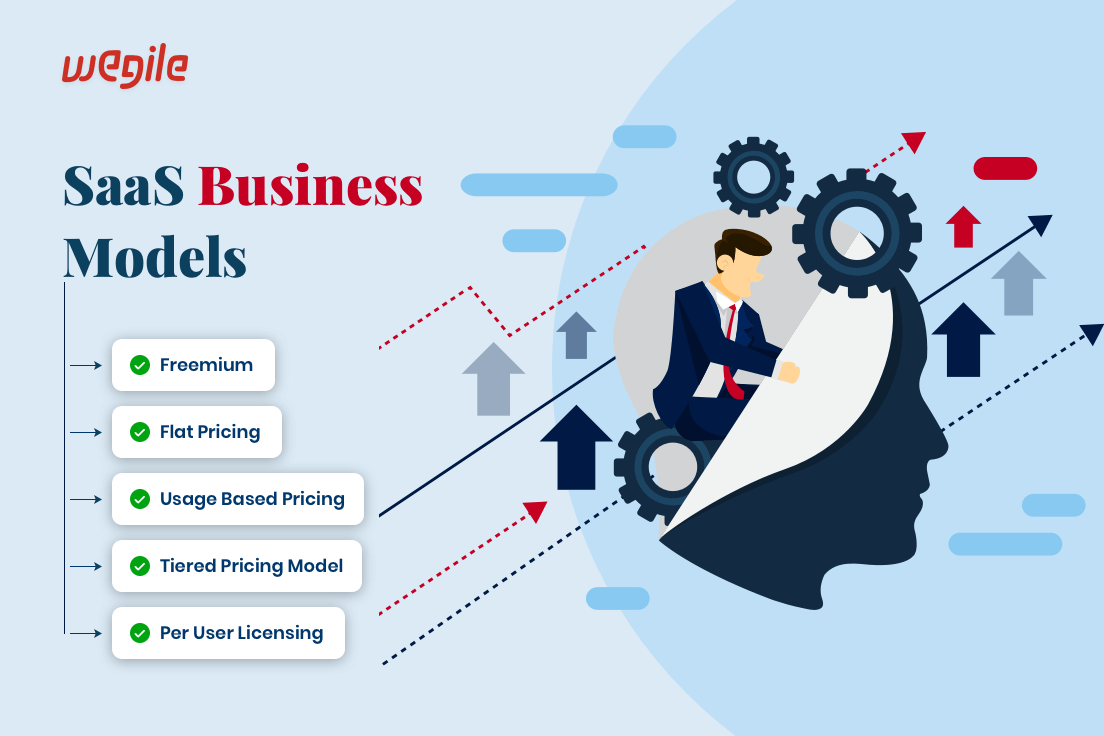
What Is SaaS Business Model?
Software-as-a-Service (SaaS) is a cloud computing model that delivers software applications over the
internet on a subscription basis. With SaaS as a business model, users access applications over any
web browser or device without needing to install and maintain their own hardware and software
environments – reducing complexity for businesses of all sizes. Companies looking to offer
subscription-based services benefit from lower upfront investments since they pay only for what they
use; this makes them attractive options compared with traditional licensed models, which require
costly licensing fees upfront.
To successfully build an effective SaaS offering, companies should focus on four key areas of SaaS as
a business model: pricing structure, customer onboarding processes, product development agility
& scalability updates, and ongoing user support/maintenance services. Properly managing these
components will ensure customers have positive experiences while using your product(s), which in
turn leads to continued loyalty from those paying subscribers – driving long-term revenue growth
potential for the business itself over time. Every company should understand how integral each
component can play in achieving success within their specific target markets. Additionally, having
comprehensive knowledge of new industry trends such as cloud computing helps inform decision-makers
about best practices needed during implementation stages as well overall strategy mapping afterwards
too!
In this SaaS as a business model blog, we will give SaaS business model examples along with SaaS as a
business model features and Different SaaS business models. So without any further ado, let’s begin.
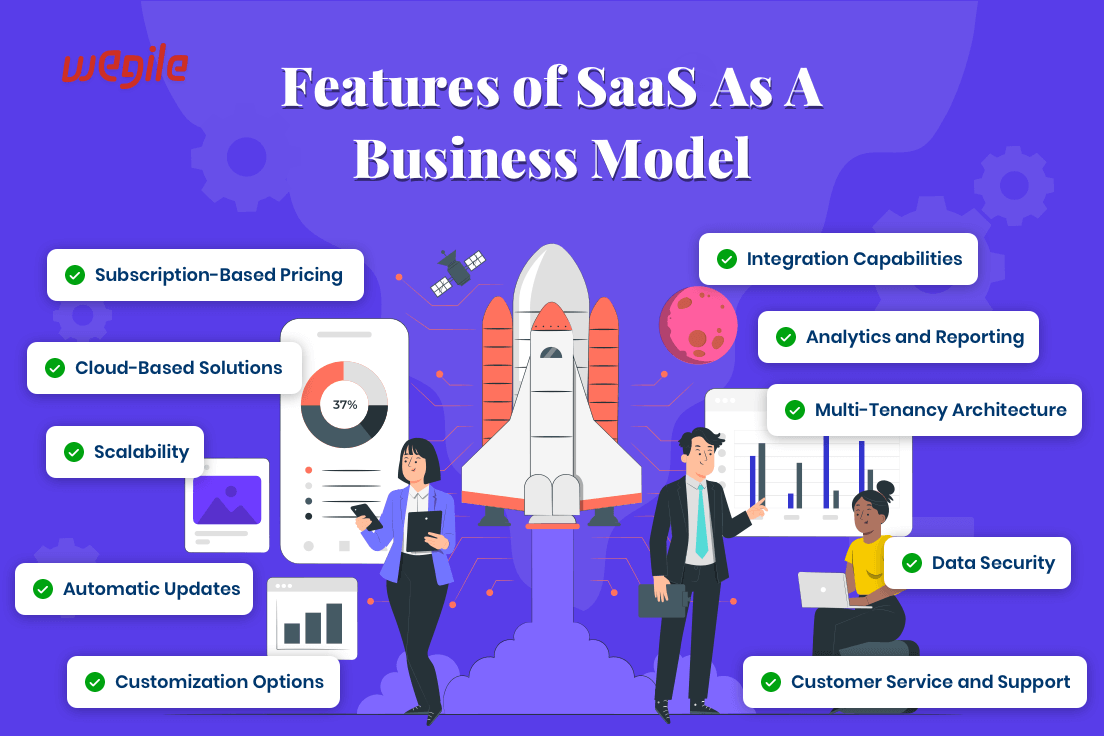
What Are the Features of SaaS as a
Business Model?
-
1. Subscription-based pricing
SaaS business model makes their software available to customers via monthly or yearly
subscription plans. -
2. Cloud-based solutions
SaaS services are provided via an internet connection, eliminating the need to store and
manage software on-site. -
3. Scalability
SaaS as a business model, offers flexibility to scale services up or down as needed,
eliminating the need to invest in new hardware. -
4. Automatic updates
SaaS businesses constantly update their services to ensure customers are using the latest
version of the software. -
5. Customer service and support
SaaS businesses provide technical support for clients using their services.
-
6. Integration capabilities
Many SaaS as business model providers offer integration options with other products and
services to help businesses streamline processes. -
7. Data security
SaaS businesses offer secure cloud storage of customer data, including access control
mechanisms and built-in authentication, along with other safety measures. -
8. Analytics and reporting
SaaS businesses enable customers to track their performance, providing useful insights for
business decisions. -
9. Multi-tenancy architecture
SaaS businesses provide access to multiple users from one system, creating a cost-effective
solution for businesses of all sizes. -
10. Customization options
SaaS businesses allow customers to configure the services to fit their specific needs,
customizing features and user interfaces as desired.
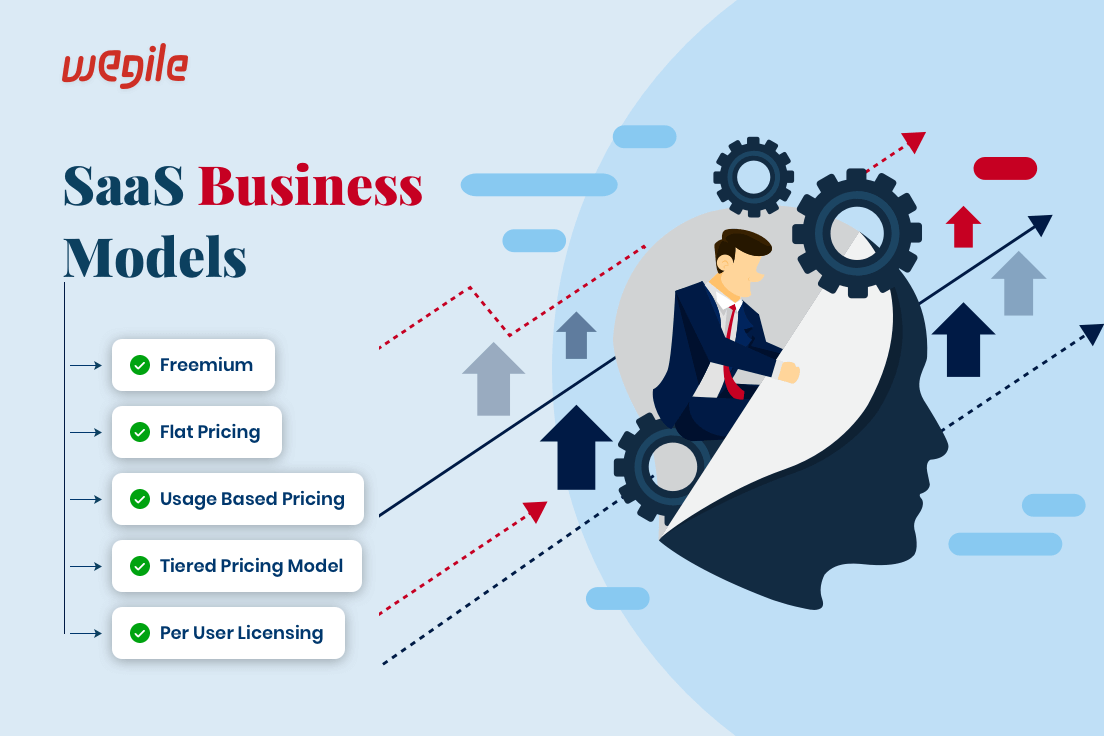
What Are The Different SaaS
Business Models?
-
1. Freemium
This model offers basic services for free and charges fees for advanced features or higher
usage levels. It’s designed to draw in customers, which can then be upgraded into paying
contracts over time. -
2. Flat Pricing
Customers pay one flat fee regardless of the number of users or features used on a platform
with the SaaS business model, making it ideal for companies that require larger packages
with low customization needs and predictable budgets. -
3. Usage-Based Pricing
Platforms utilizing this pricing method bill based on how often—or how much—services are used
by individual customers during specified billing cycles, such as minutes consumed per month
or user queries processed annually by individual accounts/users subscribing to the SaaS as a
business model offering. -
4. Tiered Pricing Model
Companies using tiered models will offer multiple levels (tiers) of their product at
different price points depending upon its feature set and size requirements needed to
accommodate each customer type within those tiers who sign up / carry out transactions
against them, allowing buyers flexibility while being cost-effective; usually accompanied
through additional promotions albeit applicable only so long as they stay subscribed within
any particular tier via reservations towards upgrades when necessary every now & again. -
5. Per User Licensing
SaaS business model companies can also determine prices by charging per user/teammate who
participates – it is beneficial when scalability is necessary and additional users boost
their value from various integrations within the platform itself.
SaaS Business Model Examples
JioCinema as Freemium SaaS Business
Model Examples
JioCinema has uniquely penetrated the Indian streaming
market. By offering free high-quality Indian content, along with exclusive access to IPL 2023 – the
world’s second most valuable sports
league worth over $10 billion, it was able to build trust and drive customer engagement
quickly.
JioCinema then went one step further by launching its premium paid plan that gave viewers access to
popular English content from HBO, Peacock, and more as soon as the cricket season ended. This bold
move made them stand out among competitors like Disney+Hotstar — who saw an overall decrease of 4.6
million subscribers during quarter four of FY 23 due to their loss of rights for the same tournament
— while building upon their already established userbase within India’s burgeoning digital
entertainment space.
Zoho Inventory – Tiered Pricing Model
Example of SaaS Business Model
Zoho Inventory uses the tiered pricing model of SaaS
as a business model, with different pricing plans, each tailored to meet the specific needs of the
right type of business. The pricing plans are differentiated by the functionalities they provide,
with higher-priced plans providing additional features. This particular model provides a wider array
of options for potential customers, allowing them to select a plan that best suits their individual
requirements. For example, Zoho Inventory offers a basic plan with free inventory management
features. The standard plan includes additional features such as order management and warehouse
management for $59 per month.
Microsoft Office 365 –
Usage-Based Pricing SaaS Business Model Example
Microsoft 365 offers something revolutionary in the SaaS industry—a Usage-Based Pricing model. With
this innovative system, customers are only charged for what they use. The flexibility of this option
has made it highly desirable for businesses in various industries. It enables them to quickly adapt
their plans to meet their evolving needs and budget.
For instance, companies that need basic applications can opt for the Business Basic plan, while those
needing advanced security features and cyber threat protection can choose the Business Premium plan.
In addition to being incredibly flexible and cost-effective, this methodology also encourages
resource optimization since users are billed according to consumption.
Conclusion For SaaS As A Business Model
The SaaS as a business model has brought about a revolutionary change in how companies deliver their
applications to users. Offering greater accessibility and flexibility than traditional software
models, SaaS leverages the cloud’s expansive infrastructure to ensure comprehensive reach.
Additionally, the subscription-based pricing structure creates a mutually beneficial
arrangement—additional savings for customers while maintaining predictable revenue streams for
businesses. With digital transformation being an increasingly integral element of our current
landscape, SaaS is emerging as an ideal solution for delivering the essential software services
required by modern businesses.
Leave a Reply