What is App Modernization
App modernization is like giving your legacy apps a fresh makeover, making them feature-rich and
up-to-date. Do you know how that app you love sometimes feels a bit slow, glitchy, or just not as
flashy as the new one? App modernization fixes all that! It’s like a digital facelift that brings
your apps into the modern era with cool features, striking looks, and lesser bugs than ever.
In this article by Wegile, we’ll dig deeper into the benefits of application modernization along with
app modernization strategy. So, whether you’re a tech whiz or just starting to figure out this whole
app modernization thing, stick around and gain some insights.
App Modernization Strategy
Understanding the Need for
App Modernization
With the rapid pace of technology, it’s no surprise that there are a lot of outdated applications and
legacy systems running on dated infrastructure. These apps are plagued by security threats,
inadequate performance, and an overall lack of reliability – to say nothing of user experience (UX)!
One of the few reasons why businesses need to understand the importance of app modernization.
App modernization strategy not only brings us into the present day with modern technologies like
cloud computing trends, artificial intelligence, or even machine learning but also allows for
advances in UX that can make applications easier to use and more enjoyable for the users.
App modernization strategies are the key to exploring greater efficiencies in legacy applications,
making them more secure and resilient, and ensuring a high-quality user experience; all of these
elements are extremely important for a successful application. So it is important for legacy apps to
catch up with technology and understand the benefits of app modernization.
Assessing Your Current
Applications
Assessing your legacy application will help you identify performance bottlenecks and security
vulnerabilities through a comprehensive application audit. This ensures that your resources for app
modernization strategy are not wasted and utilized where needed.
Conducting a Comprehensive Application Audit:
Before embarking on any transformational journey, you need to know where you stand. Conducting a
comprehensive application audit is like taking stock of your digital assets. This involves:
-
1. Cataloging all existing applications.
-
2. Mapping out their functionalities, dependencies, and integrations.
-
3. Identifying redundant or obsolete applications.
-
4. Documenting the technologies powering each application.
Identifying Performance Bottlenecks and Security Vulnerabilities:
The audit isn’t just about counting applications; it’s about understanding how well they perform and
how secure they are. This entails:
-
1. Analyzing response times and user experiences.
-
2. Pinpointing performance bottlenecks causing slowdowns or crashes.
-
3. Uncovering potential security vulnerabilities that expose your data and systems to threats.
-
4. Assessing compliance with industry standards and regulations.
Defining Your App Modernization
Goals
Every successful journey begins with a clear destination in mind. As you begin to determine which
modernizations you should prioritize, consider your end users and how they will interact with the
applications. This is critical for achieving the best possible outcomes—your stakeholders expect an
intuitive experience, no matter the platform or device. Before implementing your plan, ensure you
have a holistic view of all proposed changes, Key Performance Indicators (KPIs) and set measurable
goals to help you track progress.
It’s essential to ensure your modernization goals are part of a larger strategy that aligns with
long-term objectives and core values. Effective app modernization strategies take into account not
only the desired outcomes but also the associated tangible costs. When crafting your approach,
consider a wide range of factors, including security, infrastructure, testing, and reporting
complexity. Creating a cost-efficient plan that fits within corporate guidelines requires an
understanding of the current budget as well as any applicable regulations such as costing, data
privacy, or industry standards like HIPAA.
From established companies to start-ups, all organizations want to stay ahead of the competition by
providing customers with the most updated UX capabilities—it’s an essential part of building
loyalty. Effective app modernization requires taking into account the user experience and ensuring
you’ve chosen the right platform and technology before launching anything into production. As
businesses strive to provide their customers with agile solutions (Check out the Benefits of Agile
Methodology) that drive Return On Investment, setting clear objectives and aligning app
modernization goals with business strategies can help you stay ahead of the curve.
Choosing the Right Modernization
Approach
-
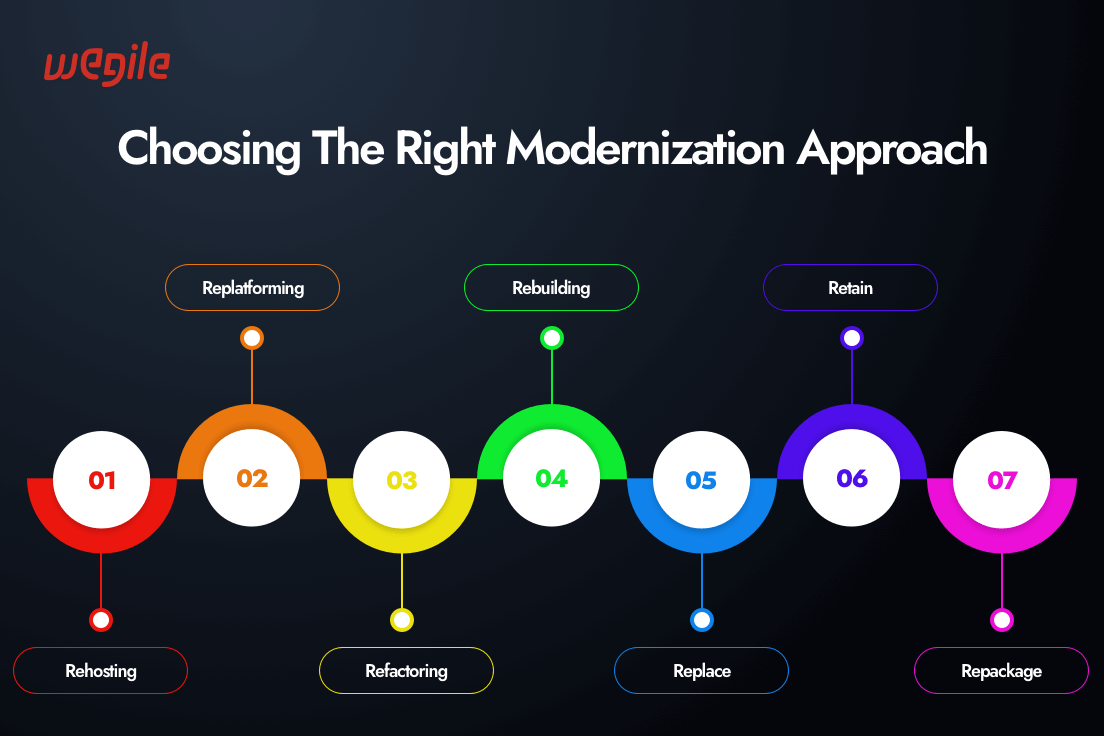
1. Rehosting
Perhaps the most straightforward and cost-effective approach to modernization is rehosting.
Rehosting is a low-risk, low-cost modernization approach. If you have applications that
aren’t set up for the cloud and you’d like to move them out of their current environment
quickly, rehosting is a great option. Rehosting requires lifting and shifting an application
from its legacy environment into the cloud. -
2. Replatforming
Replatforming involves making more structural changes to existing applications than
rehosting, such as re-platforming an application from a monolithic to a microservice
architecture. With re-platforming, you’re able to take advantage of the cloud’s scalability
while keeping the code intact. Replatforming an application typically requires compression
and optimization of its code in order to structure it for a new cloud infrastructure. -
3. Refactoring
Refactoring, or rearchitecting, is an app modernization strategy wherein you need to delve
deeper into your application’s code to optimize performance, enhance scalability, and adopt
cloud-native technologies. This approach requires significant changes to your codebase but
results in a more robust, efficient, and scalable application. Refactoring is suitable when
you’re committed to harnessing the full potential of modern platforms. -
4. Rebuilding
Rebuilding is the process of completely redeveloping an outdated application using new
development tools and techniques, such as modern programming languages or components like
databases, web servers, or messaging services. -
5. Replace
When an application no longer serves its purpose or is too outdated to salvage, replacement
might be the best route. This involves replacing the legacy application with an
off-the-shelf solution or a new custom-built application. It’s like trading in your old car
for a brand-new model. -
6. Retain
If an organization’s use case qualifies, maintaining the existing system may make more sense
than trying to modernize it. This app modernization strategy is beneficial to those
organizations who either cannot afford app modernization at the moment or no modernization
is required for the foreseeable future as the legacy application is intact and in touch with
the current technology. -
7. Repackage
Packaging existing legacy applications into containers or cloud-native architectures is
another option available for legacy modernization efforts. The repackaging approach gives
organizations complete control over the entire transformation process so that they can shift
non-compatible apps into the cloud without sacrificing security or performance standards.
When your application’s user interface needs a facelift or new packaging, the repackage
approach shines.
Streamlining Application
Development and Quality Assurance
When modernizing applications, speeding up time-to-market is essential – but so is ensuring that
quality and performance do not suffer as a result. To strike this delicate balance, deploying DevOps
and agile methodologies is key. By streamlining the development and deployment process with CI/CD
pipelines, teams can increase the velocity of releases without sacrificing the quality users have
come to expect.
Automation tools are also essential for reducing the manual burden so that teams can focus on
improving feature quality. With automation comes a rigorous testing process – automated testing
tools are the best way to ensure uniform and complete tests that don’t miss any variables. It also
helps to evaluate performance and load ahead of an app’s release by capturing performance and load
testing metrics early on in the process. All of these steps taken together in the app modernization
strategy will result in modern apps that offer the speed users demand and the quality they expect.
Benefits of Application
Modernization
With the rapid change in technology, application modernization is the need of the hour for legacy
applications. Modernizing your applications may sound intimidating, but the truth is the process can
be tailored to your needs – no matter what industry you’re in. And while the thought of coming up
with a comprehensive application modernization strategy may not be the most exciting prospect, the
truth is it can be incredibly beneficial for your organization in numerous ways.
Whether you’re a tech aficionado or just someone looking to stay ahead in the digital race, Wegile
has your back; we have got the scoop to help you understand the benefits of application
modernization in the easiest way possible.
Strengthened Security Measures
Application modernization can have numerous benefits, one of the most notable being improved cyber
security. With technology advancing at a rapid pace, many outdated legacy applications are no longer
built to withstand the full spectrum of security threats. It is absolutely crucial to modernize your
applications in order to stay on top of security protocols and maintain the highest levels of data
safety, especially in the face of constantly evolving security threats.
By implementing the most up-to-date security measures, you can maintain compliance with industry
standards and ensure that sensitive data remains secure and confidential. Application modernization
also reduces the risk associated with hidden weaknesses in legacy systems while providing your
organization with advanced threat detection capabilities. The process fortifies data privacy and
security, instilling confidence in customers and providing them with greater peace of mind.
Cost Optimization and Resource
Efficiency
-
1. Cost Optimization
Application modernization enables organizations to build cost-effective applications that
are optimized to run in the cloud. By utilizing application modernization, businesses can
successfully avoid costly infrastructure investments, reduce operating costs, and control
their overall IT spend. -
2. Resource Efficiency
Application modernization helps organizations become more resource efficient by automating
manual processes and utilizing intelligent systems that enable better use of the existing
resources. Application modernization reduces human error and allows employees to focus on
higher-level activities. Modernized applications provide faster delivery time due to
improved development processes, automated testing, and reduced cycle times from concept to
production.
Enhanced Business Agility and Market Responsiveness
Application modernization plays a crucial role in achieving heightened business agility and market
responsiveness. By modernizing existing applications, businesses can reach a new level of nimbleness
and capability, enabling them to swiftly respond to dynamic customer demands and changing market
conditions.
Embracing application modernization empowers organizations with access to potent tools and
technologies, facilitating rapid updates, modifications, and adaptations to ensure optimal customer
satisfaction and market performance. Applications are upgraded to maximize operational efficiency
and effectiveness while staying aligned with evolving industry trends and customer needs. As a
result, embracing application modernization fosters business agility and market responsiveness,
positioning organizations for sustained long-term success.
Seamless Integration and
Interoperability
Embracing application modernization offers numerous benefits, including the ability to seamlessly
integrate and improve interoperability. Essentially, this means that different systems and
applications can now work together and communicate better with each other, that too more effectively
than ever before.
This is a major benefit of application modernization, wherein businesses will allow for greater
efficiency, flexibility, and scalability. Essentially, application modernization allows firms to
streamline their operations, minimize website downtime, and improve overall productivity, which is
something that all organizations can appreciate. By making the most of application modernization,
businesses can stay ahead of the curve and provide an enhanced level of consumer service to their
customers while keeping expenditures down and revenues up.
Expanded User Accessibility and
Device Compatibility
As technology is constantly ever-changing at a rapid pace, older applications need to keep up with
the latest advancements. This is where application modernization offers a range of benefits, but one
of the most significant is expanded user accessibility and device compatibility. As users
increasingly rely on mobile devices with different OS, device configuration applications must be
able to run on multiple platforms while being compatible with every device, be it Android or iOS, in
order to meet customer demands.
Application modernization solutions make it easier for applications to be responsive and
user-friendly across different platforms, ensuring that customers can access the application from
any device regardless of the device’s size or operating system. By expanding its reach to multiple
devices, an organization can more effectively target its customer base while providing better user
experiences with more efficient software.
Streamlined Regulatory
Compliance and Data Governance
In the past, the key to regulatory compliance and data governance was manual processes. It was a game
of chase – chasing down paperwork, ensuring forms were filled out correctly, and keeping everything
up to date. But with modernization efforts, companies can now rely on automated systems to manage
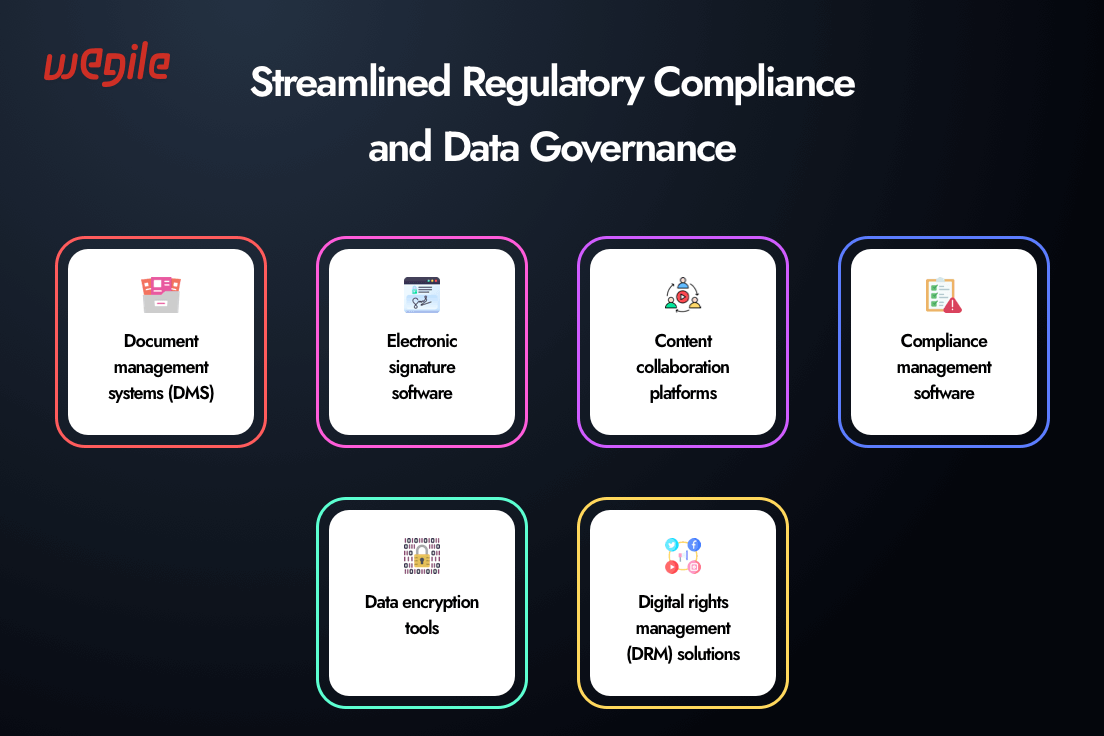
these tasks. These applications can help you with document tracking, compliance issue flagging, and
data security, including:
-
1. Document management systems (DMS)
-
2. Electronic signature software
-
3. Content collaboration platforms
-
4. Compliance management software
-
5. Data encryption tools
By streamlining regulatory compliance and data governance processes, organizations not only save
money and prevent potential legal risks, but they can also create an overall sense of security among
stakeholders. It’s clear that application modernization is the secret weapon that will help you stay
compliant, protect your organization’s data, and take on whatever comes your way with confidence.
Artificial Intelligence and
Machine Learning Integration
Do you want your apps that could anticipate user needs and regularly improve themselves through
automatic learning? Well, with the help of artificial intelligence (AI) and machine learning (ML),
it can. AI and ML integration makes it possible for apps to be smarter, more efficient, and better
able to meet customer needs.
Plus, legacy applications can easily be modernized with these technologies. With AI and ML
integration, you can take advantage of the latest technologies to help your app development stay
ahead of the competition. Whether starting a new app from scratch or modernizing an existing one,
Wegile mobile app development professionals can help. Contact us today to find out how we can help
you with the integration of AI and ML in your application.
Environmental Sustainability
and Green Initiatives
When we talk about the benefits of application modernization, it’s not just about tech upgrades –
it’s also about contributing to a greener planet. Check out how environmental sustainability and
green initiatives tie into the realm of application modernization:
-
1. Energy Efficiency
Modernizing applications often involves optimizing their underlying infrastructure, leading
to reduced energy consumption and a smaller carbon footprint. -
2. Resource Optimization
Upgraded applications streamline resource usage, minimizing waste and making the most of
available assets. -
3. Reduced E-waste
Application modernization promotes extending the lifespan of existing hardware and devices,
reducing the need for frequent replacements and associated e-waste. -
4. Carbon Emission Reduction
By consuming less energy and resources, modernized applications contribute to cutting down
overall carbon emissions. -
5. Paperless Workflows
Modernization enables digital transformation, minimizing paper usage and promoting
environmentally friendly practices. -
6. Remote Work and Telecommuting
Updated applications often support remote work, reducing the need for daily commutes and
resulting in lower transportation-related emissions. -
7. Green Data Centers
Modernization encourages the use of energy-efficient data centers that incorporate renewable
energy sources and advanced cooling techniques. -
8. Virtualization and Server Consolidation
These practices optimize server utilization, leading to fewer physical servers and,
consequently, reduced energy requirements. -
9. Eco-friendly Software Development
Modernization encourages eco-conscious coding practices, ensuring that software is designed
with sustainability in mind. -
10. Environmental Reporting and Accountability
Modernized applications can incorporate tools for tracking and reporting environmental
impact, encouraging transparency and accountability. -
11. Cloud Modernization Trends
Migrating applications to the cloud often aligns with green initiatives, as cloud providers
focus on energy-efficient infrastructure and resource sharing.
Leave a Reply