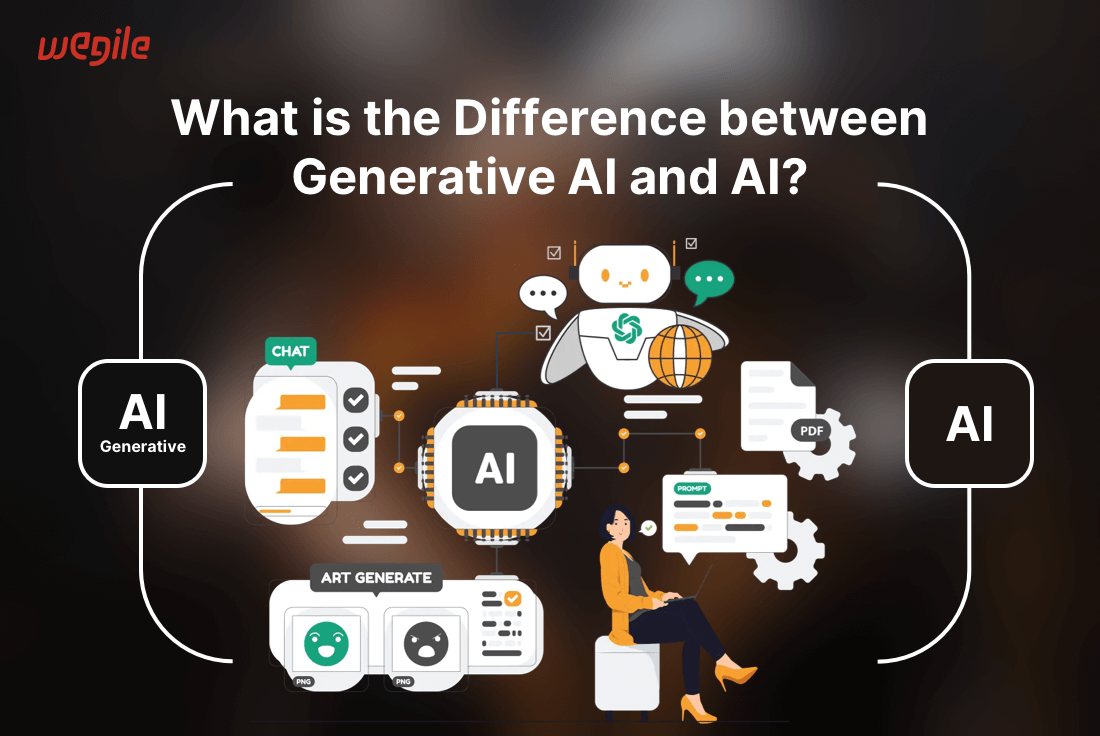
Artificial Intelligence (AI) has come a long way since its conceptual beginnings and formal
inception. From early philosophical musings about automations to today’s sophisticated neural
networks, the journey of AI has been marked by significant milestones that shaped its development.
The roots of AI can be traced back to the mid-20th century when pioneers like Alan Turing introduced
concepts that laid the groundwork for computers to mimic human cognitive processes. The 1956
Dartmouth Conference is often considered the official birth of AI, where the term “Artificial
Intelligence” was coined and the potential of machines to perform tasks reserved for human
intelligence was first formally explored.
Over the decades, several key developments have pushed AI from theoretical research into practical
applications. The creation of expert systems in the 1970s demonstrated AI’s capability to make
decisions in specialized domains, like medical diagnosis or stock trading. The 1990s saw the
emergence of machine learning, with systems that could learn from data and improve over time,
leading to more dynamic AI applications.
The last few years have seen the rapid rise of generative AI, marked by systems like GPT (Generative
Pre-trained Transformer) and DALL-E, which can generate human-like text and creative images from
textual descriptions. These advancements highlight a shift from AI that simply processes data to AI
that can create new, coherent, and contextually relevant content.
Understanding the differences between traditional AI and generative AI is crucial as we integrate
these technologies into various sectors. While traditional AI excels in rule-based automation and
analytical tasks, generative AI opens new possibilities for innovation in creative fields,
personalized technology, and more. This distinction helps in leveraging the right AI technology for
specific tasks and navigating the ethical and practical implications of these powerful tools.
Whether you’re a professional looking to optimize processes, a creator aiming to push the boundaries
of art and design, or a tech enthusiast curious about AI’s possibilities, understanding these
technological nuances will enable you to make more informed decisions and innovative contributions.
For a deeper understanding of AI’s fascinating evolution and its impact across industries, keep
reading our blog for more insights and updates.
What is
Artificial Intelligence (AI)?
Artificial Intelligence (AI) refers to the development of computer systems capable of performing
tasks that traditionally require human intelligence. These tasks include reasoning, speech
recognition, visual perception, and language understanding. AI can be categorized into various
types, ranging from reactive machines, which perform specific pre-defined tasks, to more complex
systems that aim to emulate human cognitive processes.
Reactive
machines are simple and focus on narrowly defined tasks, while more advanced AI involves
learning from past experiences and making decisions based on that learning. AI applications are
extensive and integrate deeply into sectors such as healthcare, where they aid in diagnosis and
treatment plans, and in consumer electronics, with virtual assistants like Siri and Alexa. The
booming advancement in AI technologies, powered by increasing computational power and large data
sets, continues to expand the potential of AI systems across various fields.
What is Generative AI?
Generative AI is a subset of artificial intelligence focused on creating new content, from text to
images and music, based on the patterns it learns from vast amounts of data. This type of AI uses
advanced machine learning models, including Generative Adversarial
Networks (GANs) and transformer models, to produce outputs that can be indistinguishable
from content created by humans.
Generative AI has been pivotal in content creation, where it assists in generating realistic and
contextually relevant media, and in personalized customer experiences by generating unique user
interactions. Its development represents a significant shift from traditional AI’s focus on
understanding and processing to being able to innovate and create autonomously. However, the
sophistication of generative AI also introduces challenges, particularly in the realm of ethics and
security, such as concerns about the authenticity of AI-generated content and its potential to
disseminate misinformation
What is
the difference between Generative AI and AI?
Purpose and Functionality
-
Traditional AI: Focuses primarily on analyzing data, making decisions, or
performing tasks based on specific algorithms. These AI systems excel in structured tasks
such
as data entry, processing, or playing games with defined rules. -
Generative AI: Designed to create new content that mimics the input data it
has
been trained on. This includes generating text, images, music, and even video. The
functionality
extends beyond analysis to the creation of new, derivative works that can be
indistinguishable
from those created by humans.
Underlying Technology
-
Traditional AI: Often relies on more simple machine learning techniques and
rule-based systems that do not necessarily require learning from large datasets. These
systems
operate within the boundaries of their programming and predefined rules. -
Generative AI: Utilizes advanced machine learning models such as deep
learning
networks, generative adversarial networks (GANs), and transformers. These models are capable
of
learning from vast amounts of data and can generate outputs based on the patterns and
features
learned during the training phase.
Data Handling
-
Traditional AI: Typically works with labeled data and is often limited to
the
quality and quantity of data it has been trained on. It is used in applications where the
environment and tasks are predictable and well-defined. -
Generative AI: Often uses both labeled and unlabeled data and is adept at
handling vast and complex datasets. It can extract and replicate patterns from these
datasets to
produce new, creative outputs.
Adaptability and Learning
-
Traditional AI: Has limited adaptability outside its initial programming
and
training. While effective in its domain, it struggles with tasks outside its predefined
scope
without additional programming or retraining. -
Generative AI: Shows significant adaptability and can improve its output by
continuous learning from new data. It is more dynamic in adjusting to new information and
can
evolve more freely as it is exposed to more varied inputs.
Applications and Impact
-
Traditional AI: Predominantly used in applications requiring precision and
reliability, such as in robotics, structured data analysis, and automation of routine
tasks. -
Generative AI: Expands the horizon of AI applications into creative and
design
fields, providing tools for artists, designers, and content creators, and pushing the
boundaries
of innovation in fields like entertainment, marketing, and even scientific research.
AI vs Generative AI
Examples
Traditional AI in
Action
Healthcare Diagnostics
AI algorithms have revolutionized healthcare diagnostics. They provide the capability to analyze
medical data with high accuracy and efficiency. These algorithms can process data from MRIs, CT
scans, X-rays, and other imaging technologies. They detect subtle patterns that may not be evident
to the human eye. For instance, AI can identify early signs of diseases such as cancer, neurological
disorders, and various forms of chronic illnesses. It does this by recognizing anomalies in the
images. AI-powered tools can predict the risk of diseases by analyzing genetic information alongside
lifestyle data. This capability not only enhances the precision of diagnoses but also speeds up the
process. Early intervention enabled by AI can be crucial for patient outcomes.
Autonomous Vehicles
AI is the driving force behind autonomous vehicles (AVs). This category includes self-driving cars,
drones, and unmanned aerial vehicles. These systems rely on AI to interpret sensory data. It allows
them to understand their surroundings and make real-time decisions. It includes recognizing
pedestrians, other vehicles, traffic signs, and road markings. It also includes predicting the
actions of other drivers and adjusting accordingly. AI algorithms also optimize routes, manage
traffic flow, and enhance vehicle safety systems. These contributions lead to more efficient and
safer driving conditions. The integration of AI in autonomous vehicles aims to reduce human error,
which is the leading cause of traffic accidents. This transformation could make our transportation
systems more sustainable and less hazardous.
Fraud Detection
In the financial sector, AI plays a critical role in enhancing security. It is used to monitor and
analyze transaction patterns. These AI systems are designed to detect anomalies and signs of
fraudulent activity in datasets. These are activities that human analysts might miss. By learning
from historical data, AI can identify suspicious behaviors. These behaviors include unusually large
transfers or frequent transactions in short periods. Banks, credit card companies, and online
retailers use AI-driven systems to quickly flag these activities. It helps prevent potential fraud.
This protection not only safeguards the financial assets of institutions and their customers but
also reduces the time and resources spent on investigating and rectifying fraudulent transactions.
Speech Recognition
AI is widely utilized in various applications that require the interpretation of human speech. This
technology powers voice-activated assistants found in smartphones and smart home devices. These
assistants respond to verbal commands. AI is also employed in transcription services. In these
services, it converts spoken language into written text with high accuracy. Real-time translation
tools also rely on AI. They provide immediate speech-to-text conversion in different languages. It
facilitates communication across language barriers. The ongoing advancements in AI have
significantly improved the accuracy and responsiveness of speech recognition technologies. This
makes them more reliable and user-friendly.
Smart Home Devices
AI is a key component in the operation of smart home devices. Examples include smart thermostats and
lighting systems. These devices use AI to learn from a user’s daily habits and preferences. For
instance, a smart thermostat can adjust the heating and cooling of a home. It does this based on the
occupants’ schedules and the external weather conditions. Similarly, smart lighting systems can
automatically adjust the brightness and color. They adjust based on the time of day or the
activities being performed. This personalized automation not only enhances comfort and convenience
for users but also optimizes energy use. It leads to cost savings and reduced environmental impact.
By integrating AI, these devices can effectively manage home environments. This creates a more
efficient and responsive living space.
Generative AI in Action
Content Creation
Generative AI has opened new avenues in the field of creative content production. It is capable of
generating diverse forms of content such as articles, poems, music, and visual artwork. This
technology utilizes deep learning models to analyze and learn from complex and vast collections of
existing works. By understanding the underlying patterns, styles, and structures of these works,
Generative AI can create new content that mirrors these elements. For instance, in literature,
Generative AI can craft stories or poems that evoke the stylistic nuances of famous authors. In
music, it can compose pieces in the style of specific genres or artists. In the visual arts,
AI-generated artwork can resemble the techniques and aesthetics of renowned painters. This
capability not only enhances the creative process but also assists artists and creators. It provides
them with initial drafts or inspiring new ideas.
Deepfakes
Generative AI’s ability to create deepfakes represents a significant advancement in digital media
technology. Deepfakes are highly realistic and convincing digital manipulations of audiovisual
content. They make it appear as though individuals are saying or doing things they never did. This
technology leverages sophisticated machine learning techniques, particularly deep neural networks.
It synthesizes human images and voices with high precision. While deepfakes are often highlighted
for their potential misuse, they have legitimate applications in filmmaking, advertising, and
virtual reality. For example, filmmakers can use deepfakes to enhance visual effects, resurrect
performances of deceased actors, or alter dialogues without reshoots. In virtual reality, deepfakes
can create more immersive and interactive experiences. They do this by generating realistic avatars
and scenarios. These applications showcase the dual-edged nature of generative AI technologies. They
offer both innovative opportunities and ethical challenges.
Personalized Marketing
Generative AI algorithms have transformed the landscape of marketing. They enable the creation of
highly personalized advertisements and content. These algorithms analyze vast amounts of data on
consumer behavior, preferences, and previous interactions. They tailor marketing efforts to
individual needs and interests. For example, an AI system might analyze a consumer’s shopping
history. It could craft personalized email marketing campaigns featuring products that align with
their past purchases. In social media advertising, generative AI can dynamically alter ad content to
match the user’s interaction patterns. This increases engagement and conversion rates. This level of
customization not only improves the effectiveness of marketing campaigns but also enhances the
consumer experience. It presents them with content that is relevant and appealing.
AI-driven Simulation
Generative AI plays a crucial role in industries where real-world training or testing is either too
dangerous or impractical. This is particularly relevant in fields such as aerospace and military
applications. It also applies to complex system testing. Generative AI can simulate detailed virtual
environments and scenarios that mimic real-world conditions. This allows for safe and controlled
testing and training. For instance, in aerospace, AI-driven simulations can test aircraft
performance under various atmospheric conditions without the risk of actual flights. Similarly,
military applications use generative AI to simulate combat scenarios for training purposes. This
provides realistic yet safe environments for soldiers to hone their skills. These simulations can be
incredibly detailed, accounting for numerous variables. They help improve the readiness and response
capabilities of professionals in these fields.
Product Design
Generative AI significantly enhances the product design process across various industries. By
generating multiple design iterations quickly, it allows designers to explore a wider range of
options and alternatives than would be feasible manually. This capability is particularly useful in
industries like automotive and consumer electronics. Design and functionality play critical roles
here. Generative AI algorithms can propose multiple design variations. Each variation is optimized
for different parameters such as durability, cost, aesthetics, or performance. This not only
accelerates the design process but also helps in identifying the most effective solutions. It
potentially leads to innovations and improvements in product quality and performance. Plus, by
simulating how designs will perform under real-world conditions, generative AI can predict potential
failures and suggest improvements. It eventually reduces development time and costs.
AI vs
generative AI vs machine learning
| Factor | Artificial Intelligence(AI) | Machine Learning (ML) | Generative AI |
|---|---|---|---|
| Definition | The broad science of mimicking human abilities. | A subset of AI that focuses on algorithms that allow computers to learn from and make predictions based on data. |
A subset of AI focused on creating new content from learned data. |
| Core Function | To perform tasks that typically require human intelligence, like recognizing speech or making decisions. |
To learn from data patterns and make predictions or classifications based on that data. | To generate new, original outputs (like text, images, music) based on the patterns it has learned. |
| Technologies Used | Rule-based systems, machine learning, deep learning, etc. | Supervised learning, unsupervised learning, and deep learning. | Deep learning, generative adversarial networks (GANs), and neural networks. |
| Applications | Robotics, search engines, voice assistants, etc. | Recommendation systems, predictive analytics, and speech recognition. | Content creation (art, music, writing), design, creative simulations. |
| Learning Type | Can be non-learning or learning-based. | Always involves learning from data. | Involves learning and then creating based on that learning. |
Future
Trends and Predictions of AI
-
1. Increased AI Ethics and Regulation: As AI technology advances, there
will be
a
significant push towards establishing global ethical standards and stricter regulatory
frameworks. This will ensure AI applications are safe, transparent, and fair, preventing
misuse
and promoting accountability in AI development and deployment. -
2. Autonomous Operations: AI will drive further automation across various
industries, including transportation, healthcare, and manufacturing. Fully autonomous
systems,
such as self-driving cars, drones, and robotic surgeons, will become more sophisticated. It
will
lead to increased efficiency and reduce human error. -
3. AI in Quantum Computing: The integration of AI with quantum computing
will
unlock new potentials in processing speed and problem-solving capabilities. This synergy
could
lead to breakthroughs in fields such as cryptography, complex molecular modeling, and
climate
simulations. It will provide solutions far beyond the reach of current classical computers. -
4. Personalized AI Interactions: AI will become more adept at understanding
and
predicting individual preferences and behaviors. It will lead to highly personalized user
experiences across digital platforms, from customized learning environments and tailored
health
advice to dynamic content curation in media and entertainment. -
5. AI-driven Sustainability: AI will play a crucial role in addressing
global
challenges like climate change and resource management. By optimizing energy use, enhancing
predictive models for weather and natural disasters, and managing resource distribution
efficiently, AI could help create more sustainable ecosystems.
Future Trends and Predictions of Generative AI
-
1. Content Creation Revolution: Generative AI will transform content
creation
across various media, including text, art, and video. AI-generated content will become more
refined and indistinguishable from human-created content. It will leading to new forms of
entertainment and information dissemination. -
2. AI as a Co-Creator in Art and Design: In creative industries, generative
AI
will serve as a co-creator. It will help artists and designers push the boundaries of
creativity. This will include AI-assisted music composition, digital art, fashion design,
and
even collaborative writing. -
3. Expansion of AI in Therapy and Mental Health: Generative AI will be used
in
therapeutic contexts, providing personalized mental health support and counseling. AI
therapists, trained through extensive psychological data, will offer accessible and
immediate
support for a range of mental health issues. -
4. AI in Education Personalization: Generative AI will revolutionize
education
by
providing personalized learning experiences. AI can generate custom learning materials that
adapt to the learning pace and style of each student. It will make education more accessible
and
effective. -
5. Generative AI in Research and Development: AI will significantly speed
up
the
R&D process in fields like pharmaceuticals, material science, and biotechnology. By
predicting
outcomes and generating innovative solutions, AI will reduce the time and cost of developing
new
products and technologies, potentially leading to rapid advancements in these fields.
Potential
Barriers to Adoption of AI
-
1. Data Privacy and Security Concerns: Organizations are vary of adopting
AI
technologies that require massive amounts of data due to the risks of data breaches and
privacy
issues. Guaranteeing the security of data and adherence to privacy regulations like GDPR is
a
major barrier. -
2. Lack of Trust and Understanding: Many people do not fully understand AI
and
its
implications. It will lead to a lack of trust in how AI systems make decisions. This
skepticism
can slow adoption rates, especially in sectors where transparency and trust are crucial,
such as
healthcare and finance. -
3. High Implementation Costs: The initial investment required for AI
technology,
including infrastructure and specialist personnel, can be prohibitively expensive. Small and
medium-sized enterprises (SMEs) often find these costs difficult to justify, limiting
broader AI
adoption. -
4. Skill Gap: There is a significant gap between the demand for AI skills
and
the
availability of professionals trained in AI, machine learning, and data science. This
shortage
can hinder the implementation of AI solutions in organizations that cannot source or afford
the
necessary talent. -
5. Ethical and Societal Concerns: AI adoption raises ethical issues, such
as
potential job displacement due to automation, bias in AI algorithms, and the use of AI in
surveillance. These concerns can lead to resistance from the public and slow down regulatory
approvals.
Potential Barriers to Adoption of Generative AI
-
1. Quality and Reliability Issues: Generative AI systems, like those
creating
textual content or media, can sometimes produce inaccurate or inappropriate outputs. The
uncertainty about the reliability of generated content can deter industries that require
high
accuracy levels, such as legal and academic sectors. -
2. Intellectual Property Concerns: Generative AI poses significant
challenges
in
copyright, ownership, and intellectual property rights. Determining who owns the output of
generative AI tools and addressing potential copyright infringements can complicate its
adoption. -
3. Regulatory Uncertainty: The rapid development of generative AI
technologies
often outpaces the existing legal and regulatory frameworks. Companies may hesitate to adopt
these technologies due to uncertainties about future regulations that might affect their
use. -
4. Control over Output: There is a concern about the extent of control
users
have
over the outputs produced by generative AI. This lack of control can be a critical barrier
in
fields requiring precise specifications and customizations, such as engineering and
architecture. -
5. Integration with Existing Systems: Integrating generative AI tools into
existing IT systems and workflows can be complex and resource-intensive. Organizations might
face technical challenges in ensuring compatibility between new AI tools and their existing
software and hardware systems.
Final words
To recap, traditional AI focuses on specific, rule-based tasks, while generative AI excels at
creating new, innovative content from existing data sets. The integration of these two forms of AI
promises to enhance both the creativity and efficiency of AI applications, transforming industries
by enabling more personalized and engaging user experiences. However, it’s essential for those in
various sectors to stay informed about AI advancements to effectively leverage these emerging
opportunities. The importance of adopting ethical AI practices and investing in AI education cannot
be overstressed, as these factors will significantly influence the successful implementation of AI
technologies in the future.
This exciting convergence of AI technologies suggests a vibrant path ahead for industries ranging
from finance to healthcare, where the combined strengths of traditional and generative AI will drive
innovation and growth.
Discover how generative AI can revolutionize your projects! As a leading Generative AI App
Development Company, Wegile is at the forefront of merging traditional and generative AI
technologies to foster unprecedented innovation and efficiency. Stay ahead in your industry with our
cutting-edge solutions that promise more personalized and engaging user experiences. Embrace the
future of AI, contact Wegile today to explore the transformative possibilities of generative AI in
your sector.
Leave a Reply