The real estate sector is evolving, driven by the groundbreaking integration of generative AI in
PropTech. This transformative technology does more than automate mundane tasks; it pioneers
intelligent solutions that enhance property visualization, investment analysis, and even
architectural design processes. As digital and physical worlds intersect, generative AI sets new
benchmarks for efficiency and innovation in real estate. And, as the lines between the digital and
physical worlds blur, how much impact can generative AI have on the real estate
sector
? And more importantly, are we ready to
embrace this revolution in PropTech?
Immerse yourself in the sophistication of generative AI and its applications in the property
industry
through our in-depth blog. The possibilities are limitless, from creating engaging virtual tours
that save time and money to leveraging predictive analytics for making informed investment
decisions. We invite you to explore these innovative technologies with us. Are you prepared to
transform your property business? Read on, and let’s discuss the future of real estate technology
together!
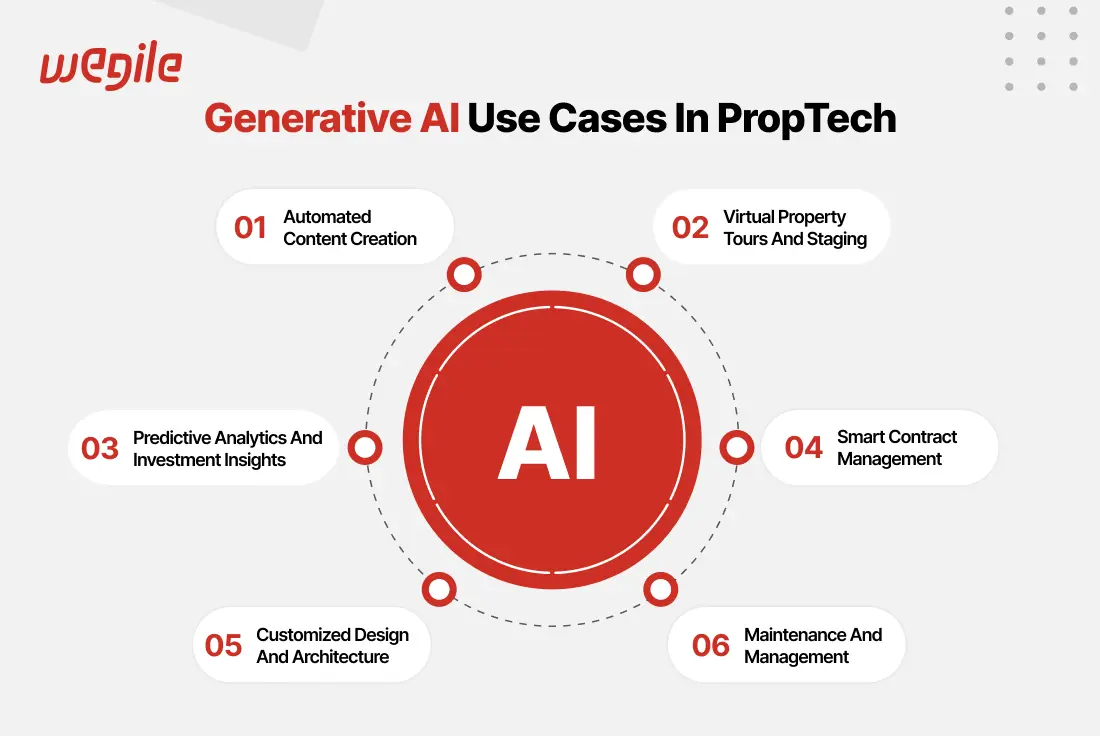
Generative
AI Use Cases in PropTech
The Scale and Scope of GPT-5
GPT-4 amazed us with its understanding and response capabilities, setting a new standard for what AI
can achieve. Now, imagine an even more powerful model. Early whispers suggest that GPT-5 could
dramatically expand on the number of parameters, diving deeper into the complexities of human
language and interactions. But it’s not just about size. The real magic lies in utilizing these
parameters for more data, learning, and significantly more nuanced interactions.
1. Automated
Content Creation
-
Marketing Materials Generation
Imagine needing to craft an eye-catching brochure or an engaging social media post for a new
property listing. Instead of spending hours on design and copywriting, generative
AI solutions step in to streamline this
process. By inputting basic details about the property, AI tools can generate complete
marketing packages that include high-quality images, compelling property descriptions, and
attractive headlines. This speeds up the marketing process and ensures the materials are
polished and professional, instantly capturing potential clients’ attention. -
Automated Report and Document Creation
Reports and documents are staples in real estate transactions and management. They often
require meticulous attention to detail and can be pretty time-consuming to produce.
Generative AI changes the game in the
real
world by automatically generating these
documents. Whether it’s a detailed property analysis report for investors or a maintenance
schedule for property managers, AI can compile data, analyze trends, and produce
comprehensive documents that are both accurate and informative. This capability saves time
and reduces the likelihood of human error, ensuring that stakeholders have reliable
information at their fingertips.
2.
Virtual Property Tours and Staging
-
Use of AI for Creating Virtual Tours
Staging a property involves furnishing the space to make it more appealing to potential
buyers. With AI-powered virtual staging, this process becomes less costly and more creative.
AI can digitally furnish an empty room, adjust decorations, and even alter wall colors to
suit different tastes and styles. This not only helps in visualizing the potential of a
property but also allows for customizable staging options that cater to diverse buyer
preferences, enhancing the property’s appeal and significantly boosting its marketability. -
Virtual Staging of Properties
Staging a property involves furnishing the space to make it more appealing to potential
buyers. With AI-powered virtual staging, this process becomes less costly and more creative.
AI can digitally furnish an empty room, adjust decorations, and even alter wall colors to
suit different tastes and styles. This not only helps in visualizing the potential of a
property but also allows for customizable staging options that cater to diverse buyer
preferences, enhancing the property’s appeal and significantly boosting its marketability.
3. Predictive Analytics and Investment Insights
-
Forecasting Property Values and Market Trends
With generative AI, predicting the future value of properties and understanding market
trends
have become more accurate. This technology analyzes vast amounts of data: past sales,
neighborhood trends, economic indicators, and emerging market influences to forecast
property values. For investors, this means predicting which properties are likely to
appreciate, making it easier to decide where to invest their money for the best return. This
foresight helps avoid the pitfalls of investing in declining markets and captures
opportunities in rising locales. -
Risk Assessment Models for Investments
Investing in real estate is not without risks, but generative AI can significantly reduce
uncertainty. AI models can identify potential risks associated with particular investments
by processing historical data and current market conditions. Whether it’s the likelihood of
natural disasters, changes in local property laws, or shifts in the economic landscape,
these AI-driven assessments help investors mitigate risks before they become problematic.
This capability secures investments and ensures stability in the ever-volatile real estate
market.
4. Smart Contract
Management
-
Automation of Lease Agreements and Transactions
The traditional process of drafting lease agreements and managing transactions is often
laden
with paperwork and prone to errors. Generative AI streamlines this by automating the
creation and management of lease agreements. By inputting key details, AI systems can draft
customized lease documents that comply with local laws and regulations. Moreover, rent
payments and lease renewals can be automated, ensuring timely execution and reducing the
administrative burden on property managers and tenants. -
Enhancing Contract Reliability and Efficiency
The reliability and efficiency of contracts are crucial in real estate transactions.
Generative AI enhances these aspects by ensuring that contracts are drafted precisely and
managed effectively throughout their lifecycle. AI systems monitor contract terms, send
reminders for upcoming obligations, and alert parties to discrepancies or forthcoming
deadlines. This proactive management helps prevent disputes and ensures all contractual
terms are met, making the process smoother and more dependable.
5.
Customized Design and Architecture
-
Generative AI-driven Design Suggestions Based on Client Preferences
Imagine walking into a home that fits your style and needs, ideally as if it were
tailor-made. That’s what AI-driven design can achieve. By analyzing your preferences,
lifestyle, and future needs, AI can suggest designs that match perfectly with your vision.
Whether the kitchen layout or the living room’s aesthetics, AI tools can craft multiple
design options, allowing clients to visualize potential homes before a single brick is laid.
This not only ensures client satisfaction but also saves on costly redesigns. -
Simulation of Architectural Outcomes
One of the standout features of AI in architecture is its ability to simulate and visualize
architectural outcomes. This means you can see how your building will look under different
conditions before it’s even built. Will it get enough natural light? How will it look during
other times of the day or seasons? AI simulations can answer these questions, allowing for
adjustments in the design phase, which can significantly improve the functionality and
appeal of the property once it’s constructed.
6. Maintenance and Management
-
Predictive Maintenance Powered by AI
AI transforms property maintenance from reactive to predictive. Traditionally, maintenance
issues are addressed after they arise, but AI allows for a more proactive approach. By
analyzing data from various sensors and systems within a building, AI can predict when a
part of the property will likely need repairs or replacement. This helps avoid the
inconvenience of sudden breakdowns and significantly reduces maintenance costs by addressing
issues before they escalate into major repairs. -
Efficient Property Management Through AI Tools
Managing a property involves many tasks, from handling tenant inquiries and managing budgets
to ensuring compliance with regulations. AI tools streamline these processes by automating
routine tasks, organizing data, and facilitating communication. For instance, AI can
automatically send reminders to tenants about rent payments or maintenance schedules, manage
energy use more efficiently to reduce costs and ensure that the property complies with all
local laws and regulations. This automation reduces the workload for property managers and
increases the efficiency and profitability of property management.
Navigating the Future:
Generative AI’s Expanding Role in PropTech
-
Potential Advancements in AI Technology
The pace at which AI technology advances suggests that what we’ve seen is just the
beginning.
Future AI systems are expected to be far more intuitive and capable of handling complex
tasks more precisely. Imagine AI tools that automatically design entire neighborhoods based
on demographic data and predicted population growth or systems that seamlessly integrate
renewable energy solutions into building designs to promote sustainability. As AI becomes
more sophisticated, it will be able to handle not just isolated tasks but entire projects,
from initial design through to construction and management, all optimized for efficiency and
sustainability. -
Broader Adoption and
Its Implications for the Real Estate MarketAs more stakeholders in the real estate sector recognize the benefits of generative AI, its
adoption is set to increase, leading to significant transformations in the industry. Broader
adoption of AI could lead to more personalized real estate services, where searches and
transactions are tailored to the individual needs of buyers and renters with unprecedented
accuracy. This could streamline the buying and selling process, making it faster, more
efficient, and potentially even more affordable as AI-driven processes reduce overhead
costs. Additionally, as AI technology becomes a standard tool in real estate, we could see a
shift in job roles within the industry, with new positions created for managing and
optimizing AI operations. -
Collaborations and Innovations to
Look Forward ToThe future of generative AI in PropTech is not just about technological advancements but
also
the collaborations that will drive these innovations. We can expect to see partnerships
between AI developers and real estate professionals, as well as collaborations with
government bodies to ensure that the deployment of AI in real estate adheres to regulatory
standards and promotes public good. These collaborations could lead to innovative solutions
like AI-driven intelligent cities, where everything from traffic management to public safety
is optimized using AI.We could see innovations that integrate AI with other cutting-edge technologies like
blockchain for secure and transparent property transactions or IoT (Internet of Things) for
more innovative home automation that enhances convenience and conserves resources.
Integrating AI with virtual and augmented reality could also revolutionize property showings
and inspections, making them more detailed and interactive.
Final Words
The terrific impact of generative AI in PropTech is reshaping the real estate industry. This
cutting-edge technology goes beyond automating tasks; it’s revolutionizing property visualization,
investment analysis, and even architectural design processes. With such profound changes afoot, the
question isn’t just about what AI can do but whether we’re ready to harness its full potential.
Are you prepared to explore the possibilities of generative AI? At Wegile, our Generative AI App
Development Services are tailored to help you
navigate this new technological landscape. Whether you want to streamline property designs or manage
complex portfolios effortlessly, our advanced AI tools are designed to meet your needs. Embrace the
future of real estate with Wegile and discover how our solutions can elevate your business. Let’s
innovate together and unlock new opportunities with generative AI!
Leave a Reply