Have you ever felt like your creative spark is running out, and you’re repeating the same ideas?
Staying unique is important nowadays. Especially if you want to stand out among the rest in the
competition; however, the constant pressure of creating can really hurt your creativity. Despite
numerous digital tools at our
disposal, many artists and musicians struggle with
outdated traditional methods. It’s like painting with dull crayons. Repetitive tasks can drain your
energy and kill inspiration. And let’s be honest about the cutthroat competition; there’s no place
for mediocre work.
But what if there was a way to break free from these creative constraints? Say hello to generative
AI, which is a game-changer for artists and musicians. It’s like a secret weapon for artists and
musicians. The role of generative AI in transforming art and music is crucial. It helps you overcome
creative blocks and gives you the freedom to create with more flair. Generative AI fuels your
imagination, apart from helping you deal with mundane tasks. Buckle up as we take you on a journey
through the top ways generative AI is transforming the creative industries. We’ll also explore top
AI tools for creative professionals.
6 Ways to
Use Generative AI in Creative Industries
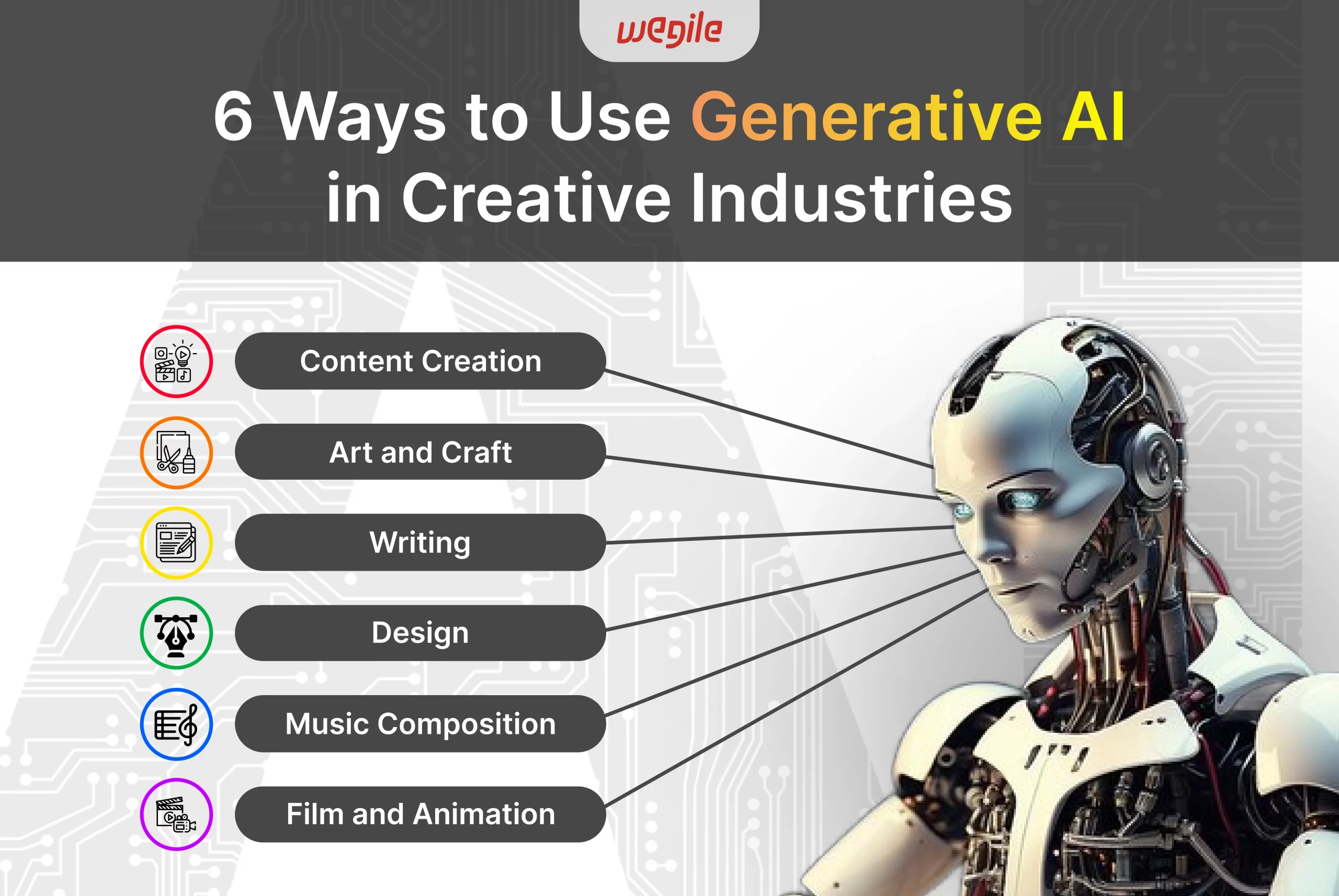
1. Content Creation
There may have been many instances where you’ve felt stuck staring at a blank page and waiting for a
perfect idea to strike. But with Generative AI by your side, that’s a thing of the past! Gen AI
works as a supercharged content assistant that never sleeps. It’s transforming how content creators
work. Generative AI does this by automating grunt work, such as creating images, text, videos, etc.
Imagine a scenario where you’re making a month’s worth of social media posts for your brand in
fractions of a second! Generative AI tools give you more time to focus on strategic and creative
tasks. It boosts the confidence of creators by crafting content that resonates perfectly with their
audience. It further maintains brand voice and consistency.
Top Generative AI Content Creation Tools
-
Synthesia effortlessly transforms text into video content. It uses AI to generate realistic
avatars that lip-sync and convey messages in multiple languages. This helps make video
creation
accessible and engaging. -
Jasper is your AI-powered writing assistant. It helps generate text for various content
needs,
from blog posts to marketing emails. It uses natural language generation to ensure clear and
compelling communication. -
Podcastle is an AI tool that simplifies podcast creation. It converts written content into
natural-sounding audio. The tool allows creators to reach audiences through podcasts without
needing professional recording equipment. -
Cohere Generate is a tool that automates content generation by understanding context and
generating relevant text. It’s ideal for generating product descriptions, social media
posts,
and other marketing content. All this can be done with accuracy and speed. -
Copy.ai is a versatile tool for crafting copy that converts. It allows marketers to create
impactful content within a short span of time. The generative AI tool creates catchy
slogans,
engaging social media posts, and persuasive ad copy.
2. Art and Craft
Artists are embracing generative AI as their new brushstroke of choice. Technology is helping inject
a fresh dose of innovation into the world of arts and crafts. Generative AI tools are opening to new
artistic realms. They generate intricate visual designs to suggest innovative material combinations.
Gen AI acts as a collaborative partner as it fuels inspiration and provides ideas and techniques
that artists might not have thought of. Hence, art with Generative AI is more than just art
creation. It is a journey of exploration and discovery of new artistic expressions.
Top Generative AI Art and Craft Tools
-
DALL-E uses generative AI to create images from textual descriptions. It makes unique and
imaginative visuals that blend different artistic styles. The tool offers artists new
avenues
for creative expression. -
DeepArt applies AI algorithms to transform photos into artworks inspired by famous artists
and
styles. It allows users to experiment with different artistic filters and effects. This is
how
generative AI turns ordinary images into extraordinary pieces. -
Runway ML is a platform that integrates AI models into creative workflows. It supports a
variety
of AI-based features for artists, such as aspects such as style transfer, object detection,
and
natural language processing. This allows experimentation and innovation in artistic
projects. -
Artbreeder lets users create new artworks by blending existing images. It uses AI to
generate
variations of visuals. This allows artists to explore endless possibilities and refine their
artistic vision through iterative experimentation. -
Prisma uses AI to transform photos into artworks. It offers a variety of artistic filters and
styles inspired by famous artists. It allows users to instantly apply artistic effects and
enhance their photos with a touch of creativity.
3. Writing
Writing with generative AI is like having a brilliant co-author who has a fresh perspective. AI
tools
are always there to rescue you, whether it’s about sparking ideas or weaving thoughts into
narratives. And when it comes to drafting, generative AI doesn’t just stop at stringing words
together. It fine-tunes sentences, polishes prose, and even suggests alternate phrasings to elevate
your writing game. It’s like having a professional editor 24/7! This way, generative AI tools
provide more time to delve into the heart of their stories and craft content that impresses readers.
Hence, creativity flows, and possibilities for storytelling are boundless when AI is by your side.
Top Generative AI Writing Tools
-
ChatGPT is a generative AI tool developed by OpenAI. It is used to generate and refine text.
Further, it helps writers brainstorm ideas, draft content, and answer questions. This makes
the
writing process smoother and more efficient. -
Grammarly is an AI-powered writing assistant. It conducts tasks such as checking grammar,
punctuation, and style errors. Also, it offers suggestions to enhance clarity and
readability.
This allows writers to produce polished and professional content. -
Sudowrite is a tool used by creative writers to generate story ideas, develop characters,
and
craft dialogue. It uses AI to suggest plot twists and enrich narratives. This makes
Sudowrite an
invaluable tool for fiction writers. -
WriteSonic is an AI content generator tool. It supports the creation of marketing copy, blog
posts, and social media content. The tool uses natural language processing to generate
engaging
and relevant text. This makes Writesonic a valuable tool for saving time and effort. -
Claude AI is an AI assistant designed for writing and research. It helps writers generate
ideas,
draft content, and find relevant information. This makes Claude AI a versatile tool for
various
writing tasks.
4. Design
Design isn’t just about aesthetics. It’s about capturing the essence of a brand, telling stories
through visuals, and staying ahead of trends. Generative AI is a key element that’s reshaping how
designers approach their work. Here, the work of tools isn’t replacing creativity; it is here to
enhance it. One of the most important aspects of designing is personalization, and generative AI
excels in it. It tailors the design to individual preferences rather than creating one-size-fits-all
solutions. Each interaction feels bespoke, whether it is product designing, developing a product
prototype, or designing marketing collateral.
Top Generative AI Design Tools
-
Canva makes designing easy for everyone. Its templates, images, and fonts allow you to
create
beautiful graphics. It’s perfect for both beginners and professionals. -
Adobe Sensei uses AI to support your creative projects. It can perform complex tasks like
editing
images and creating content, making your design work faster and more creative. -
Deep Dream Generator turns your photos into dream-like art. It uses AI to create unique and
surreal images. This gives you a fun way to experiment with your designs. -
CLO 3D helps fashion designers create 3D models of clothes. You can design, change, and
present
your clothing ideas in a realistic way. This makes it easier to see your designs come to
life. -
Planner 5D lets you design 3D homes and interiors. You can easily create and visualize
rooms.
This makes Planner 5D a great tool for architects and interior designers.
5. Music Composition
Music is evolving into a dynamic playground where generative AI sparks new symphonies of creativity.
Picture AI algorithms collaborate with musicians to compose melodies and explore genres, rhythms,
and musical territories that are still yet to be explored. This way, AI redefines music composition
by expanding creative horizons from classical orchestras to futuristic beats. Artists around the
world are harnessing Gen AI’s power to generate endless musical ideas from a simple prompt. These AI
tools have become their virtual bandmate who is always ready with fresh inspiration. Generative AI
is your partner in pushing the boundaries of musical expression, be it composing film scores or
crafting chart-topping hits.
Top Generative AI Music Composition Tools
-
AIVA composes original music using AI. You can use it to create music for films, games, and
commercials. This makes the composition process faster and more creative. -
MuseNet by OpenAI can generate music in many styles. It blends different genres and
instruments. This helps you create unique and interesting pieces. -
Jukedeck creates custom music for your projects. You can adjust the tempo and style to fit
your video, ad, or presentation perfectly. -
Melodrive generates music that adapts to your interactive content. It’s great for games and
VR experiences, creating dynamic and responsive music.
6. Film and Animation
Light, camera, AI-action! Generative has turned out to be a transformative force in the field of
film
and animation. Directors and animators collaborate with AI to craft stunning visuals and streamline
the editing process. Gen AI tools are further transforming how stories come to life on screen.
They’re enhancing CGI realism and refining characters’ animations. Generative AI steps in as your
digital assistant. It supports tasks such as analyzing scenes, suggesting edits, and predicting
audience reactions. Also, Gen AI automates tedious tasks and frees filmmakers and animators to focus
on going deeper into the storytelling aspects. Hence, AI supports creators in delivering cinematic
experiences that captivate and inspire audiences worldwide.
Top Generative AI Film and Animation Tools
-
Runway ML helps create and edit videos with AI. It offers various tools for video effects,
color
grading, and more. This makes the editing process faster and more creative. -
NVIDIA GauGAN turns simple sketches into realistic images. You can draw basic shapes, and it
will
transform them into detailed scenes. The tool is perfect for creating stunning visuals. -
Ebsynth animates your drawings and photos. It allows you to add motion to still images and
quickly and easily create animations. -
DeepMotion creates realistic animations from video. It tracks movement and turns it into
animated
characters. This helps animators work faster and more accurately.
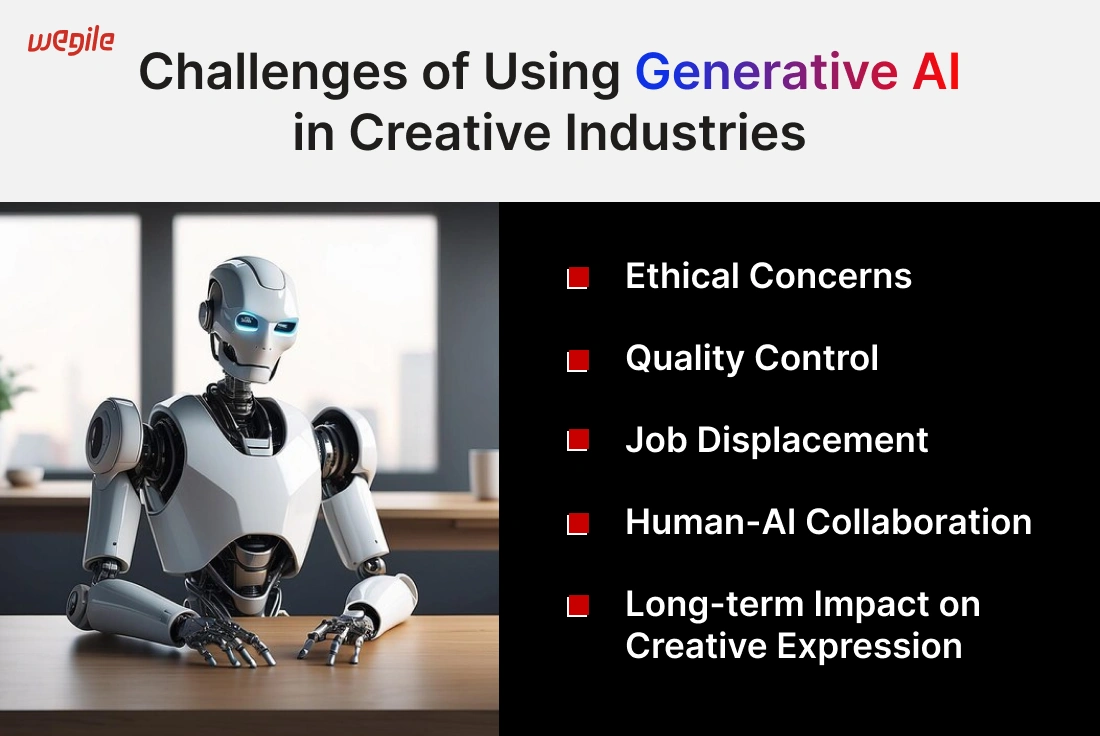
Challenges of Using Generative AI in Creative
Industries
Generative AI is undeniably transforming creative industries, offering unprecedented tools for
innovation and efficiency. However, this transformation is not without its challenges. This section
delves into some of the more nuanced and less frequently discussed challenges associated with
integrating generative AI in creative fields.
1. Ethical Concerns
Generative AI raises significant ethical questions that are often overlooked in mainstream
discussions. One major concern is the issue of authorship and originality. This ambiguity can lead
to legal disputes and hinder the adoption of AI-generated content. Another ethical dilemma involves
the potential for bias. AI systems learn from existing data, which can include inherent biases. When
these biases are replicated in creative outputs, they can perpetuate stereotypes and cultural
insensitivity. For example, an AI trained in predominantly Western art styles may struggle to
generate art that accurately represents other cultures, leading to a homogenization of creative
expression.
2. Quality Control
While generative AI can produce high-quality content, maintaining consistent quality remains a
challenge. AI-generated content can sometimes lack the nuanced understanding and emotional depth
that human creators bring to their work. This can result in outputs that feel generic or unoriginal,
which may not resonate with audiences on a deeper level. Furthermore, the reliance on algorithms
means that the quality of AI-generated content is directly tied to the quality of the input data.
Poor-quality or biased data can lead to subpar outputs, which can undermine the credibility of AI
tools in creative industries. Ensuring high-quality, diverse training data is crucial but can be
resource-intensive and challenging to curate.
3. Job Displacement
The automation of creative processes raises concerns about job displacement. While AI can augment
human creativity, there is a fear that it could replace human jobs, particularly in roles that
involve repetitive or formulaic tasks. For example, AI-generated music and art could potentially
reduce the demand for commercial artists and composers. However, this challenge is multifaceted.
While some jobs may be at risk, new roles and opportunities are likely to emerge. The key lies in
upskilling and reskilling the workforce to adapt to this technological shift. Creative professionals
may need to focus more on roles that involve overseeing AI systems, curating content, and adding a
human touch to AI-generated works.
4.
Dependence on Data Availability
Generative AI’s effectiveness is heavily dependent on the availability of large datasets. In
creative
industries, high-quality datasets that represent a wide range of styles and genres are crucial.
However, obtaining such datasets can be challenging due to issues of copyright, privacy, and
accessibility. Without diverse and comprehensive data, AI systems may produce limited or biased
outputs.
5. Human-AI
Collaboration
Effective collaboration between humans and AI in creative processes is another challenge that is
often underemphasized. While AI can assist with idea generation and technical execution, the
integration of human creativity and intuition is essential for producing truly innovative and
emotionally resonant work. Striking the right balance between leveraging AI’s capabilities and
preserving the unique qualities of human creativity is a delicate task that requires careful
consideration and ongoing adjustment.
6.
Long-term Impact on Creative Expression
The widespread adoption of generative AI in creative industries could have long-term implications
for
creative expression. There is a risk that reliance on AI tools could lead to a homogenization of
creative outputs, as AI systems may favor certain styles or approaches based on their training data.
This could stifle diversity and innovation, leading to a more uniform and less vibrant creative
landscape.
Wrapping Up
Generative AI is undeniably reshaping creative industries, from content creation to music
composition
and everything in between. While the potential benefits are immense, it is crucial to navigate the
associated challenges with care and foresight. For those looking to explore the integration of
generative AI into their creative endeavors, partnering with an experienced generative AI
development company like Wegile can provide significant advantages. Wegile offers comprehensive
generative AI development services tailored to meet the unique needs of creative
professionals and industries. By leveraging Wegile’s expertise, you can ensure that your AI tools
are both cutting-edge and aligned with your creative vision. In conclusion, the path forward
involves a balanced approach, embracing the innovative power of generative AI while addressing its
challenges with strategic insight and ethical consideration. By doing so, we can harness AI’s full
potential to enhance creativity, drive innovation, and enrich the cultural landscape.
Leave a Reply