
Worried about data security in your generative AI projects? Safeguarding sensitive information has
become more critical with the increasing use of AI. Your data can be vulnerable to breaches and
misuse in the absence of proper security measures. This can lead to significant setbacks, loss of
trust, and potential legal issues. It’s like building a house with no walls. Your valuable
information is left exposed. But you don’t need to fear as this blog covers nine powerful tips to
enhance data security in generative AI. It covers strategies that will help you protect your data
and ensure your AI projects are safe and secure. Ready to fortify your data security? Let’s dive in
and build a robust defense for your generative AI endeavors!
Major
Challenges in Generative AI?
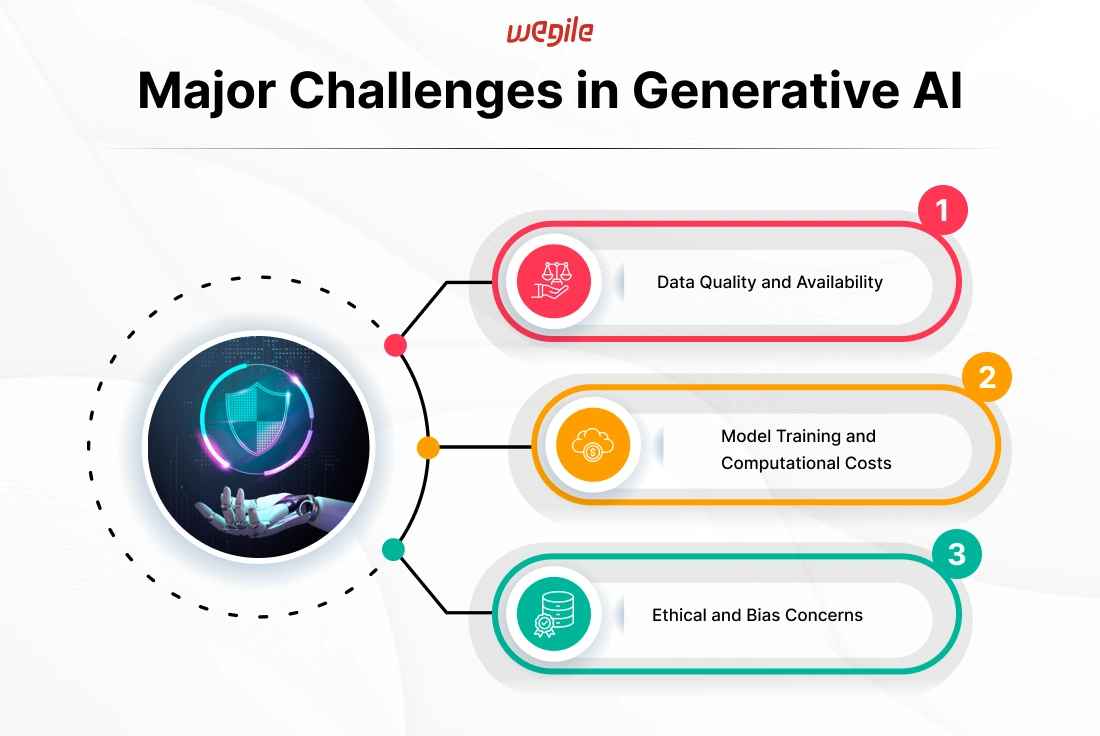
1. Data Quality and Availability
Training generative AI models require high-quality and diverse data. However, finding this
high-quality data isn’t always straightforward. AI’s output can be skewed or inaccurate if the data
is biased or incomplete. Ensuring the data is comprehensive and representative is key to building
robust and reliable generative models. Consider collecting diverse datasets that represent different
scenarios and perspectives accurately.
2.
Model Training and Computational
Costs
Training generative AI models requires hefty computational resources. Imagine running multiple
high-powered machines simultaneously, crunching numbers, and learning patterns; it’s a
resource-intensive process. This massive computational need translates into significant financial
costs. High-performance GPUs
or TPUs
and substantial storage capacity are essential, making the training process not just a tech
nical challenge but also a financial one. Balancing these costs with performance needs is crucial
for any organization venturing into generative AI.
3.
Ethical and Bias Concerns
The main ethical issue with generative AI is that it can embed and spread biases. These biases can
affect decisions and outcomes, leading to unfair treatment. Addressing this challenge requires
careful monitoring and intervention. By recognizing the biases early, we can take steps to ensure
fairness and accuracy. This approach improves AI systems and builds trust in their use.
Must
Read:
How Generative AI Can Be Used in
the Real World?
Tips to Enhance Data Security in Generative AI
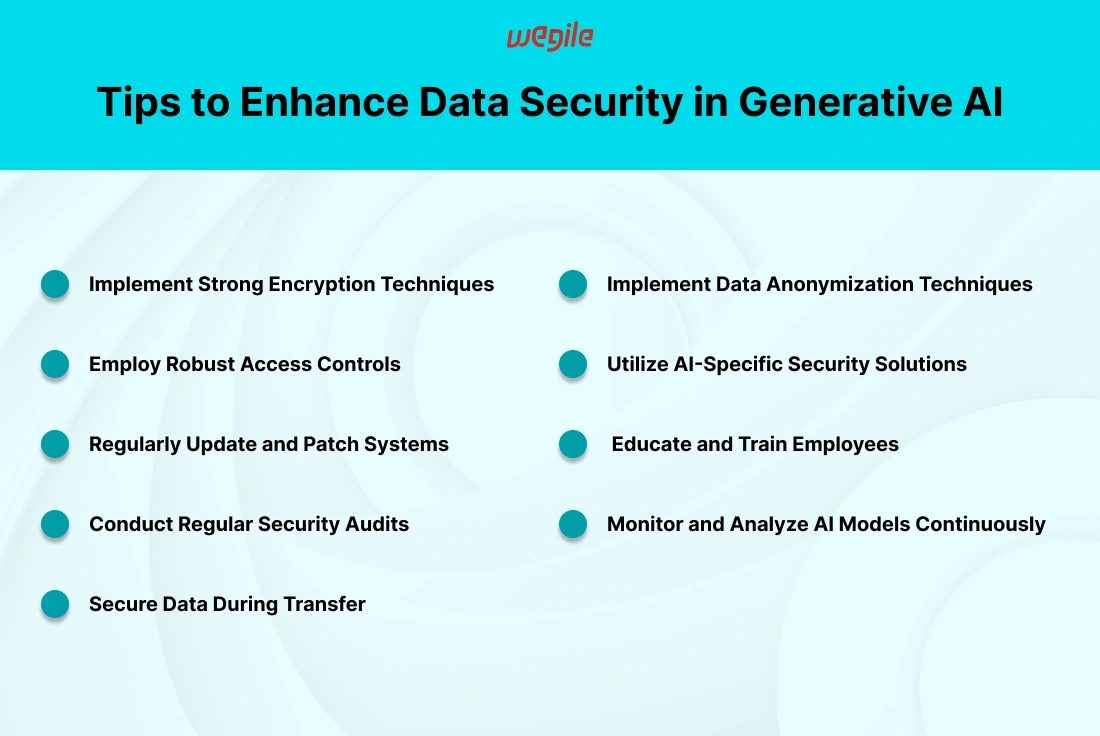
Tip 1: Implement Strong Encryption
Techniques
Types of Encryption
Encryption is crucial to secure AI’s data. But how does it happen? There are two main ways that you
should consider. 1. Symmetric and 2. Asymmetric encryption. Symmetric encryption requires only one
key to encrypt and decrypt data. This makes it a speedy process; however, make sure to handle the
key securely. On the other hand, asymmetric encryption uses a pair of keys: one is public, and the
other one is private. This adds an extra layer of security but at the cost of additional
computational overhead. Both methods are crucial, and choosing the right one depends on your
specific needs and data sensitivity.
Best Practices for Encryption
Always use strong, updated encryption algorithms and manage keys securely. These practices will get
you the most out of encryption. Update the encryption protocols regularly to keep up with evolving
threats. Additionally, ensure encryption is applied consistently across all data points. This is
required both in transit and at rest. Follow these best practices
to protect your data against breaches and unwanted access.
Tip 2:
Employ Robust Access
Controls
-
Role-Based Access Control (RBAC)
RBAC restricts access to sensitive information so that only authorized users may view it.
Data access, modification, and view permissions can be better managed with it as it
allocates
roles and permissions according to job functions. This guarantees only those who need
sensitive
information can find it and also reduces the risk of unauthorized access. -
Multi-Factor Authentication (MFA)
MFA enhances security by prompting users to confirm their identity through multiple methods.
Think of it as having a double lock on your front door. When one key is compromised, you can
rest assured that the second layer is ready to keep the entry secure. You can ensure that
access is closely monitored and greatly minimize the chances of unauthorized entry by
incorporating
MFA into your generative AI environment. Rest assured, knowing that your data is fully
protected
and secure.
Must Read: What Every CEO Must Know About Generative AI?
Tip 3: Regularly Update and Patch
Systems
-
Importance of Updates
Consider regular updates as the necessary maintenance for your AI systems. They
safeguard your
system from potential vulnerabilities. Keeping your systems updated is crucial for
staying ahead
of any risks. Software developers are always working hard to find and fix security
issues. Not
keeping up with updates is like forgetting to lock your door. You’re surely going to
invite
trouble. Thus, it’s important to regularly update your systems so that they can
effectively
handle any new security threats and operate at their best. -
Automated Patching Solutions
Manual patching can be tedious, but automated solutions make it a breeze. Automated
patch
management tools handle updates for you. It ensures that your systems are always
up-to-date
without constant manual intervention. These tools monitor for vulnerabilities and
apply patches
automatically. This saves you time and reduces the risk of missed updates. Embracing
automation
means you’re not just staying current but staying ahead.
Tip
4: Conduct Regular Security
Audits
-
Types of Security Audits
Security audits are like regular check-ups for your AI systems. Identifying
difficulties in
advance prevents them from escalating into significant problems. Various types of
audits exist,
each fulfilling a distinct function in the identification and mitigation of
potential hazards.
This ensures your AI systems remain robust and secure.-
Internal Audits: These inspections are carried out within your
organization.
Internal audits provide a glimpse into your security posture from an insider’s point
of
view. -
External Audits: These inspections are carried out by independent
professionals. Getting an external audit can give you a fresh perspective on your
security
practices and help uncover any blind spots that may have been overlooked.
-
-
Implementing Audit Findings
Finding issues in an audit is just the beginning. The real work begins with acting on those
findings. Prioritize the audit recommendations first by taking into account their impact and
risk. Make a comprehensive strategy that takes into account all of the issues, identifies
who
will do what, and sets due dates. Maintaining a high level of data security requires
periodically reviewing and revising security rules in response to audit results. You can
strengthen your defensive measures and fix any holes in them by taking proactive actions.
Tip 5:
Secure Data During Transfer
-
Secure Transfer Protocols
It’s important to make certain that data remains secure and intact during transfer calls.
This
requires reliable and strong methods to prevent any unauthorized interception or tampering.
For
a more laid-back and technical approach, you can rely on secure transfer protocols such as
HTTPS, FTPS, and VPNs. Employing these methods guarantees the security and integrity of your
data while it is being transferred.-
HTTPS: It encrypts data between your browser and the server. This
makes HTTPS essential to secure web interactions. -
FTPS: It offers a secure way to transfer files and adds encryption
to the standard FTP. -
VPN: It creates a private network over the internet and protects
your data from prying eyes.
-
-
Data Integrity Checks
Data integrity checks are the security guards for your data that make certain that it
arrives
unchanged. These checks verify that the data sent matches the data received, and they
further
flag any alterations. Checksums and hash functions employ methods to produce distinct
identifiers for data and enable comparison before and after transmission. If the identifiers
match, you know the data is intact. Implementing these checks adds an extra layer of
security.
This ensures that your data remains unaltered and trustworthy.
Tip 6: Implement Data Anonymization
Techniques
-
Methods of Data Anonymization
Anonymizing data deals with protecting identities while retaining useful information. There
are methods to ensure that even personal information remains protected even if data is
accessed
without authorization. Several techniques can achieve this:-
Data Masking: The approach replaces sensitive data with random but
realistic values. This makes it unreadable to unauthorized users. -
Tokenization: This approach substitutes sensitive data with unique
identifiers (tokens) that retain the original data’s usability but conceal its true
form.
-
-
Balancing Anonymization and Data Utility
Data anonymization poses a problem in balancing privacy concerns with its
practicality. Ensuring user identity protection without sacrificing the data’s usefulness is
like walking a
tightrope. Data analysis becomes impossible when it is over-anonymized. Also, it becomes
risky
when it is under-anonymized. Thus, you need to strike the right balance here, which involves
understanding the specific use case and
applying the appropriate level of anonymization. This careful calibration makes certain that
data remains both secure and functional for its intended purposes.
Tip 7: Utilize AI-Specific Security
Solutions
-
AI-Driven Security Tools
AI-driven security tools are like having a digital watchdog that never sleeps. These
advanced
tools use machine learning to detect and respond to threats in real-time. They can identify
unusual patterns, flag potential security breaches, and even automate responses to contain
threats. Thus AI-driven tools, by continuously learning from new data, become more effective
over time and provide a robust defense against evolving cyber threats. -
Integrating Security into AI Development
The development of AI should incorporate security measures. You can’t just throw it on as an
afterthought. Putting security first from the very beginning of the design process is where
it
all begins. Further, approaches such as secure coding practices, conducting regular code
reviews, and implementing thorough testing enable the early detection of vulnerabilities.
Also,
the incorporation of automated security tools into the development pipeline will result in
identifying and fixing issues before deployment. This proactive approach ensures that
security
is an integral part of your AI solutions and guarantees protection from the ground up.
Tip 8:
Educate and Train Employees
-
Security Training Programs
Having a knowledgeable team is crucial for protecting against security threats. It’s
important
for security training programs to cover key topics such as identifying phishing
attempts,
practicing safe data handling, and emphasizing the significance of regular software
updates.
Practical workshops and realistic simulations can boost learning and improve
long-term memory.
Also, providing employees with the necessary training and knowledge can
significantly reduce the
chances of human error compromising your data security. -
Promoting a Security-First Culture
Building a security-first culture means ensuring everyone takes responsibility for
it. Therefore,
open communication about security issues is important. Additionally, recognize and
appreciate
employees who proactively safeguard data. To maintain vigilance, keep the team
informed about
new threats and the steps to handle them. Moreover, it encourages good security
practices by
implementing rewards or recognition programs. Ultimately, when security becomes a
core value
shared by the whole organization, it strengthens your defense strategy and helps
maintain robust
data protection.
Tip 9: Monitor and Analyze AI
Models Continuously
-
Monitoring Tools and Techniques
Think of continuous monitoring as having a security camera installed to keep watch
over your AI models. It ensures they stay on the right track. There are several tools and
techniques you can use to monitor effectively:-
Logging and Alerts: Set up comprehensive logging to track
model behavior and alarm systems to keep you informed of any unusual occurrences. -
Performance Metrics: Regularly measure key performance indicators
(KPIs) to identify any deviations that could indicate potential security
issues. -
AI-Specific Monitoring Tools: Employ specialized tools designed to
monitor AI models. These tools provide customized insights into the performance and
security
of the models.
-
-
Responding to Security Incidents
Swift and effective response is crucial in the times when a security incident occurs. Here’s
a framework to guide your actions:-
Incident Identification: Quickly identify and confirm the security
breach using your monitoring tools. -
Containment: Stop the breach in the initial stages and stop it from
spreading by isolating the compromised systems right away. -
Eradication: Identify the root cause of the incident and eliminate
it
from your systems. -
Recovery: Restore affected systems and verify that they are
functioning
correctly and securely. -
Post-Incident Analysis: Conduct a thorough review of the incident
to
understand what happened and how to avoid repeating the same mistakes in the future.
Update your security measures and protocols based on these insights.
-
Wrapping Up
Now that you have explored the crucial nine tips, you should be able to secure your generative AI
projects’ data much better. Putting these ideas into practice will secure your sensitive information
and establish trust with users to prevent future problems. Embrace these security measures to ensure
your AI projects remain robust and secure. Ready to take your generative AI security to the next
level? Wegile’s generative AI
development
services can help you build and
secure your AI solutions with expert guidance. Let us help you uild robust AI
projects
that stand out. Reach out to Wegile
today, and let’s secure your AI future together!
Leave a Reply