Generative AI is standing at the intersection of technology and society as it is continually
reshaping how we interact with the world and each other. As this technology progresses, its
consequences on cultural fluency, diversity, and ethical considerations grow even deeper. Addressing
biases and ethical considerations and concentrating on diversity and fluency in generative AI is
super important for creating equitable outcomes. A researcher named Jeong obtained a $558,000 grant
from the National Science Foundation for a project striving to cut bias in AI through improved data
preparation. This stat in itself highlights the significance of handling biases and unethical
considerations before using the prowess of AI.
In this blog, we will explore the roles of generative AI within these contexts. We will discuss the
challenges and opportunities it presents. So, no matter if you are a tech enthusiast, a business
leader, or simply curious about the future of AI, this exploration will bring valuable insights into
how artificial intelligence and generative AI app development services are shaping our cultural and
ethical landscapes.
So, keep reading to learn more about the balance of innovation and responsibility in the age of AI.
Significance of Cultural Fluency in Generative AI
Cultural fluency in generative AI is pretty important as it determines how effectively these
technologies can perform across diverse global cultures. Making sure that AI systems can understand
and respect cultural differences assists in crafting solutions that are fair and inclusive.
For example, when Generative AI solutions are used in language translation or content creation, they
must accurately reflect cultural contexts. It further helps to avoid misinterpretations and biases.
This becomes even more significant in healthcare or legal settings where the stakes are high and the
demand for cultural sensitivity is of immense value.
Successful integration of cultural fluency in Generative AI development not only enriches user
experience but also levels up trust and adoption across different communities. This focus on
cultural fluency can bring in more personalized and culturally aware interactions which make
Generative AI-backed tools more useful and relevant worldwide.
5 Effective Strategies to Promote Cultural Fluency in
Generative AI
Boosting cultural fluency within generative AI includes a good number of strategies that makes sure
Generative AI technologies operate effectively and respectfully across different cultural contexts.
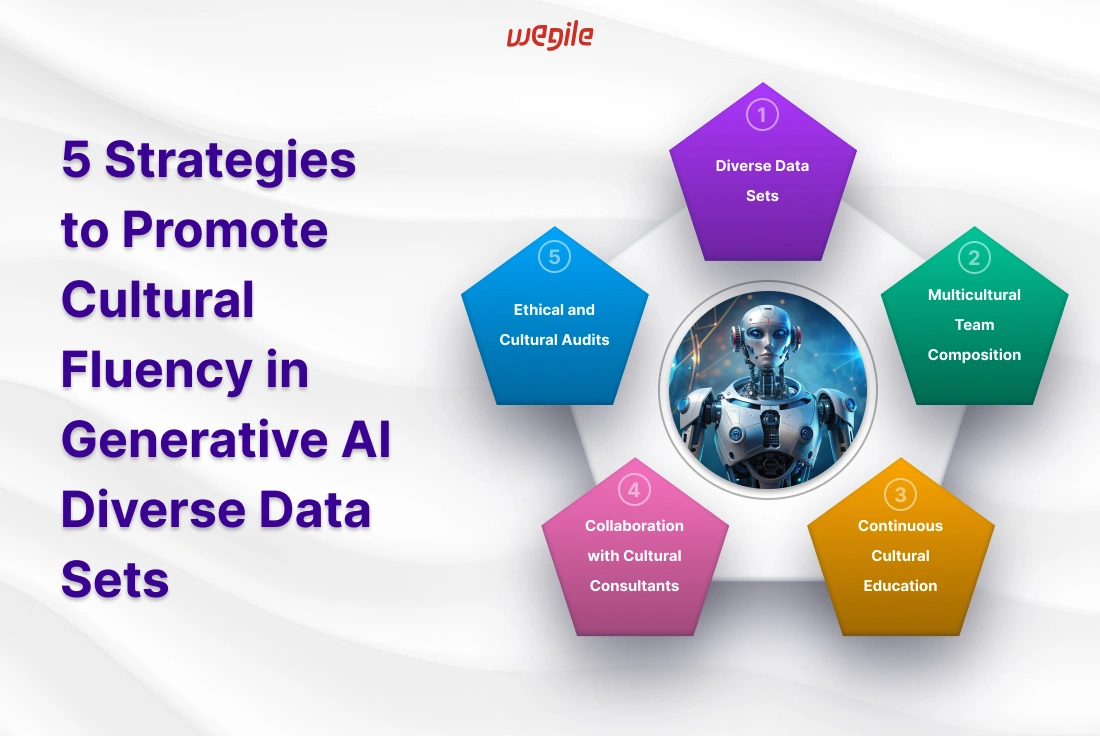
Here are five ways to enrich cultural fluency:
1. Diverse
Data Sets
Combining a wide array of cultural data into Generative AI training sets is essential. This means
including languages, dialects, and cultural norms. It also includes expressions from a broad
spectrum of communities. Generative AI systems comprehend from a more diverse set of data and they
are better equipped to address requests and deliver responses that are culturally relevant and
sensitive. This approach helps in minimizing biases that can take place when Generative AI is
trained predominantly on data from a single or limited number of cultures.
2.
Multicultural Team Composition
Building Generative AI with teams that are culturally diverse can enormously impact the cultural
fluency of their products. Team members from various backgrounds bring different perspectives that
are valuable in recognizing and dealing with potential cultural biases in Generative AI algorithms.
This diversity also assists in designing algorithms that are thoughtful of global cultural nuances
and these can further be overlooked by a more homogeneous team.
3. Continuous Cultural Education
Implementing continuous cultural education and sensitivity training for Generative AI developers and
stakeholders can enrich their knowledge of the complexities included in cultural interactions. This
education can wrap global cultural dynamics, social norms plus ethical considerations. An informed
team can better foresee and eliminate potential cultural insensitivities in Generative AI
applications which lead to more respectful and effective technology deployments.
4.
Collaboration with Cultural
Consultants
Setting meetings and collaboration sessions with cultural experts and consultants who have mastery
in
linguistics, anthropology, and cross-cultural communication can further refine Generative AI
development. These experts can provide insights into cultural subtleties and curate advice on
appropriate data usage and algorithmic decisions. Their expertise makes sure that Generative AI
applications respect cultural differences and perform effectively across various multinational
settings.
5.
Ethical and Cultural Audits
Regular audits of Generative AI algorithms for cultural bias and ethical integrity are also pretty
essential. These audits are conducted by independent bodies or internal teams trained in ethical AI
practices. They can identify and correct biases that may have been overlooked during development.
Audits help retain a high standard of cultural sensitivity and guarantee that AI systems remain fair
and unbiased as they evolve.
Importance of Diversity in Generative AI
The importance of diversity in generative AI is of immense importance as it directly impacts the
fairness, effectiveness, and thorough applicability of Generative AI technologies. The lack of
diversity in AI can have severe outcomes such as biased algorithms that fail to serve the entirety
of society equitably. For example, studies have shown that AI and Generative AI systems often
replicate and even intensify existing biases present in their training data. This can further lead
to discriminatory outcomes against underrepresented groups.
The lack of diversity in the Generative AI workforce has substantial implications for the
development
and deployment of technologies. For example, data exhibits that in North America, women account for
only around 19% of all AI and computer science PhD graduates. Similarly, the racial composition of
AI professionals is brutally skewed. These statistics highlight a big and worrisome gap in the
representation within AI development teams. It can lead to biased algorithms that do not
satisfactorily portray the diversity of the user base they serve. The diversity of the development
team affects the Generative AI’s ability to be fair and effective across different demographic
groups. Plus, diverse teams are more likely to recognize and correct biases in AI systems before
they are deployed.
Plus, the representation within the development teams also matters to great extent. A diverse team
can bring a wide range of perspectives which later contribute to the composition of more inclusive
AI models. This is crucial because when Generative AI technologies do not satisfactorily portray the
diversity of the users they serve, the consequences can be technologies that are less effective and
potentially biased. For example, the introduction of Generative AI-powered applications like an
interactive sign language dictionary demonstrates the positive impact AI can have when it deals with
the needs of diverse groups including those with hearing impairments.
Nurturing diversity within the Generative AI sector is not just about discouraging biases but also
about enriching the creativity, effectiveness, and societal acceptance of Generative AI
technologies. This is a crucial step towards guaranteeing that AI systems benefit all segments of
society equitably.
How to
Ensure Diversity in Generative AI?
Promoting diversity in generative AI is vital for developing equitable and effective technologies.
Here are five leading ways to enhance diversity in this rapidly evolving field:
1.
Expand Diverse Data Sources
One fundamental way is to broaden the range of data used to train Generative AI systems. It includes
collecting and incorporating data from diverse cultures and languages. It also involves assimilating
data from socio-economic backgrounds to cut biases that may originate from over-reliant training on
homogeneous datasets. Including varied data helps Generative AI learn and comprehend a wider
spectrum of human experiences and expressions which makes it more adaptable and less likely to
perpetuate existing biases.
2.
Diverse Development Teams
Constructing Generative AI development teams that portray a broad range of perspectives is
essential.
It means hiring professionals from diverse gender, racial, and ethnic cultural backgrounds. Diverse
teams are better trained to spot potential biases and combine a wider range of viewpoints in
Generative AI design and functionality which leads to more inclusive products.
3.
Bias Audits and Testing
Regularly performing bias audits throughout the Generative AI development life cycle is critical.
This procedure involves analyzing how Generative AI algorithms perform across different demographic
groups to recognize and eliminate unintended biases. Third-party audits can deliver an objective
review of AI systems which ensures accountability and transparency in how Generative AI applications
operate.
4.
Community and Stakeholder
Engagement
Having meetings with diverse communities and stakeholders during the Generative AI design and
development process can bring insights into the demands and concerns of various groups. This
engagement can be facilitated through workshop and feedback sessions. You can further nurture the
engagements using partnerships with community organizations. These will help inform AI development
and ensure that the technology serves a broad user base effectively.
5.
Inclusive Policies and Training
Implementing inclusive policies and continuous training schedules for Generative AI practitioners
can
nurture an environment that values and promotes diversity. Training should cover ethical AI use,
cultural competency, and reliable ways to get around unconscious biases in Generative AI
programming. Plus, policies that advocate for diversity in recruitment, retention, and promotion
within Generative AI fields encourage a systemic shift towards more inclusive AI development
practices.
Ethical
Considerations of Generative AI
Crossing the ethical landscape of generative AI includes careful consideration of various factors to
make sure that these technologies are formulated and used responsibly. Here are five main ethical
considerations along with strategies to stick to these ethical standards effectively:
1. Transparency
Users should understand how Generative AI systems make decisions. To accomplish this, AI developers
can implement systems that provide clear and understandable explanations for their outputs. It means
formulating Generative AI with explainable AI (XAI) techniques that help users to see the steps AI
took to arrive at its conclusions. Transparent practices help attain trust and help users make
informed decisions about using Generative AI.
Beyond simply making Generative AI’s decision-making processes visible, transparency also involves
documenting and sharing the methodologies behind AI training. It involves the sources of training
data, and the Generative AI’s limitations. This sort of openness allows users and regulators to
trust and substantiate the technology’s reliability and safety. For example, developers could
publish white papers or system documentation that explains their Generative AI models with ultimate
precision. It also includes inner workings in layman’s terms which further makes it easier for
non-experts to understand how decisions are being made.
2.
Privacy and Data Protection
Generative AI majorly requires large datasets, which may include sensitive personal information.
Protecting this data is of immense importance. Developers must stick to stringent data protection
standards such as GDPR in Europe or CCPA in California. It provides frameworks for supervising user
data responsibly. Techniques such as data anonymization and secure data storage must be employed to
safeguard individual privacy.
Effective data protection goes way beyond compliance with laws as it needs proactive measures to
manage data against unauthorized access and leaks. Techniques such as differential privacy, where
Generative AI learns about the general patterns in a dataset without accessing any specific
individual’s data can further be crucial. Engaging in regular security audits and vulnerability
assessments makes sure that data protection measures develop in response to new threats which
safeguards user data continuously.
3. Bias and
Fairness
Generative AI systems can perpetuate or even exacerbate biases if not carefully monitored. To combat
this, AI developers should utilize diverse training datasets and continually test AI outputs for
biases. Regular audits by independent third parties can assist in making sure that AI applications
treat all users fairly. Plus, implementing inclusive design and development practices can further
decrease bias.
To further tackle bias and guarantee fairness, Generative AI systems should not only be tested
against diverse data sets but also be designed to acclimate and learn from real-world interactions
in a way that cuts discriminatory outcomes. It can involve dynamic updating of models as they
encounter new data plus the implementation of feedback mechanisms where users can report biases or
unfair treatment. Such responsive systems can assist in creating AI that evolves and enhances its
fairness over time.
4.
Accountability
When Generative AI systems make mistakes, it is pretty crucial to have solid mechanisms in place to
keep the right entities accountable. It involves establishing clear guidelines on who is responsible
for Generative AI’s actions: the developers, the users, or the AI itself. An ultimate way to assure
accountability is through rigorous testing and validation of AI systems before they are deployed.
Setting a legal framework that clarifies liability issues is also critical.
Establishing a culture of accountability in AI involves clear documentation of decision-making
processes. It also encompasses maintenance of audit trails that record the steps AI used in making
decisions. It helps in tracing any errors back to their source. Plus, Generative AI systems should
include mechanisms for users to challenge and correct decisions that affect them. It makes sure that
AI remains a tool for human benefit and not a controller of fate.
5. Impact
on Employment
As AI automates more tasks, there arises a pressing and critical ethical concern about job
displacement. The ultimate way to address this concern ethically is that organizations must focus on
retraining and reskilling workers whose jobs are impacted by Generative AI technologies. Crafting
policies that facilitate the responsible adoption of AI can help cut negative impacts on employment.
It further makes sure that the transition towards automation is as smooth as possible for all
workers.
Addressing AI’s impact on employment includes not only retraining workers but also forecasting
future
skills requirements and readying the workforce accordingly. Governments and educational institutions
can work together with the tech industry to develop education and training programs that are in sync
with the emerging and advanced technological landscape. Such forward-looking initiatives guarantee
that as certain jobs are automated, new opportunities are also created that help the workforce to
transition into more fulfilling and productive roles in the age of AI.
Following these ethical guidelines needs staunch commitment from all stakeholders involved in the
development and deployment of Generative AI technologies. It includes setting up strict governance
frameworks plus continuous learning environment. It also involves adaptation of ethical standards,
and a powerful focus on human-centered design principles.
By prioritizing these ethical considerations, developers and users of generative AI can make sure
that these technologies are used for the good of society as a whole. They should help
Final Words
As we go through the complex landscape of generative AI, the incorporation of cultural fluency,
diversity, and ethical considerations is of high significance. Generative AI is not just a
technological marvel in fact it is a reflection of our society. It carries the enormous
responsibility of shaping our future interactions and decisions. It assists in understanding diverse
cultural landscapes.
The examples and strategies discussed highlight the critical need for an inclusive approach that
respects and portrays the rich story of global cultures by making sure that Generative AI serves as
a force for good and promotes fairness and inclusivity. By nurturing diverse development teams and
implementing continuous cultural and ethical education plus engaging with a wide array of
stakeholders, we can guide generative AI towards more fair outcomes.
Are you all set to utilize the power of Generative AI for your next project? Wegile is at the main
door of integrating Generative AI into app development by ensuring that our solutions are not only
creative but also culturally fluent, diversified, and ethically sound. We know the importance of
diversity in technology and are determined to build applications that are as inclusive as they are
powerful. Connect with us today to explore our Generative AI App Development Services and find out
how we can help you build a future that respects and enriches all cultures. Let’s innovate smartly
responsibly together!
Leave a Reply