What Is a Framework in Programming
A framework in programming is commonly defined as a set of conventions and practices used to
structure a coding framework. It serves several purposes when it comes to writing software
applications, including making the development process faster while helping developers avoid
unnecessary complexity and duplicate work. Popular frameworks are often seen providing predefined
functions that allow coders to focus more on coding frameworks and solving problems rather than
learning how coding works or reinventing the wheel for each project.
Additionally, using open-source frameworks allows for establishing solid foundations upon which
further customizations can be applied according to specific needs with minimal effort – enabling
massive scalability from web design elements (client-side) all the way up through backend systems
like databases and source control utilities (server-side). In any case, choosing from among
available options should come down to understanding what components an application will require
before delving into its logical implementation details – being mindful about guiding forces such as
speed vs. security ratios balanced against much sought-after performance results alongside viable
cost considerations throughout technology’s lifecycle overall.
What Is Framework in App
Development
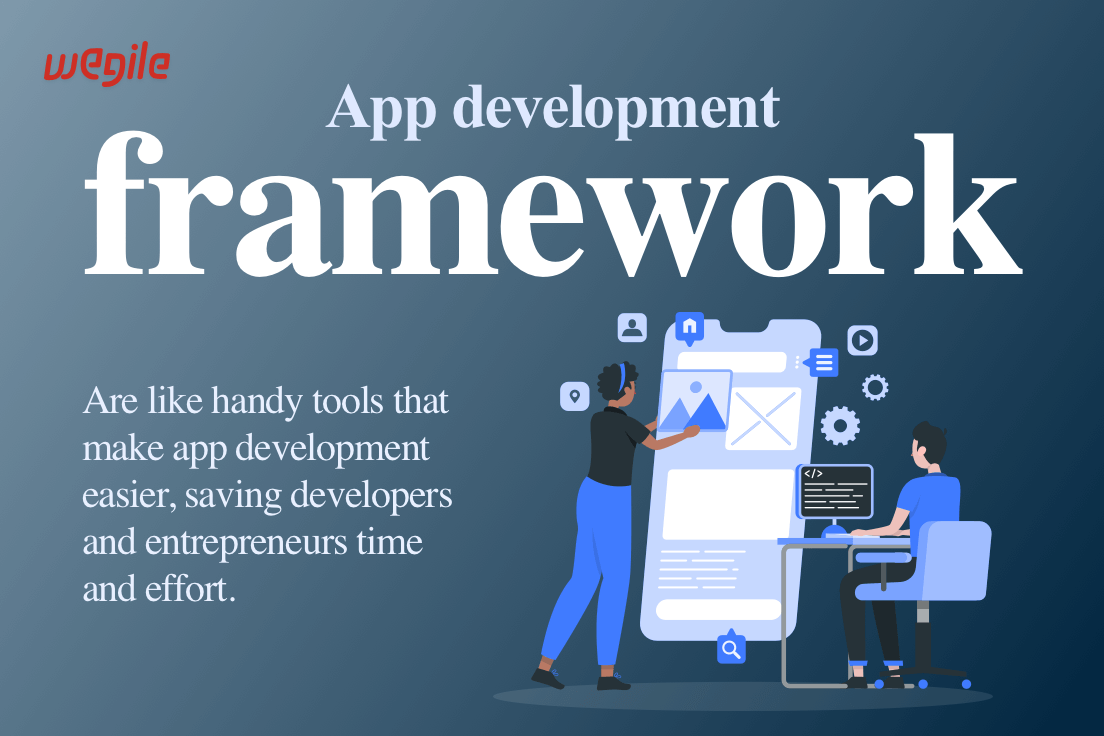
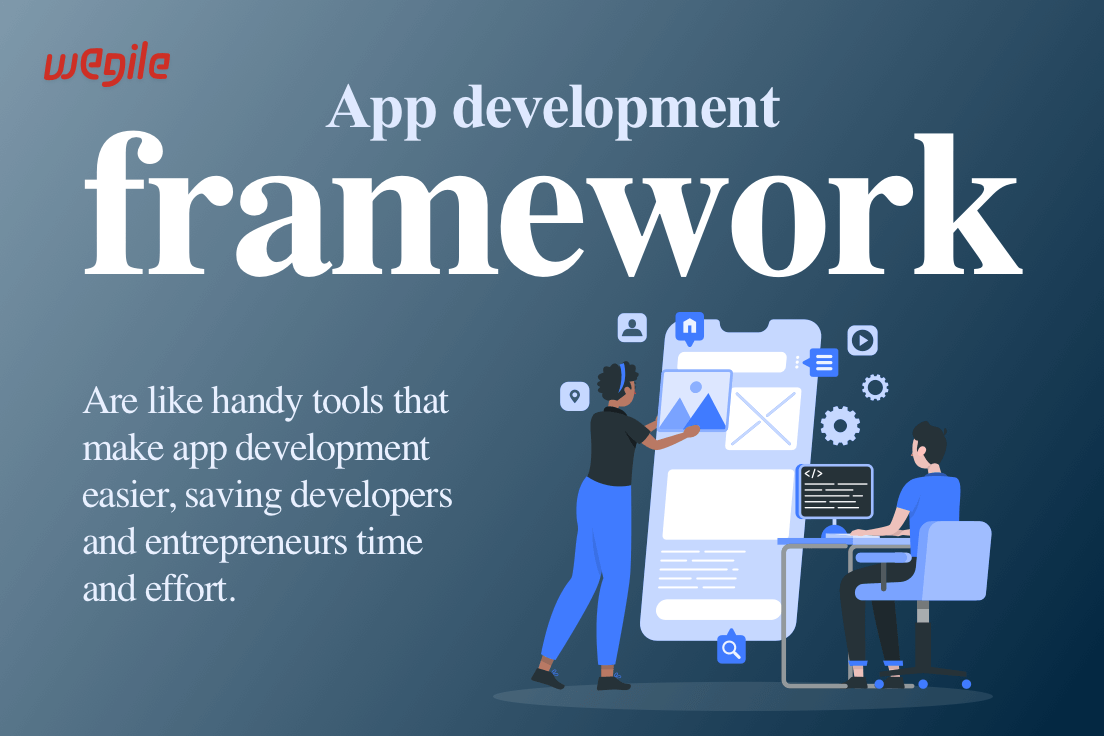
App development frameworks are a source of assistance for app developers as well as entrepreneurs. They serve as
a
structure or scaffolding that helps automate portions of the software engineering process and
provides an integrated environment in which to create applications quickly, easily, and efficiently.
Frameworks simplify many aspects of application building by providing pre-built tools such as UI
elements (buttons, checkboxes), various libraries containing accepted functionality—such as allowing
users to log into your app with OAuth2 authentication —and even relationship management when dealing
with databases like MongoDB. This would’ve cleared your question of what is a framework in app
development.
Example of Framework in
Programming
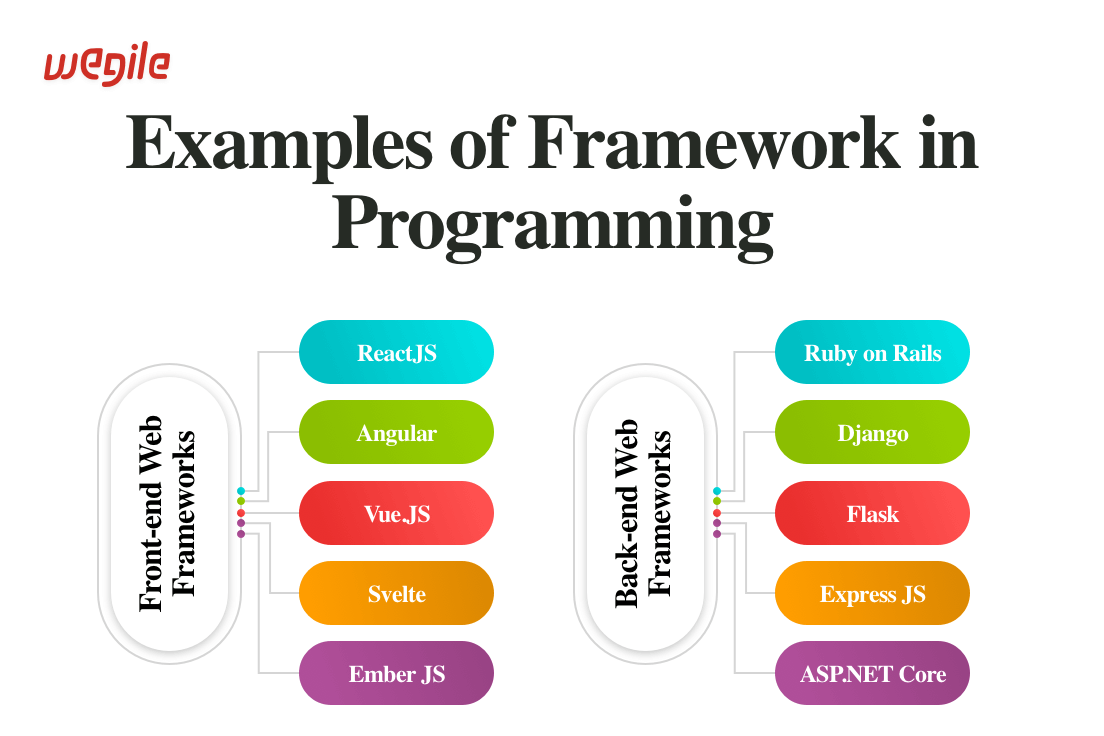
Front-End Web Frameworks
In web design, front-end frameworks help developers create user interfaces. Whether you’re developing
a website or an app, the right front-end framework can make all the difference in quickly building
out end products with seamlessness and efficiency.
List of Front-End Web Frameworks:
-
1. ReactJS
A JavaScript library for creating dynamic UIs that is maintained by Facebook
-
2. Angular
An open-source project developed by Google that allows developers to extend HTML syntax &
build powerful client apps -
3. Vue.js
An approachable yet effective progressive javascript framework
-
4. Svelte
This newer player in town smartly reduces code so as not to render unnecessary data
-
5. Ember JS
A JavaScript MVC architecture (Model View Control Framework), it helps rapidly rebuild
complex projects much quicker than other frameworks
Back-End Web Frameworks
Backend web frameworks are packages of programming coding frameworks designed to provide structure
and services for the development of websites or web applications development.
List of Back-End Web Frameworks:
-
1. Ruby on
RailsA popular open-source framework that enables fast acceleration of development. It has a
simple structure, numerous libraries, and built-in testing tools to ensure stable
applications from start to finish. -
2. Django
An especially secure yet flexible Python-based option designed for building complex web apps
with minimal coding required. -
3. Flask
Offers an easy way to prototype as it is lightweight and modifiable in nature; can also
connect other technologies such as databases or HTML templates quickly without hindering
performance speed. -
4. Express JS
Known as a “fast, unopinionated” language utilized primarily by NodeJS; great documentation
makes setup straightforward so more time can be spent focusing on key features. -
5. ASP.NET Core
This open-source Microsoft-backed framework offers reliable performance on Windows servers as
well as macOS and Linux systems; its cloud scalability allows it to manage huge user numbers
with ease.
Before you move forward, take a look at Revolutionize Your Mobile
App Development Process With These Essential Tools And Frameworks
What is the Difference:
Framework vs Library
Framework describes a set of tools and techniques used for building complex programs, systems, or
applications. It provides the foundation upon which an application is constructed; like walls
support a house, frameworks provide structure to software development projects. A library is a
collection of code stored in packages that allow users to write more modular and reusable code with
fewer errors than if they had written it independently from scratch every time. Let’s take a look at
the difference: Framework vs Library:
| Specification | Framework | Library |
|---|---|---|
| Resilience | A framework provides a more structured approach to software development and is resilient by allowing you to modify parts of the code to adjust and fit the application requirements. |
Libraries lack the structure and organized components that are provided by frameworks, making them less resilient when faced with changing conditions. |
| Level of Abstraction | Framework: Allows for a high level of abstraction by providing a ready-made structure for applications and requiring the user to plug in code for specific tasks simply. |
Provides a low level of abstraction, allowing the user control over the individual data structures and algorithms used in application development. |
| Deployment | Deployment typically involves linking the framework’s code to other system components, as well as any necessary configuration changes. |
Libraries are usually deployed by including them in compiled binaries and making sure they’re available at run-time. |
| Control and Customization | Frameworks provide a high degree of control over the structure, with detailed instructions guiding development. This eliminates guesswork from programming by providing a clear roadmap that can be followed while developing code. Frameworks are usually customizable to some extent, but it’s more difficult than customizing libraries. |
Libraries offer greater customization flexibility but generally require developers to program higher-level logic instead of being provided automatically, as in frameworks, meaning programmers must think carefully about how their code will work before writing it down into executable form – rather than relying on the framework for guidance. |
| Size and Scope | A framework offers a well-defined infrastructure with tools and components that can be used to build an application. It encapsulates the code into modules, abstracting it from being exposed and making development easier in a larger scope. |
A library is simply just prewritten functions or classes of existing code that are ready to use when needed during programming activities, either as method calls or function invocations, but an extension of this isn’t available if more vendor-specific implementation compatibility requirements arise. The size of libraries usually is quite small compared to frameworks since only base utility codes come along with them. |
| Architecture | It allows developers to structure their software applications in terms of components with a well-defined Architecture. |
Developers can choose from these building blocks, eliminating repetition without having to write their own version. It is easier to combine multiple libraries together than frameworks due to its loose coupling procedures when implemented within development practices. |
| Dependency | Dependency is imposed on the user, wherein components are dependent upon each other within a predefined structure. |
Users can choose which specific libraries they would like to use with no pre-defined structures or dependencies between them. |
| Learning Curve | Complex in terms of a learning curve with a steep initial slope, featuring more depth into the programming language and greater understanding required. |
Easier to learn as compared to Framework, allowing for faster assimilation with less knowledge about underlying features necessary. |
Conclusion for Framework in
Programming
From speeding up your workflow to ensuring consistent quality, frameworks offer a myriad of benefits
that can make all the difference in successful software development. Without one, you may be unaware
of how much time and effort they can save – or worse yet, end up with an unfinished project due to
inefficient coding practices. Whatever your coding requirements may be, by taking advantage of a
suitable coding framework, you can speed up project delivery times significantly, all whilst having
access to robust features allowing you competently manage projects no matter their size or
complexity! Don’t leave yourself or your team short-changed; harness the power that lies within
these powerful tools today!
Leave a Reply