The fitness industry has evolved significantly, and with the rise of technology, it’s opening new avenues for
innovative fitness apps that embrace the latest trends. With health and wellness at the forefront of priorities in our digital age,
cutting-edge fitness apps are more in demand than ever before. As individuals seek convenient and personalized
solutions to meet their fitness goals, the role of fitness apps becomes increasingly vital. Understanding
fitness
app ideas is not just about exploring options; it’s about recognizing the diverse possibilities available to
meet
individual health and wellness goals. Each idea represents a unique approach to fitness, tailored to different
preferences and needs. In light of this knowledge, individuals are empowered to make informed fitness app
choices
that match their specific fitness goals. This blog delves into various fitness app ideas, offering a
comprehensive
guide to inspire and guide you on your wellness journey.
Fitness App Market Overview
Before exploring fitness app ideas, many people may have the following question: “Is creating a fitness app worth
it?” The fitness app industry, marked by its dynamic and ever-evolving nature, unfolds a terrain filled with
opportunities and innovations. According to Statista’s reports, revenue in the Fitness Apps market is expected
to
hit US$5 billion by 2023, indicating a substantial annual growth rate (CAGR 2023-2028) of 14.96%. This
trajectory
sets the stage for a projected market volume of US$10.04 billion by 2028. These numbers underline the industry’s
upward climb, indicating a positive outlook and potential for sustained growth and profitability. As we delve
into
the market overview, these statistics serve as a robust foundation for comprehending the present and future
dynamics
of the fitness app landscape.
Must Read:
Fitness App Development Cost: Essential Insights
Top Fitness App Ideas
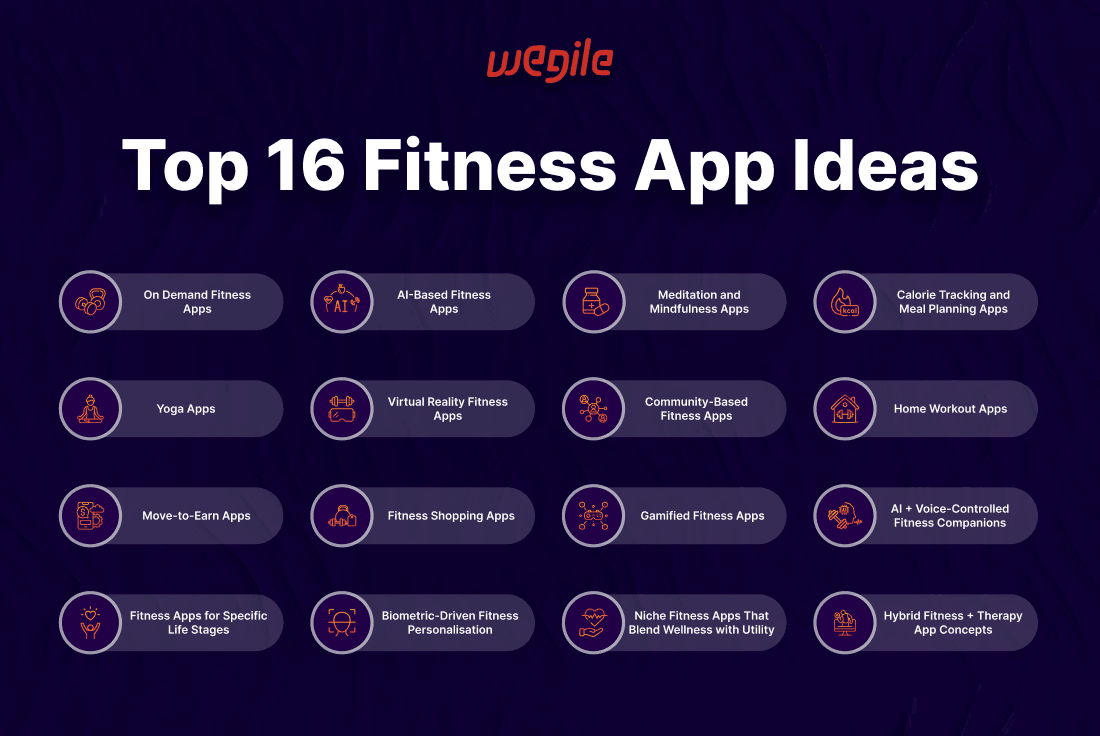
1. On-Demand Fitness Apps
In today’s fast-paced world, on-demand fitness apps are coming into their own as the solution to time
constraints.
These apps allow users to access workouts at their chosen time and location, presenting an array of options from
live sessions with trainers to pre-recorded routines. The emphasis here is on making fitness convenient and
tailored
to individual schedules, fostering seamless health integration into daily life.
Peloton offers on-demand fitness classes, including cycling, running,
strength, and yoga. Users can access a vast library of workouts anytime, bringing the gym experience to the
comfort
of their homes.
2. AI-Based Fitness Apps
The integration of Artificial Intelligence (AI) into fitness apps signifies a paradigm shift in how individuals
approach their well-being. AI-powered fitness apps analyze user data to craft personalized workout plans, track
progress, and dynamically adapt routines based on individual goals. This
personalization ensures a unique fitness journey for each user, enhancing the overall
experience and setting a new standard for individualized health and fitness solutions.
Freeletics leverages AI to create
personalized workout plans based on individual fitness levels and goals. The app continuously adapts and refines
the
training regimen, providing users with dynamic and effective workouts.
Must Read: Best Practices For Fitness App Development In 2024
3. Meditation and Mindfulness Apps
Acknowledging the integral role mental well-being plays in overall health, meditation, and mindfulness apps guide
users through practices that promote stress relief, improved focus, and better sleep. These apps provide more
than
just a fitness routine; they contribute to a balanced and integrated approach to holistic wellness, creating a
sanctuary for mental rejuvenation amid life’s demands. Headspace guides
users through mindfulness practices, meditation sessions, and sleep exercises. It focuses on mental well-being,
stress reduction, and enhancing overall mindfulness. Read our insightful guide on
how to create a meditation app
to dive deeper into the art of crafting a digital sanctuary for mental health and mindfulness.
4. Calorie Tracking and Meal Planning
Nutrition is a cornerstone of fitness, and apps focused on calorie tracking and meal planning empower users to
make
informed dietary choices. By facilitating the monitoring of nutritional intake, these apps play a vital role in
helping users stay aligned with their health and fitness goals. They go beyond workouts to address a fundamental
aspect of well-being, ensuring a comprehensive approach to health management.
MyFitnessPal allows users to track their food intake, log
exercises,
and set personalized fitness goals. It provides insights into nutritional information and offers meal planning
features for a comprehensive approach to health.
5. Yoga Apps
Yoga, with its holistic approach to wellness, has seamlessly transitioned into the digital realm through yoga
apps.
These apps cater to practitioners of all levels, offering guided sessions, pose tutorials, and personalized
routines. The aim is to enhance flexibility, build strength, and foster inner balance, making yoga accessible to
a
broader audience. With these apps, yoga becomes not just a practice but a transformative journey toward physical
and
mental well-being. Daily Yoga provides a diverse range of yoga classes
suitable for all levels. Users can follow guided sessions, track their progress, and enjoy a variety of yoga
routines to improve flexibility, strength, and mental well-being.
6. Virtual Reality Fitness Apps
Embracing cutting-edge
technology, virtual reality (VR) fitness apps redefine the workout
experience. These apps transport users to immersive environments, turning exercise into an engaging adventure.
Whether cycling through virtual landscapes or participating in interactive fitness challenges, VR fitness apps
add
an element of excitement to workouts, making them more enjoyable and motivating.
FitXR combines VR technology with fitness routines, offering users
immersive
workouts set in stunning virtual environments. It turns exercise into a captivating experience, enhancing
motivation
through virtual reality.
7. Community-Based Fitness Apps
The power of community can significantly impact one’s fitness journey, and community-based fitness apps tap into
this potential. These platforms connect users with similar health goals, fostering a supportive environment for
shared challenges, achievements, and motivation. The sense of accountability and camaraderie within these
communities enhances the overall fitness experience, turning individual pursuits into collaborative endeavors.
Fitbit Community connects users with similar
fitness goals, allowing them to participate in challenges, share achievements, and seek motivation. The app
fosters
a sense of community to enhance the overall fitness journey.
8. Home Workout Apps
Recognizing the increasing preference for home-based workouts, home workout apps offer curated routines that
require
minimal or no equipment. Whether it’s high-intensity interval training (HIIT), bodyweight exercises, or yoga,
these
apps cater to users looking to stay fit within the comfort of their homes. Home workout apps democratize
fitness,
making it accessible to anyone, regardless of their location or gym access.
7 Minute Workout app provides quick,
effective home workouts that require only seven minutes. It offers a range of exercises targeting different
muscle
groups, making it convenient for users with busy schedules.
9. Move-to-Earn Apps
Innovating on the concept of fitness incentives, move-to-earn apps introduce a gamified approach to staying
active.
Users earn rewards or incentives by achieving certain fitness milestones, completing challenges, or maintaining
consistent activity levels. This gamification not only motivates users to stay physically active but also adds
an
element of fun and competition to their fitness routines. Sweatcoin rewards
users
with virtual currency (Sweatcoins) for every step they take. These coins can be exchanged for various products,
creating an incentive for users to stay active and earn rewards.
10. Fitness Shopping App
Combining retail therapy with fitness goals, fitness shopping apps curate products that enhance and complement
users’ health journeys. From workout gear and nutritional supplements to fitness gadgets, these apps provide a
convenient platform for users to discover and purchase items that align with their fitness aspirations. It’s a
holistic approach to both health and lifestyle, merging wellness with retail convenience.
Nike Training Club not only offers workout routines but also
features a
shopping section where users can explore and purchas Nike fitness apparel and accessories, seamlessly
integrating
fitness with lifestyle.
11. Gamified Fitness Apps
Gamification takes center stage in fitness apps, turning workouts into engaging challenges. Users embark on
quests,
earn points, and unlock achievements as they progress in their fitness journey. This approach injects an element
of
playfulness into workouts, making them more enjoyable and compelling. Gamified fitness apps transform routine
exercises into exciting adventures, keeping users motivated and committed.
Zombies, Run! gamifies running by immersing users in a post-apocalyptic
story
where they need to complete missions while avoiding virtual zombies. The app turns jogging into an interactive
game,
adding excitement to outdoor workouts.
Must Read: Benefits of Fitness App Development
Here are a few more fitness app ideas, each explained with a bit more depth to help you think through their
potential impact and usefulness.
12. AI + Voice-Controlled Fitness Companions
Voice technology is entering fitness with surprising impact. With
AI-based fitness
voice assistants already guiding smart homes, it makes perfect sense for them to guide fitness routines too.
These
apps deliver an interactive experience without needing to touch your phone during workouts.
Here are some standout AI voice-controlled fitness app ideas you can explore:
-
Real-Time Form Correction
The app listens to your commands and watches your movement through your
phone camera
or wearable sensor. It gives real-time feedback if your form is off
or if you’re missing
reps. It mimics having a personal trainer with constant attention on your posture. -
Personalized Audio Coaching
Instead of generic voiceovers, these apps offer adaptive coaching. They
switch tone,
speed, and intensity depending on your energy levels and exercise history. It keeps workouts motivating
without
the repetition. -
Goal-Based Reminders and Routine Suggestions
Instead of relying on user prompts, voice-enabled fitness apps initiate the
conversation. Based on your behavior, it may say, “You haven’t done core work this week. Want to squeeze
in five
minutes of planks?” -
Breath Training Integration
AI tracks breathing and gives vocal cues when it senses you’re off pace. For
cardio
or yoga, this creates more awareness and control without needing to stop and check the screen. -
Hands-Free Routine Switching
You no longer have to stop midway to switch exercises. Just say, “Next
workout,” and it
transitions instantly. This makes high-intensity or flow workouts smoother and more engaging.
13. Fitness Apps for Specific Life Stages
Not all fitness journeys look the same. Different age groups and life stages demand custom tools. Developing apps
tailored to specific demographics can help address underserved niches and drive long-term loyalty.
Below are fitness app ideas that focus on user life stage and age specificity:
-
Postpartum Fitness Support
These apps cater to women recovering from childbirth. They offer slow-paced
movement
routines approved by medical experts. They also include mental health support and pelvic floor
strengthening. -
Elderly Wellness and Balance Training
Seniors need different metrics. These apps prioritize fall prevention, joint
mobility, and heart-safe exercises. AI adjusts intensity levels and flags anomalies that could indicate
health
risks. -
Teen-Focused Health Habits
Teens are digitally native but often sedentary. Gamified fitness apps for teensuse streaks, peer
challenges, and school-integrated routines to build lifelong movement habits. -
Pre- and Post-Surgery Rehabilitation
These niche fitness apps track recovery milestones and suggest low-impact
exercises prescribed by physiotherapists. They’re especially useful for knee, hip, or spinal surgeries. -
Menopause and Hormonal Wellness
These fitness apps adapt routines based on energy levels, joint inflammation,
and
hormonal fluctuations. The goal is consistency, not intensity, so users feel supported, not punished.
14. Biometric-Driven Fitness Personalization
Fitness apps that connect with wearables are just scratching the surface. As biometric tech evolves,
we can expect apps to deliver even more granular, actionable insights.
Here are some fitness app directions based on biometric feedback and analytics:
-
Heart Rate Variability-Based Scheduling
The app reads your HRV trends and tells you whether to push or rest that day.This balances
performance with recovery and prevents overtraining. -
Sleep-Corrected Training Plans
If your wearable data shows poor sleep, the app adjusts your workout to avoid injury and optimize
fat burn. It can delay heavy lifting to the next day when you’re better rested. -
Stress Monitoring and Recovery Suggestions
Using heart rate, skin temperature, and voice tone, the app senses your
stress
levels. Then it recommends stretching, walking, or breathing routines to regulate your nervous
system. -
Nutrient Deficiency Alerts
Linking with blood tests or food diaries, these apps suggest training intensitybased on your
nutritional health. Low iron or protein? You’ll get lighter routines until you recover. -
Blood Oxygen Monitoring During High Altitude Training
For mountaineers or runners training at elevation, apps can alert users to risk zones and offer
warm-up cooldowns tailored to oxygen intake patterns.
15. Niche Fitness Apps That Blend Wellness with Utility
Not every fitness app needs to revolve around workouts. Some ideas blend health with lifestyle and address
secondary goals like productivity, routine-building, or wellness tracking.
Following are niche app types that bring together wellness, utility, and lifestyle:
-
Fitness-Focused Productivity Planners
These apps integrate step goals, hydration reminders, and focus sessions
with your
calendar. They help balance meetings, meals, and movement in one dashboard. -
Smart Hydration and Electrolyte Trackers
By syncing with your wearable, this app reminds you to hydrate. It considers weather, activity, and
body weight to suggest how much water and sodium you need. -
Sleep-First Fitness Coaches
Unlike general fitness apps, these put sleep at the core. They limit late-night notifications,
auto-schedule early workouts based on circadian rhythm, and link sleep quality to performance gains. -
Mood + Movement Diaries
These are designed for users managing depression or anxiety. Every
workout is paired
with a mood rating. AI then correlates which types of exercise improve the user’s emotional
baseline. -
Fitness Travel Apps
This idea helps users stay fit on the move. Whether they’re in hotels or
coworking
spaces, it recommends bodyweight routines or local gyms with day passes.
16. Hybrid Fitness + Therapy App Concepts
As mental health and physical health continue to converge, fitness apps are now exploring ways to support both
simultaneously.
Here are new fitness app concepts that merge therapy and movement for a holistic experience:
-
Movement-Based CBT Apps
Cognitive Behavioral Therapy is enhanced with physical routines. After every
journaling
session, users are prompted to stretch or walk, reinforcing mental reflection through motion. -
Daily Reflection After Exercise
Post-workout reflections allow users to check in emotionally. Apps can ask
short
prompts
like, “What did you feel during this session?” over time, patterns emerge, guiding custom coaching. -
Emotion-Based Workout Suggestions
Using voice tone analysis or facial expression tracking, the app detects
mood and
suggests a workout accordingly. Frustrated? Try kickboxing. Anxious? Start with yoga. -
Guided Meditation During Cooldowns
Instead of ending a workout with silence or music, apps guide users through
short
meditations while they stretch. This seals the mental benefits of physical activity. -
Couples Fitness Therapy Tools
For partners training together, these apps offer shared goals, conflict
resolution
tips,
and accountability features. They encourage connection through joint physical growth.
| App Ideas | Features | Benefits | Example |
|---|---|---|---|
| On-Demand Fitness Apps | Flexibility in workout timing, live sessions with trainers, vast library of pre-recorded routines | Convenient access to workouts at chosen time and location, gym experience at home | Peloton, Aaptiv, Daily Burn |
| AI-Based Fitness Apps | Personalized workout plans, dynamic adaptation based on user goals | Tailored fitness journey, effective and dynamic workouts | Freeletics, Sworkit |
| Meditation and Mindfulness Apps | Guided sessions for stress relief, improved focus, and better sleep | Holistic wellness, mental rejuvenation amid life’s demands | Headspace, Calm, Insight Timer |
| Calorie Tracking and Meal Planning | Nutritional intake monitoring, meal planning features | Informed dietary choices, comprehensive approach to health | MyFitnessPal, Lose It!, Yazio |
| Yoga Apps | Guided sessions, pose tutorials, personalized routines | Enhanced flexibility, strength, and mental well-being through yoga practice | Daily Yoga, Asana Rebel, Glo Yoga |
| Virtual Reality Fitness Apps | Immersive workouts in virtual environments | Engaging and enjoyable exercise experience, enhanced motivation through virtual reality | FitXR, Beat Saber, VRWorkout |
| Community-Based Fitness Apps | Connects users with similar health goals, supportive environment | Sense of accountability, shared challenges and achievements, motivation through community | Fitbit Community, Strava |
| Home Workout Apps | Curated routines with minimal or no equipment | Accessibility to fitness routines at home, democratization of fitness | 7 Minute Workout, Home Workout, JEFIT |
| Move-to-Earn Apps | Gamified approach to staying active, rewards for fitness milestones | Motivation through gamification, incentives for consistent activity levels | Sweatcoin, WayBetter, JustMove |
| Fitness Shopping App | Curates products enhancing health journeys | Convenient platform for fitness-related shopping, holistic approach to health and lifestyle | Nike Training Club, Under Armour Record, Lululemon |
| Gamified Fitness Apps | Turns workouts into engaging challenges, rewards and achievements | Enjoyable and compelling exercise routines, motivation through gamified adventures | Zombies, Run!, Fitocracy |
| AI + Voice-Controlled Fitness Companions | Hands-free workouts, real-time feedback, adaptive voice coaching, breath & routine control | Seamless interaction, personalized training, flow-friendly | Future (Voice AI), Fitbod + Alexa, Tempo Move |
| Fitness Apps for Specific Life Stages | Demographic-specific routines (postpartum, seniors, teens, recovery, hormonal health) | Inclusive wellness, long-term engagement | Juna, SilverSneakers, Mighty Health |
| Biometric-Driven Fitness Personalization | HRV-based scheduling, sleep-adjusted plans, stress recovery suggestions, nutrient-based routines | Smarter recovery, injury prevention, health alignment | WHOOP, Oura, Garmin Connect |
| Niche Fitness + Utility Apps | Combines wellness with productivity, hydration, sleep, travel, and mental tracking | Lifestyle-focused fitness support | WaterMinder, Rise Sleep, Fitness Planner |
| Hybrid Fitness + Therapy Apps | CBT + workouts, mood-based sessions, post-exercise reflection, couple-focused wellness | Mental-physical synergy, emotional awareness | Mindbody, Reflectly Move, Bloom |
How Do You Make a Good Fitness App?
Creating a top
fitness app requires careful planning and consideration of various factors. First, understand your target
audience and their specific fitness needs. Incorporate features that make your app user-friendly, engaging, and
personalized to cater to individual preferences. Implementing intuitive design, seamless navigation, and
custom
features such as tailored workout plans, real-time activity tracking, and community support can contribute
to the app’s overall appeal. Additionally, leveraging advanced technologies like
AI for personalized recommendations can enhance user experience. For an in-depth guide on
how to make a
fitness app, explore our comprehensive guide that provides step-by-step insights and valuable tips to guide
you
through the development process. Considering the complexity of
app development, partnering with
professional
fitness
app developers is crucial. An expert can give you the tech support and insight you need for a successful
launch.
Wrapping Up
As we conclude our exploration of diverse fitness app ideas, it’s evident that the realm of digital wellness is vast
and
dynamic. The growing demand for innovative fitness solutions presents a plethora of opportunities for those looking
to
embark on this transformative journey. For comprehensive guidance and expert support in turning these
ideas
into reality, consider trusting Wegile, leading
fitness
app
development company. With Wegile’s expertise, you can navigate the intricate path of creating a fitness app
that
not only meets but exceeds user expectations, contributing to a healthier and more connected world.
Leave a Reply