In today’s digital age, healthcare
technology is rapidly evolving, providing innovative solutions to enhance
personal well-being. Among the most significant advancements is the development of women’s health
tracking applications. These apps cater specifically to women’s unique health needs, addressing
aspects such as hormonal changes, reproductive health, and mental and physical well-being.
Unlike generic healthcare apps, women’s health trackers and personalized fitness apps offer tailored
insights, helping users manage their health more effectively. Despite their growing popularity, many
women’s health apps fail to meet the comprehensive needs of their users.
Experts often overlook the importance of integrating holistic health metrics, user-friendly design,
and robust data security. Additionally, the rapid pace of technological advancement demands
continuous updates and improvements to maintain app relevance and efficiency.
In this blog, we will explore how to create a comprehensive women’s health tracking application,
considering key technical
aspects and unique user needs to ensure an exceptional and effective user experience.
Scope of
Women Health App Development
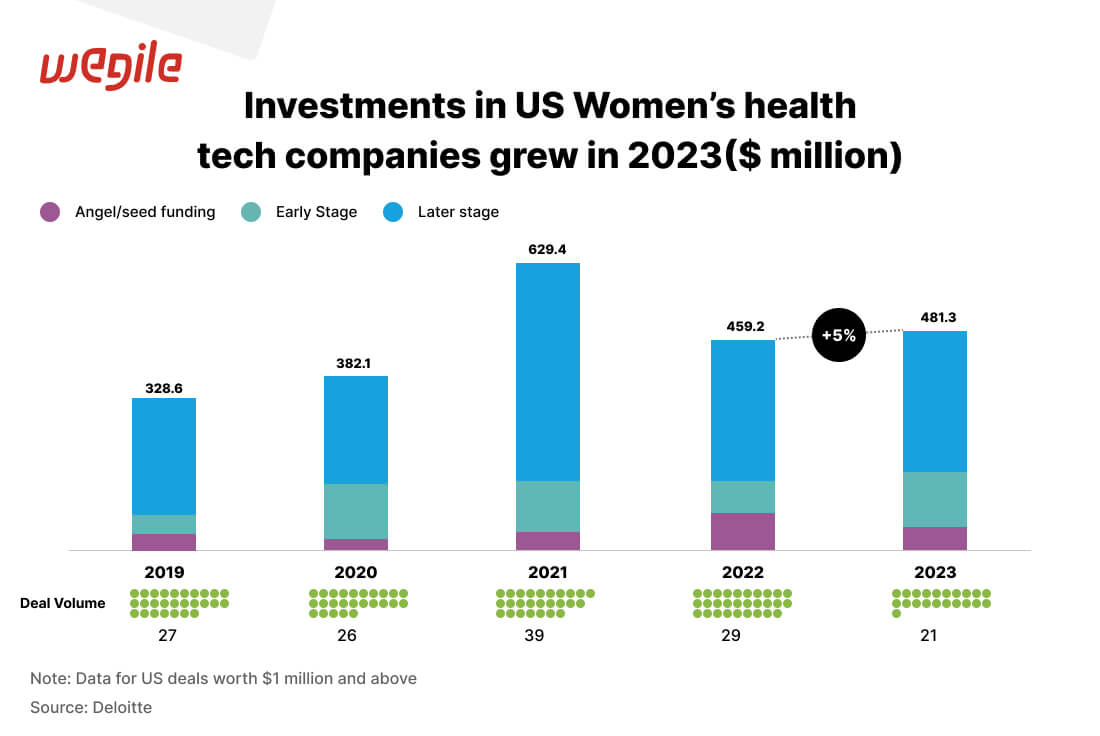
As we delve into the development of women’s health fitness apps, a fundamental question arises: are
they truly worth it? With the growing demand for personalized attention towards women’s well-being,
digital technology is making significant contributions. Let’s examine some crucial statistics and
figures highlighting the scope of developing women’s health apps.
-
Despite women constituting over half
of the US population, investors have historically perceived women’s health as a niche
market. -
In 2022, North America represented around 51
percent of femtech companies globally, making it the leading region in this sector.
Additionally, 27 percent of femtech companies were based in Europe that year. -
The global market for women’s health apps was valued at USD 3.25 billion in
2022
and is projected to reach USD 15.31 billion by 2031, with an impressive CAGR of 18.80%
during
the forecast period (2023–2031). -
The Asia-Pacific region is anticipated to register the highest CAGR of 21% from
2022 to 2031, fueled by increased awareness about women’s health, a surge in smartphone
users,
and a large population base.
These statistics underscore women’s health apps’ significant potential and growing acceptance. As
digital technology advances, the opportunity to develop comprehensive and user-centric women’s
health tracking applications becomes increasingly promising. These apps can play a crucial role in
enhancing women’s health and well-being globally by addressing specific health needs and integrating
advanced features.
Must Read: Fitness App
Development Cost:
Essential Insights
How to
Create a Women’s Health Tracking Application?
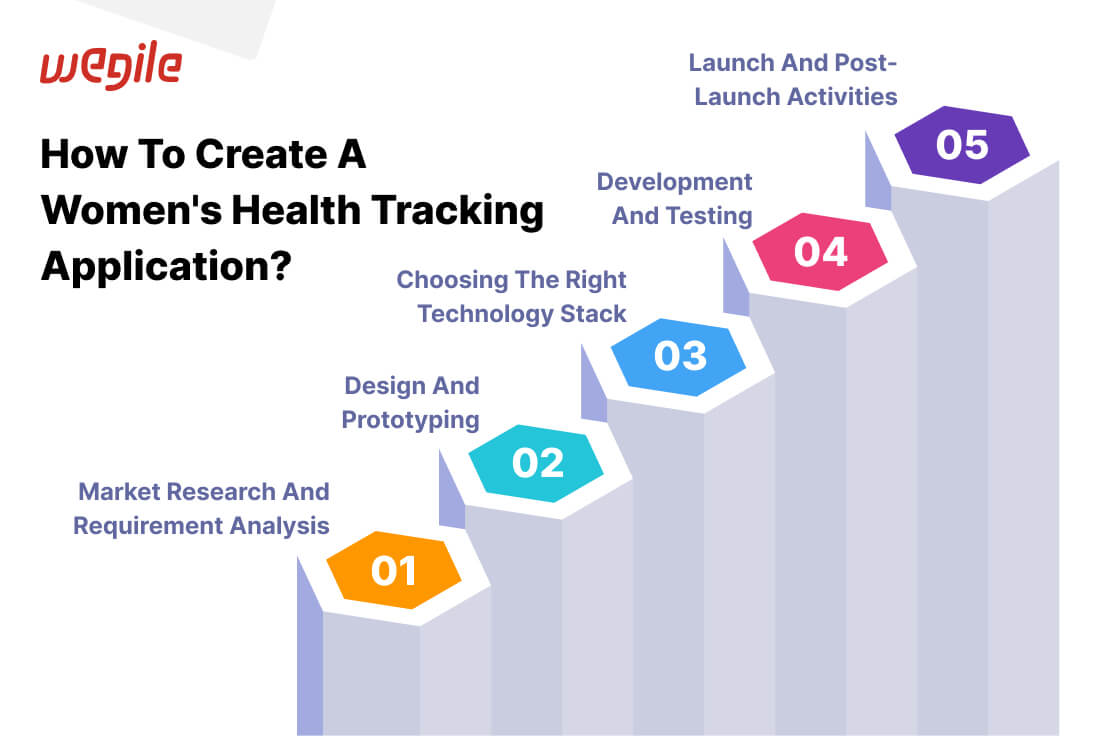
Developing a comprehensive women’s health tracking application involves a thorough process combining
understanding user needs and leveraging advanced technology. Here are the steps to guide you through
this process of building a women’s health-tracking app:
-
1. Market Research and Requirement
AnalysisThe foundation of any successful app begins with thorough market research and requirement
analysis. This stage involves identifying the target audience’s specific needs and pain
points. For a women’s health tracking app, it is crucial to understand the diverse health
concerns that women face across different age groups and lifestyles.Analyzing existing apps in the market to identify gaps and opportunities is essential. You
can consider gathering direct feedback from potential users, which provides insights into
the most valued features and current issues with available apps. Additionally, consulting
healthcare professionals offers perspectives on the medical accuracy and relevance of the
health metrics to be tracked.Requirement analysis also includes defining clear objectives for the app. It is crucial to
determine specific health aspects to focus on and identify how the app will stand out from
the competition. This detailed specification outlines the necessary features, design
elements, and technological considerations, forming a solid foundation for development. -
2. Design and Prototyping
Once user needs and requirements are clearly understood, the next step is design and
prototyping. This phase sets the visual and functional blueprint for the app. It begins with
wireframing, which involves creating basic layouts of the app’s screens to visualize the
user journey and ensure a logical flow of information.The design prioritizes user
experience (UX) and user interface (UI). An intuitive and aesthetically pleasing
interface is essential for a women’s health tracking app. The design should be clean, easy
to navigate, and facilitate quick access to key features.Prototyping involves developing a functional model of the app that users can interact with.
This allows for testing the app’s usability and gathering user feedback before proceeding to
full-scale development.Further, iterative testing and refinement during this phase ensures that the final product
meets user expectations and provides a seamless experience. These initial steps lay the
groundwork for creating a robust and user-centric women’s health tracking application.Must Read: How to
Create A Fitness App: Your Ultimate Fitness App Creation Guide -
3. Choosing the Right Technology Stack
Selecting the appropriate technology stack is a critical decision in the development of a
women’s health tracking application. The choice of technology directly impacts the app’s
performance, scalability, and maintenance. A well-chosen stack ensures that the app can
handle a large user base, process data efficiently, and remain adaptable to future
technological advancements.Technology like Node.js is popular for the backend due to its robust performance and
scalability. For the front end, frameworks such as
React Native or
Flutter allow for creating cross-platform applications that ensure a consistent
user experience on iOS and Android devices. Additionally, integrating APIs for
functionalities such as real-time data synchronization and third-party integrations like
Google Fit and HealthKit enhances the app’s capabilities.It is also essential to incorporate advanced analytics tools to generate personalized health
insights, which are crucial for user engagement and retention. Overall, the right technology
stack forms the backbone of a reliable, high-performing health-tracking application. -
4. Development and Testing
The development and testing phase transforms the design and prototypes into a functional
application. This stage involves writing clean, efficient code to implement the app’s
features as defined in the requirement document. Adopting an agile development methodology
ensures continuous growth, allowing for continuous testing and refinement.Unit testing is conducted to verify the functionality of individual components, while
integration testing ensures that different parts of the app work seamlessly together. User
acceptance testing (UAT) is crucial as it involves real users testing the app to validate
its performance and usability under real-world conditions. Further developers
exphasize on automated testing tools to streamline repetitive testing tasks, enhancing
overall efficiency.Moreover, performance testing is essential to ensure the app can handle high traffic and
data
loads without compromising speed or functionality. Security testing is also conducted to
identify and reduce vulnerabilities, ensuring user data remains protected. This
comprehensive approach to development and testing guarantees a robust, reliable, and secure
women’s health tracking application ready for market deployment. -
5. Launch and Post-Launch Activities
The launch and post-launch activities are crucial for ensuring the success and
sustainability
of a women’s health tracking application. A well-planned launch strategy helps to create
buzz and attract early users. This includes pre-launch marketing through social media,
blogs, and press releases to generate interest and anticipation.Post-launch, it’s essential to engage with users through continuous feedback loops.
Implementing in-app surveys and monitoring app store reviews can provide valuable insights
into user satisfaction and areas needing improvement. Regular updates based on user feedback
enhance the app’s functionality and show users that their opinions are valued, fostering
loyalty.Additionally, post-launch activities should include performance monitoring to ensure the app
runs smoothly. Utilizing analytics tools to track user behavior and engagement can help
identify trends and areas for optimization. Establishing a dedicated customer support system
is also vital for addressing user issues promptly, maintaining a positive user experience,
and reducing churn rates.
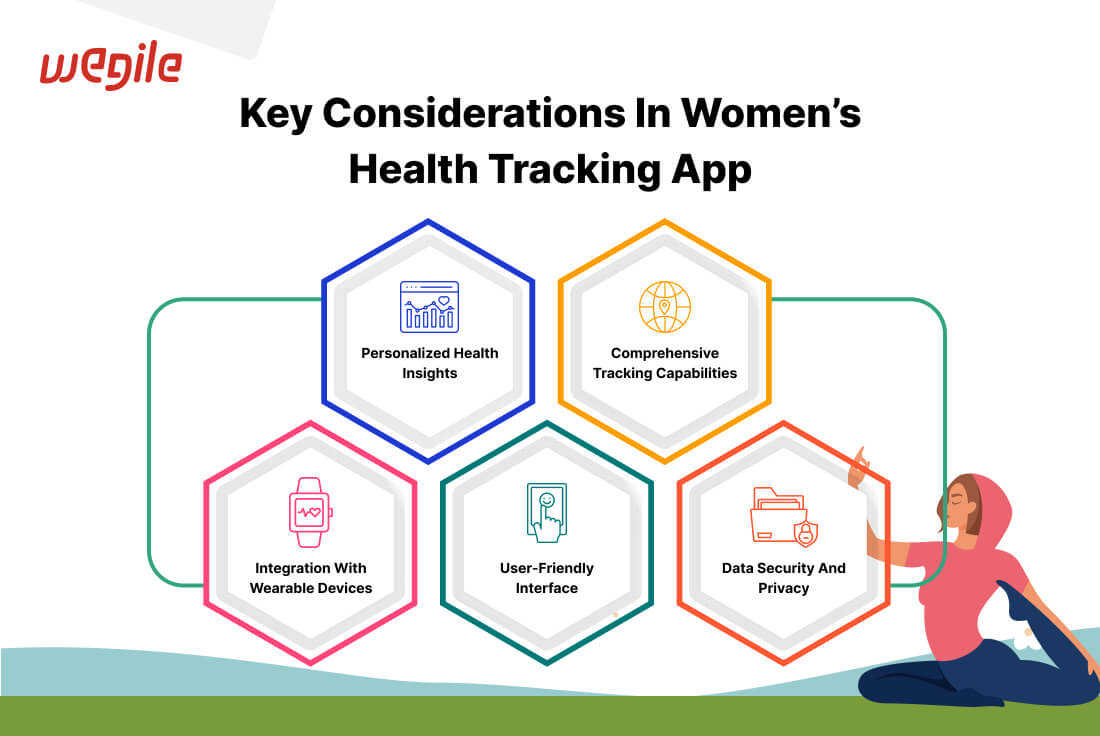
Key
Considerations in Women’s Health Tracking App
-
1. Personalized Health Insights
An essential aspect of a women’s health tracking application is its capacity to offer
tailored health insights. Unlike generic fitness apps, a women’s health tracker must
consider the unique physiological and hormonal changes women experience. By analyzing user
data such as menstrual cycle patterns, physical activity, and symptoms, the app can offer
tailored advice and recommendations. Advanced algorithms and machine learning can predict
menstrual cycles, ovulation periods, and potential health issues, empowering women to manage
their health proactively and effectively. -
2. Comprehensive Tracking Capabilities
Comprehensive tracking capabilities are essential for a women’s health app to meet diverse
health needs. The app should enable users to track various health metrics, including
menstrual cycles, mood, symptoms, physical activity, and sleep patterns. This holistic
approach ensures that users receive a complete picture of their health and well-being.
Moreover, the ability to log symptoms and moods can help users identify patterns and
correlations, providing deeper insights into their health status and potential triggers for
certain conditions.Must Read: The Future
of Fitness App Development: Top Trends to Watch in 2024 and Beyond -
3. Integration with Wearable Devices
Seamless integration with
wearable devices significantly enhances the functionality of a women’s
health-tracking app.
Wearables like fitness trackers and smartwatches can provide real-time data on
physical activity, heart rate, sleep, and other vital metrics. This integration allows for
more accurate and comprehensive health monitoring, enabling the app to deliver precise
insights and recommendations. Additionally, wearables can facilitate continuous health
tracking without the need for manual input, improving user convenience and engagement. -
4. User-friendly Interface
A user-friendly interface is paramount for the success of a women’s health tracking app. The
design should be intuitive, visually appealing, and easy to navigate, ensuring users can
access key features and information quickly. An effective interface minimizes the learning
curve and enhances user satisfaction. Incorporating features such as customizable
dashboards, clear navigation paths, and accessible help options can significantly improve
the overall user experience, making the app more attractive and user-friendly. -
5. Data Security and Privacy
Guaranteeing strong data security and privacy is a crucial consideration in the development
of a women’s health-tracking app. Given the sensitive nature of health data, the app must
implement stringent security measures to protect user information from breaches and
unauthorized access. Compliance with regulations like GDPR and HIPAA is essential to maintain
user trust and legal standing. Features such as data encryption, secure authentication
methods, and transparent privacy policies help reassure users that their personal health
data is safe and secure.
Wegile’s Contribution in Women’s Health App
Wegile has significantly advanced women’s health app development, leveraging extensive experience
and
expertise in fitness app development. Here are two prime examples of successful women’s health apps
developed by Wegile that stand out in the industry:
-
1. Athli
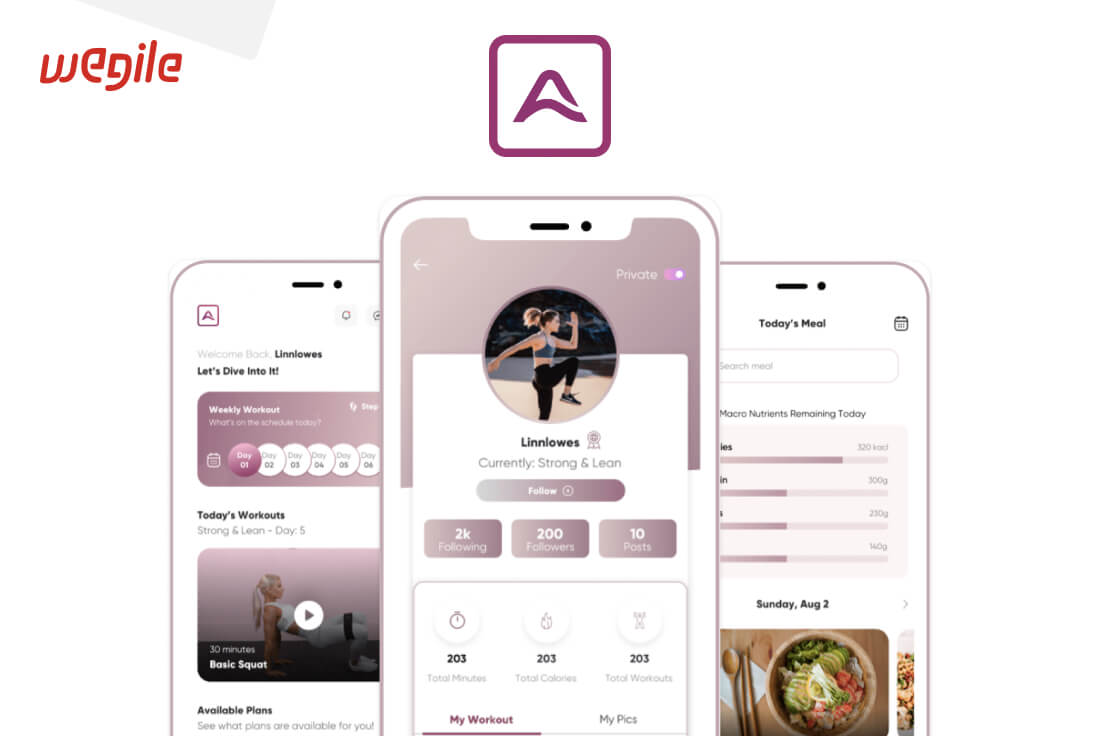
Athli, created in collaboration with
Linn Lowes, has emerged as a leading fitness app, garnering widespread acclaim globally.
This app provides a comprehensive health solution that resonates with fitness enthusiasts.
It features standout workouts, in-depth nutrition advice, and cutting-edge technology
integration, contributing to a healthier, more active lifestyle, particularly among its
large European user base.Athli allows users to choose from over 16 pre-scheduled fitness plans or customize their own
routines, all supported by an extensive library of more than 700 exercises. This offers a
personalized and diverse workout experience, catering to the varied needs and preferences of
users. The app also provides extensive nutrition and meal plans that address a wide range of
dietary goals and requirements. Additionally, Athli enhances the fitness experience through
advanced features such as Apple Watch integration, facilitating seamless tracking and
interactive user engagement. -
2. Crewe Fitness
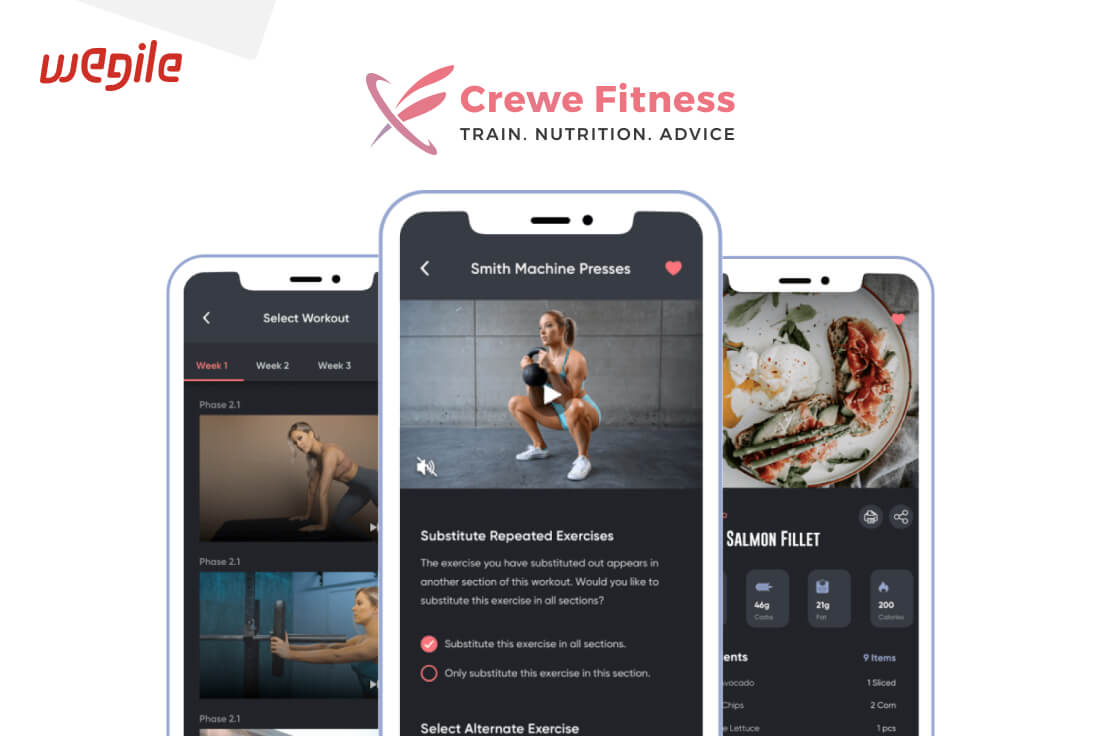
Crewe Fitness by Katie Crewe is
another remarkable health app promoting women’s health. It is known for its evidence-based,
results-oriented approach.
With thousands of monthly paid subscribers, this app underscores the effectiveness of
Katie Crewe’s carefully designed workouts and comprehensive nutritional guidance.A notable feature of Crewe Fitness is its focus on maternity and postpartum programs, which
safely guide users through fitness journeys during and after pregnancy. This app recognizes
the uniqueness of each fitness journey, offering a wide range of home and gym workouts and
specialized maternity and postpartum programs, ensuring a personalized fitness experience.
Crewe Fitness distinguishes itself with its commitment to quality and results, featuring
over 500 dietitian-approved recipes and regularly updated content incorporating the latest
fitness and nutrition science advancements.Wegile’s expertise in developing these apps highlights our dedication to creating
innovative,
user-centric solutions that address women’s unique health and fitness needs. This commitment
to excellence ensures that we remain at the forefront of women’s health app development,
consistently delivering exceptional products that enhance users’ well-being.
Wrapping Up
Creating a women’s health tracking application involves more than just addressing basic health
metrics. It requires a nuanced understanding of the unique needs of women and a commitment to
integrating advanced technological
solutions. Businesses can significantly impact women’s health management by focusing on
personalized insights, comprehensive tracking, and seamless user experiences.
The growth potential in this sector is vast, reflecting an increasing awareness and demand for
specialized women-related health solutions. For those looking to venture into this field, partnering
with experts who understand the complexities involved is essential. If you’re looking to create a
women’s health app, partner with Wegile. Our fitness app development
company will help you build apps that are tailored to your vision, ensuring they meet the
highest standards of quality and functionality.
Leave a Reply