Fitness apps have become essential tools nowadays. Why? Due to their health-enhancing capabilities.
These digital tools allow users to access personalized workout plans, track progress, and stay
motivated. All these features can be accessed with just a few taps. Fitness application development
presents a great opportunity for businesses in the fitness industry. It allows them to connect with
health-conscious individuals. However, this requires the creation of a successful fitness app. But
it isn’t a simple deal. This requires more than just coding and design. It involves understanding
user needs, keeping up with tech trends, and strategic planning. In this article, we’ll explore the
top ten considerations for developing a standout fitness application.
Advantages of
Fitness Application Development
-
Boosting User Engagement: Fitness apps are fantastic for keeping users
hooked. Users are likelier to stick to their fitness routines when offered personalized
workout plans, progress tracking, and motivational feedback. Features like goal setting,
reminders, and social sharing make the experience interactive and fun. This ensures your
users stay engaged and committed to their health goals. -
Tapping into a Growing Market: A huge and ever-growing market of
health-conscious individuals is waiting to be tapped into. Fitness apps can cater to all
preferences, whether they prefer working out at home, hitting the gym, or enjoying outdoor
activities. This broad appeal means you can reach a diverse audience and expand your user
base significantly. -
Building Brand Loyalty: Fitness apps can create a strong bond with users by
consistently delivering value. Personalized coaching, nutrition advice, and community
support can help users see real improvements in their fitness journey. Users are more likely
to stick with your brand for the long haul when they find continuous benefits
from your fitness app. -
Gaining Data-Driven Insights: One of the major perks of fitness apps is the
wealth of data they collect. This data can be analyzed to better understand user behavior
and preferences. These insights can guide future app enhancements, marketing strategies, and
personalized recommendations. This ultimately leads to happier users and smarter business
decisions. -
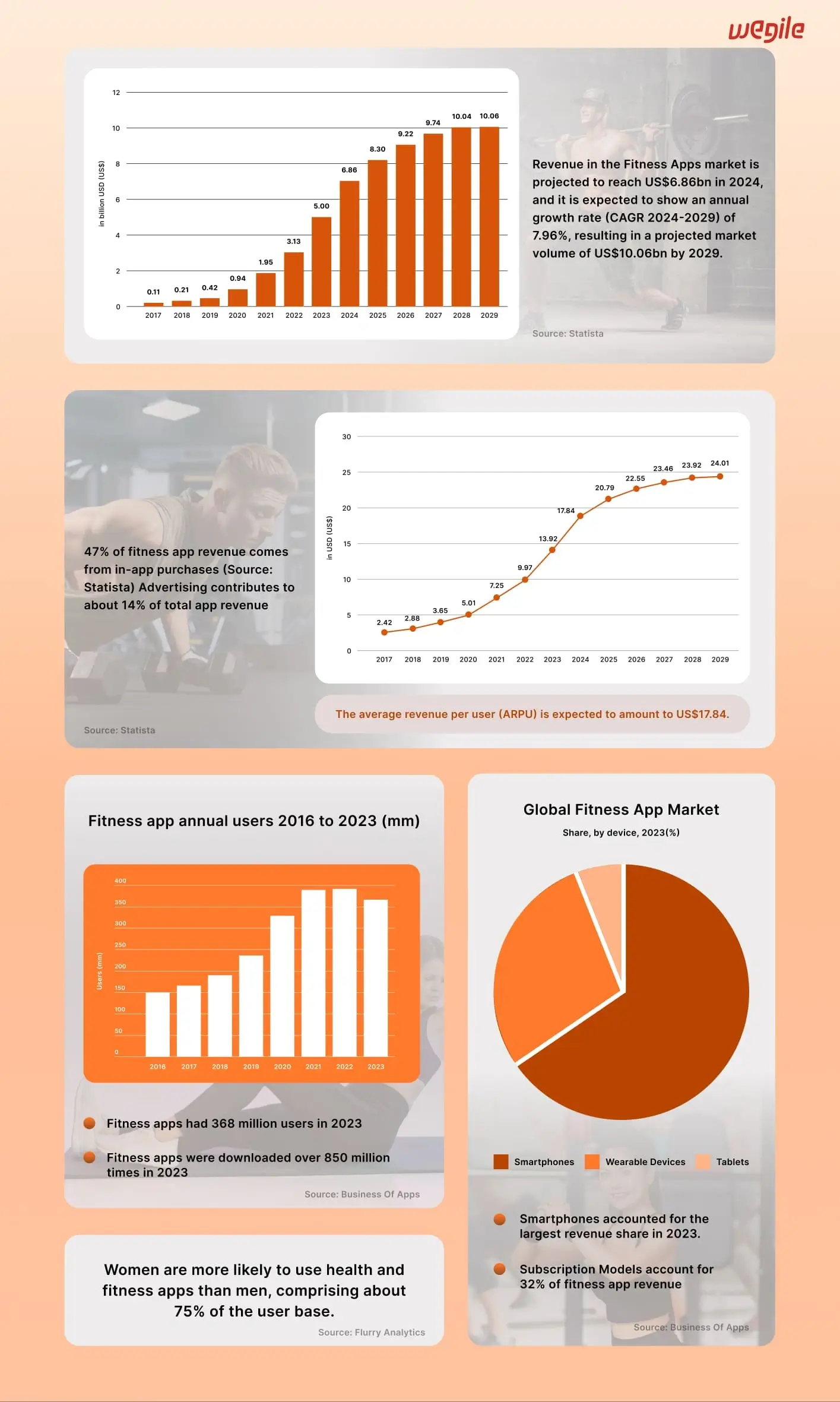
Unlocking Revenue Streams: Fitness apps offer numerous ways to generate
revenue. You can implement subscription models, in-app purchases, and even advertising.
Premium features or exclusive content can attract paying users. Partnerships with fitness
brands and influencers can further boost your profitability. -
Promoting Healthy Lifestyles: Fitness apps make it easier for people to
adopt and maintain healthy habits. Users get encouraged to stay active, track their
progress, and achieve their goals when they’re offered accessible and convenient tools for
fitness. This positive impact on users’ physical and mental health can enhance the app’s
reputation and user satisfaction. -
Gaining a Competitive Edge: A standout fitness app can give you a
significant advantage in a crowded marketplace. By incorporating innovative features,
staying current with fitness trends, and continuously improving the user experience of your
app, you’ll be able to outshine competitors and attract a loyal user base. -
Ensuring Scalability and Flexibility: Fitness apps are incredibly scalable
and flexible. They can cater to a wide range of users with different fitness levels and
goals. You can easily update and expand app features to keep up with user demands and new
technologies. This ensures your app remains relevant and effective over time.
Key
Considerations for Fitness Application
Development
1. Opting
For Best Fitness App Ideas
Alright, let’s kick off with the first essential component of fitness application development. Your
app’s fate hinges on choosing the right fitness app idea. Start by scoping out the competition.
What are they focusing on?
What are they missing?
How can your fitness application be better than competitors’ apps?
Maybe there’s a gap in the market for AI-driven personal trainers or virtual reality workouts that
transport users to breathtaking landscapes while working out. The key is to pinpoint an unfilled
need or figure out a way to outperform the competition and capitalize on it. Get creative and think
outside the dumbbell; your unique idea is what will set your app apart from the rest. Discover fresh
app concepts in our blog that highlights innovative fitness app ideas.
2.
Fitness Application Development Cost
Now, let’s talk dollars and sense. Fitness application development isn’t a simple stroll in the
park(though those are nice, too). You’ve got to consider everything from design and development to
marketing and maintenance. Each aspect has a price tag. So, it’s important to stay informed on the
cost of each element. This is key to smart decision-making.
Start by breaking down the prices on each aspect or feature you want for your app. Don’t forget to
leave the little room for unexpected expenses. Planning and smart budgeting will allow you to get
the best fitness application without breaking the bank. Don’t miss our blog on
fitness application development costs to get a detailed breakdown and accurate insights.
3. Harnessing
Best Practices
Creating a top-notch fitness app is like crafting the perfect workout routine; it requires attention
to detail, focus on quality, and commitment to user satisfaction. Focusing on the best fitness app
development practices can make all the difference. Pay utmost attention to UI/UX design; your app
should be as intuitive as a well-marked running trail. Easy navigation, clean design, and engaging
visuals keep users coming back. Security is another must-have. Just like you’d lock up your gym
gear, protect user data with robust encryption and secure authentication methods. The best practices
aren’t just restricted to the previously mentioned ones. Delve into our insightful blog on best
fitness app development practices to ensure you capture every
essential tip!
4.
Personalization and Customization
Imagine walking into a gym where every piece of equipment is set up just for you. That’s the vibe you
want your app to give off. Personalization and
customization are the secret ingredients to making
users feel special. Personalization– because no two fitness journeys are the same. Tailor your app
to meet individual users’ needs and preferences. This makes your users feel like they have a
personal trainer in their pocket.
Allow users to set goals, track their progress, and receive personalized workout plans and nutrition
tips. The more your app can adapt users’ preferences—from workout intensity to favorite music
playlists—the more they’ll love using it. Offering customization options adds an extra layer of
user-centric design. This involves choosing themes or adjusting notification settings.
5. Focusing on
Future Trends
Keep your eyes open for the latest trends in the fitness world to keep yourself ahead of the
competition. It’s like staying updated with the newest workout gear or gym equipment. Remaining
informed about the latest trends is essential for developing cutting-edge fitness applications.
Consider integrating features like AI-powered personalized workouts and community-building tools to
keep users engaged. Wearable tech compatibility is also a big plus since more users are opting for
smartwatches and fitness bands to keep track of their fitness goals. Harnessing on the latest fitness
app trends will keep your app relevant and give you a competitive edge.
6. Fitness Application Development Approach
Choosing the right development approach is like picking the right training program; it has to suit
your goals and resources. There are different approaches to app development, which are as follows:
-
Native development: Focuses on iOS and Android fitness application development separately.
-
Cross Platform
Development: Allows you to write a code once and deploy it everywhere.
Evaluate your project’s needs, budget, and time to decide which approach is your perfect match.
7. Tech Stack
The tech stack is the foundation of your app. It needs to be rock-solid to support everything you
build on top of it. The right technology ensures your app is scalable, performs well under load, and
is reliable day in and day out. Choosing the right tools for the job allows you to set your app for
long-term success and smooth performance, no matter how many users jump on the board. Explaining
which tech stack is right for you is another vast topic. For this reason, we have a separate guide
that sheds light upon the crucial technology for fitness application development.
Must Read: Explore
The Key Tech Stack For
Fitness App Development
8. Choosing the
Right Features
Building a standout fitness app is all about choosing the right mix of features. Start with basics and
important ones like user onboarding,
app dashboard, workout options, nutrition planning, admin panel, and community setup. These core
features are the ones you cannot miss out on! Think of modern features like real-time workout
analytics and wearable integration. All this mixture of core and modern components will keep your
users motivated and connected. This way, you’re making fitness apps an essential part of their
fitness routine.
9. Monetization
Strategies
Turning sweat into profit starts with choosing the right monetization strategy. Like a well-planned
nutrition program, you should aim for options that fit your app’s goals and user base. Subscriptions
offer recurring revenue with access to premium features or content. In-app purchases, like workout
plans or virtual coaching sessions, will provide users with added value while boosting your bottom
line. Advertising can provide a revenue stream, but intrusive ads can disrupt the user experience.
Hence, make sure to maintain a balance between app monetization and user satisfaction. This will
create a win-win situation for both you and your users!
Fitness App
Development Complexities
Creating a fitness app is an exciting venture, but it comes with its fair share of complexities that
are crucial to navigating success. One often underestimated challenge is ensuring
that your app works seamlessly with a variety
of wearable devices and fitness trackers. This isn’t just about connecting to one or two devices but
about creating a robust system that can handle data from multiple sources accurately and in real
time.
Data security and privacy are paramount. Fitness apps collect a lot of sensitive information, from
workout routines to health metrics. Ensuring this data is secure involves more than just basic
encryption. You need to implement strong authentication methods and stay compliant with regulations
like GDPR and
HIPAA.
This builds trust with your users, showing them that their data
is safe with you.
Balancing a feature-rich app with a user-friendly design can be tricky. It’s tempting to add every
possible feature, but this can lead to a cluttered and overwhelming interface. Prioritize core
functionalities and design a clean, intuitive navigation system. Advanced features should enhance
the user experience, not complicate it.
Scalability is another critical factor. Your app should be built to handle growth, both in terms of
user numbers and data volume. This means designing an architecture that can scale efficiently, often
by leveraging cloud services and conducting regular performance testing to ensure your app can
handle peak loads without a hitch.
Continuous improvement is key in app development. Your app will need regular updates to fix bugs,
incorporate user feedback, and stay up-to-date with the latest technology trends. To keep your app
competitive and functional over time, you need a dedicated team and a
well-structured project management approach.
Wrapping Up
Fitness apps have become indispensable tools in our daily lives. This is because they offer
personalized attention and motivation—all at the touch of a button. The fitness application
development provides an excellent opportunity for businesses in the fitness industry to engage with
health-conscious individuals. However, crafting a standout fitness app is no simple feat. You can
get a top-tier app by considering the crucial aspects of fitness application development discussed
above.
Partnering with a reliable fitness app development company
can help you address important
considerations. Wegile specializes in fitness app development by providing comprehensive solutions
tailored to meet your unique needs. Our expertise will enable you to confidently embark on your
journey to create innovative, user-centric fitness applications that stand out in the competitive
market.
Leave a Reply