The fitness app market is booming as more people turn towards digital solutions for their health and
workout needs. The global health craze is driving these apps to the main door of mobile technology,
with user bases expanding rapidly. Fitness applications guide users through workouts and bring
essential dietary tracking and customized fitness plans. This surge in popularity makes the
potential for monetization substantial yet quite challenging. App developers need to create a
sustainable revenue model at this hour. Revenue models not only help in bearing fitness app development costs but
also generate a solid earning
source.
App developers need to catch the value from their offerings while providing continuous improvement
and user satisfaction. They need to create fitness apps which are not
just rich in features but
also bring them monetary gains. Without effective monetization strategies, even the most prevalent
fitness apps might struggle to maintain operations and innovate.
Read our full blog for detailed insights into monetizing fitness applications effectively and keeping
your business healthy and thriving!
1. Subscription Model in Fitness Apps
The subscription model is a pretty popular monetization strategy. In this strategy, users pay a
recurring fee to access an app. This model is practical and effective because it delivers a steady
income stream for developers and continuous access to the app for users. Fitness apps often use this
model by presenting various features such as workout guides, diet plans, and progress tracking.
a.
Benefits of Tiered Subscription
Levels
Offering multiple subscription tiers, such as primary and premium, permits users to select a level
that suits their needs and budget. A basic tier might present standard workouts and tracking
features. A premium tier includes personalized coaching and advanced dietary plans. It also includes
other perks, such as ad-free experiences. This flexibility helps provide services to a broader
audience and enriches customer satisfaction, leading to higher retention rates.
b. Strategies for Pricing and Trial
Periods
Setting the right price is also crucial. It should portray the app’s value but remain inexpensive to
attract a wide range of users. Implementing trial periods where users can access premium features
for free for a limited time can also increase conversions. Trials allow users to experience the
app’s full capabilities before committing financially, which can significantly boost subscription
rates.
2. In-App Purchases in Fitness Apps
In-app purchases bring additional revenue by allowing users to buy extra features or content within
the app. For fitness apps, these may include personalized workout plans tailored to individual
fitness goals. It may include other parameters, such as dietary guides or exclusive motivational
content.
a.
Types of In-App Purchases
-
1. Personalized Workout Plans: Customized or tailored plans that match the
user’s progress and goals. -
2. Exclusive Content: Specialized training sessions or dietary advice not
present in the regular subscription. -
3. Enhanced Features: Advanced tracking metrics or integration with other
fitness devices and applications.
b. Best
Practices for Integrating and Promoting In-App Purchases
-
Seamless Integration: Make sure that in-app purchases are a natural part of
the app experience. They should be easy to access but not break in the user’s fitness
journey. -
Clear Value Proposition: Explain how these purchases can enrich the user’s
fitness goals. Use real user testimonials and data to demonstrate potential benefits. -
Timely Promotions: Present in-app purchases when users most likely find them
valuable, such as after completing a milestone or progressing to a higher level of training.
3. Freemium Model in Fitness Apps
The freemium model is yet another popular approach to in-app monetization. This model offers basic
features for free, while more advanced features are available through paid upgrades.
The freemium model authorized users to access fitness apps’ basic workout routines and tracking
functionalities without payment. Premium features might include personalized training programs and
detailed nutritional guidance. They may also provide integration with other fitness devices.
a. Features to Offer in Free vs.
Paid Versions
-
Free Features: These features offer basic workout routines and standard
tracking of activities like steps and calories. They may also provide access to a community
forum. -
Paid Features: The paid features are way more promising than the basic
ones. They include advanced personalized workouts, dietary consultations, and an ad-free
experience. They also have reliable features like detailed analytics and syncing with
high-end fitness devices.
b.
Tactics for Converting Free Users to Paying Customers
-
1. Showcase Value Early: Present them a taste of premium features during the
initial app usage phase. -
2. Engagement-Based Promotions: Provide discounts or free premium trials after
users reach certain milestones. -
3. Continuous Improvement: Regularly update premium features to enrich their
value and encourage free users to upgrade.
4. Advertising in Fitness Apps
Advertising can be an effective monetization strategy, and it works incredibly well within free
versions of fitness apps. Properly integrated within fitness applications, it can generate
substantial and high-paying revenue without compromising user experience.
a. Types
of Advertising
-
Banner Ads: Small advertisements placed at the top or bottom of the app’s
interface. They are less intrusive and constant. -
Interstitials: Full-screen ads that appear at natural transition points
within the app. They mainly appear between workout sessions.
b. Balancing
User Experience with Ad Placement and Frequency
Providing a positive user experience while showing ads requires careful placement and timing. Ads
should be integrated at points that cut disruption. They must be placed at the end of a workout
rather than the middle, as they may create disturbance in the middle. Limiting the frequency of ads
ensures that users are not overwhelmed and get a positive app experience.
It is crucial to select advertisers who align with your audience’s health and fitness values. Ads for
fitness equipment, health foods, or wellness retreats are more likely to resonate with users and
perform better than unrelated products.
c. Sponsored Content and
Partnerships in Fitness Apps
Sponsored content and partnerships present lucrative opportunities for fitness apps. They allow them
to collaborate with fitness equipment brands, health food companies, and other relevant enterprises.
These collaborations can enrich the app’s content and provide users with valuable resources.
Opportunities for Collaborations
-
Fitness Equipment Brands: Apps can feature sponsored tutorials or fitness
challenges that utilize specific equipment. -
Health Food Companies: Integrating dietary plans that encourage or include
partner products. -
Wellness Services: Offers and promotions for services like spa treatments or
yoga retreats that complement the app’s fitness goals.
Case Studies of Successful Sponsored Content
-
1. MyFitnessPal and Under Armour: Under Armour’s acquisition of MyFitnessPal
included collaborations that integrated Under Armour’s connected fitness gear within the
app. It provides users with personalized fitness equipment suggestions based on their
workout data. -
2. Headspace and Nike: The partnership offered Headspace meditation practices
through the Nike Run Club app. It eventually targets mental and physical health.
Tips for Maintaining Authenticity
-
Relevant Partnerships: Only partner with brands that align well with the
app’s fitness philosophy. -
Transparent Communication: Disclose sponsored content to retain and bolster trust.
-
Quality Content: Ensure all sponsored content provides genuine value and
aligns with user interests.
d. Merchandising in Fitness
Apps
Selling branded merchandise such as workout gear and supplements directly through the application can
open solid revenue streams and augment brand loyalty.
e. Logistics of Setting Up an
E-Commerce Platform
-
Integrated Shopping Experience: Incorporate a seamless shopping area within
the app. This will allow users to browse and purchase without leaving the app environment. -
Secure Payment Gateway: Arrange and implement robust and secure payment
solutions to regulate transactions smoothly and safely. -
Inventory and Supply Chain Integration: Automate the synchronization of
stock levels and order fulfillment to secure efficient operations.
f. Benefits of Cross-Promotion
-
Enhanced Engagement: Users who buy the app’s branded merchandise are pretty
likely to use the app more frequently. -
Brand Loyalty: Merchandise develops a tangible connection between the user
and the app brand, eventually fostering loyalty. -
Marketing Synergy: Merchandise can be used to promote the app offline, while
app features can multiply online merchandise sales.
5. Data Monetization in Fitness Apps
Data monetization involves generating revenue using extensive data sets collected from application
users. Fitness apps that accumulate vast amounts of health and activity data are uniquely positioned
to capitalize on this model. The only requirement is that they navigate ethical and privacy
considerations carefully.
a. Ethical Considerations and BestPractices in Data Handling
-
Transparency: Users should be informed about what data is collected. Also,
inform them on how their data would be used. It will help in enriching transparency between
the app and the users. -
Consent: It is crucial to obtain explicit user consent before compiling,
using, or sharing data; otherwise, it may infringe on their privacy. -
Data Anonymization: Ensuring that data shared with third parties is
anonymized to avoid identifying individuals.
b. Potential Revenue Streams
-
Health Researchers: Anonymized data can be invaluable for medical research,
programs, and public health studies. -
Marketers: Anonymized and aggregated data can help marketers understand
consumer behavior. It also assists in decoding health trends plus aids in more targeted
campaigns.
c. Ensuring User Privacy
and Trust
-
Robust Security Measures: Implement class-apart security protocols to
protect data integrity and confidentiality. -
User Control: This feature helps users access their data and control its
use, including options to opt out of data sharing.
d.
Membership and Loyalty Programs in Fitness Apps
Membership and loyalty programs can also enhance user engagement and retention. They reward users for
their loyalty and continuous use of the app.
e. Designing
Membership Benefits
-
Exclusive Access: These companies offer members-only content, such as
specialized workout regimes. They also offer other perks like expert consultations and
advanced tracking tools. -
Customized Plans: Brings exclusive and personalized workout and nutrition
plans that fulfill individual member needs.
f.
Loyalty Rewards for User Milestones and Referrals
-
Milestone Rewards: Reward users when they achieve significant milestones.
Offer them loyalties for workout streaks or fitness goals with badges, discounts, or free
upgrades. -
Referral Programs: Encourage users to refer friends and family to the
application with rewards such as extended membership benefits or merchandise.
Examples of
Successful Membership Programs
-
Strava Summit: It offers tiered membership levels and provides advanced
analytics. It also provides enticing features such as personalized coaching and premium
safety features. -
Fitbit Premium: Rewards users with detailed wellness reports, personalized
health insights, and well-curated guided programs.
Final words
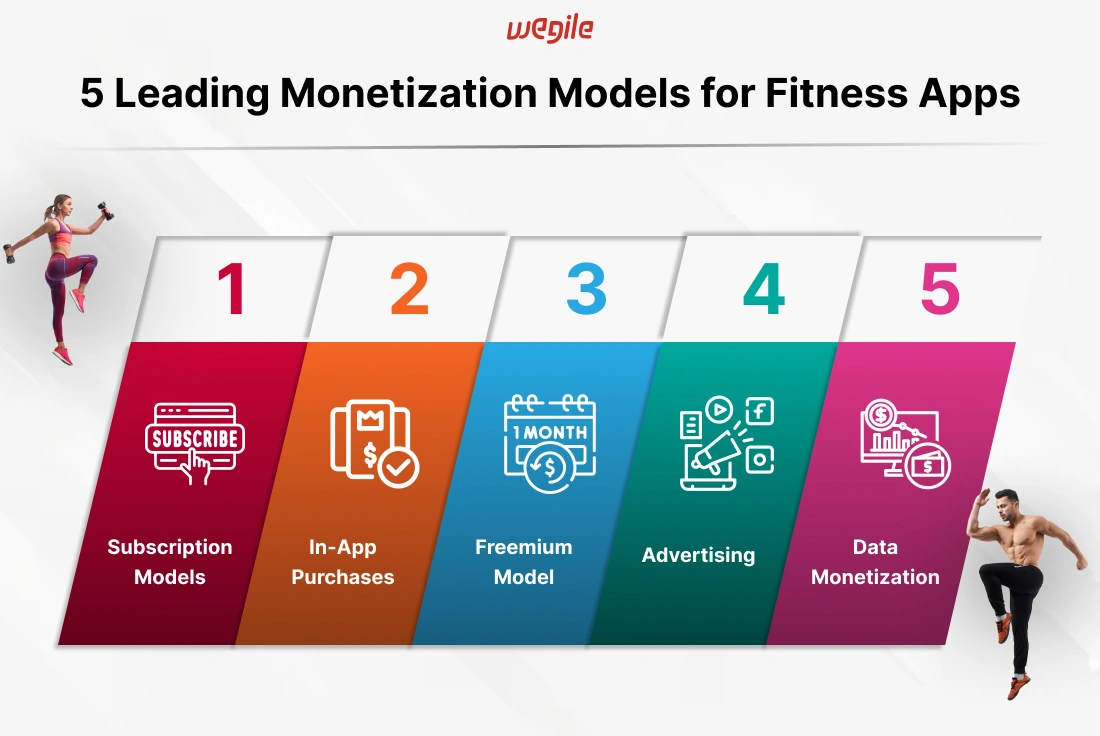
In the expanding fitness app market, effective monetization strategies are indeed essential. Various
models, including subscriptions, in-app purchases, and freemium models, are making a wave in the
fitness domain. Other monetization models, such as advertising, sponsored content, merchandising,
and data monetization, are also extensively being used. Each strategy has its unique advantages and
challenges. This factor makes selecting the right mix based on your application’s audience and goals
crucial. Continuous adaptation and creation of these strategies will help maintain user satisfaction
and aid business growth.
For expert and personalized assistance in developing a top-rated fitness app, look no further than
Wegile. As a leading fitness app development company, Wegile brings comprehensive solutions tailored
to your needs.
So, are you all set to take your fitness app to the next level? Contact Wegile, your top-rated
fitness app development company, today!
Leave a Reply