Technology is revolutionizing the fitness industry, propelling it to new heights of success. The
emergence of AI, or Artificial Intelligence, is primarily leading the revolution in the fitness
sector. From basic pedometers to sophisticated fitness trackers, AI is changing how we approach
health and exercise. Today, AI stands as a pivotal innovation in this evolution. It is transforming
the tools we use and how we interact with them.
But what exact role does AI play in enhancing fitness apps? Well, AI personalized fitness by making
it more innovative and effective. Its use extends beyond mere tracking and suggestion features. AI
helps analyze and learn from user data to offer personalized and interactive fitness experiences.
The leading question is when did this technology begin to leave its mark on fitness apps? Well, it
was not until the mid-2010s that developers began using AI to generate more adaptive and responsive
fitness solutions. But how significant is the impact of AI in the fitness app market? To decide, let
us look at a few insights: A recent 2024 statistic disclosed that the global market for AI in
fitness apps is predicted to reach $81.47
billion in 2028. This growth pinpoints the increasing
reliance on and trust in AI technologies within the fitness sector, with a projected annual growth
rate of 33% from previous years.
This integration of AI in fitness apps not only bestows enhanced personalization but also opens the
door to more efficient, engaging, and scientifically sound fitness experiences. As we explore the
emergence of AI within this industry, it becomes clear that AI’s potential to revolutionize fitness
practices is not just a contemporary trend; it’s already underway.
Let’s explore how AI is reshaping the fitness landscape. Immerse yourself in our blog for an in-depth
look at AI-driven innovations in fitness apps. Discover how this technology changes and upgrades how
we approach health and fitness.
Start your journey to a smarter workout today!
Best
Features of AI in Fitness Apps
Personalized
Workout Plans
Artificial intelligence enhances fitness apps by tailoring workout plans to individual users,
analyzing data like fitness levels for a customized experience. It also examines personal goals, BMI
or Body Mass Index, and exercise preferences. This approach guarantees that the workout routines are
customized to individual capabilities and goals and upgrade as the user progresses. For example, the
AI-driven app
Transform developed by Wegile designs customized training sessions that adapt over time.
They consider feedback from finished workouts to refine future sessions by making them more
effective and aligned with the user’s evolving fitness needs. This personalization helps in
maintaining user interest and motivation. The workouts are designed to be challenging yet
achievable, promoting consistent progress and preventing plateaus. If you are also building apps or
fitness platforms and want to explore how to integrate personalization, connect with us as we are
one of the top-rated fitness app development
companies.
Building on AI’s powerful impact, fitness apps also adapt workouts by considering external factors
such as weather conditions and schedule changes. It further ensures that users remain on track with
their fitness journeys despite changes in their daily routines or environmental conditions. For
example, on days when outdoor conditions are poor, the AI might suggest indoor alternatives that
require no or minimal equipment. This adaptability improves the practicality of fitness regimes and
helps maintain consistency, a critical factor for long-term fitness success.
Read More: Top 5 Leading Fitness
Apps
Developed by Wegile
Real-Time
Performance Tracking
Real-time performance tracking uses the power of AI to monitor and analyze user performance during
physical activities. This feature is necessary for adjusting workout intensity and curating feedback
that helps users maximize their exercise sessions. AI integrates data from sensors that track heart
rate, breathing rates, and other physical parameters. It also monitors the calories burned to give
users insights into their performance. It allows for immediate adjustments to the workout intensity
based on real-time data. The real-time data also ensures that users exercise within their optimal
heart rate zones for fat burn. It optimizes workouts for endurance improvement and cardiovascular
health. This technology not only enhances workout safety but also increases the effectiveness of
each session. All this makes it possible to achieve better results in a shorter time.
Beyond adapting workouts, AI-powered real-time performance tracking can also provide predictive
insights that help prevent injuries. AI can identify potential overuse or incorrect form by
analyzing the user’s movement patterns and exertion levels over time. Fitness apps can notify users
about these risks and recommend corrective measures or alternative exercises. This proactive
approach helps users avoid common exercise-related injuries. It eventually promotes a safer training
environment and ensures that avoidable setbacks do not hinder fitness progress.
Diet and
Nutrition Management
AI also contributes significantly to diet and nutrition by suggesting meal plans. The meals are
tailored to complement the user’s workout intensity and fitness goals. It investigates dietary
preferences, nutritional requirements, and calorie expenditure to instruct meals that support the
user’s fitness motives. It can include meal suggestions that optimize macronutrient intake for
muscle recovery post-workout or meals that help retain energy levels for upcoming sessions.
AI’s role expands into seamless integration with smart home devices. It enriches the convenience of
managing diet and nutrition. For example, AI can sync with smart refrigerators to track food
inventory and expiration dates. It suggests meal plans based on what is currently available and
needs to be consumed soon. This integration helps reduce food waste and confirms that meal plans
remain nutritious and aligned with the user’s dietary needs. Such innovative applications of AI
simplify the management of nutritional habits and support sustainable habits.
Sleep and
Recovery Tracking
AI in fitness apps augments its capabilities to monitor and support sleep and recovery. These two are
essential components of any successful fitness regime. By interpreting sleep patterns and quality,
AI can bring insights and recommendations on optimizing rest periods for better physical
performance. For example, certain apps use data from wearable devices to track sleep stages and
duration. They then employ AI to suggest changes in workout intensity or timing based on the quality
of sleep a user gets. It guarantees that workouts are aligned with the body’s natural recovery
states. It enhances muscle regeneration and fitness resilience. Sleep tracking helps users
understand the critical link between rest and physical performance. It eventually encourages better
sleep habits crucial for long-term health and fitness success.
Stress
Management Features
Another innovative feature facilitated by AI in fitness apps is stress management. By monitoring
physiological signs of stress, including heart rate variability and breathing patterns, AI can
propose activities specifically designed to reduce stress. It can include guided breathing
exercises, yoga sessions, and minimal physical activities. All these depend on the individual’s
stress levels and personal preferences. Some apps also integrate mood tracking to assess emotional
well-being. This further allows the AI to provide more holistic health management. These features
are quite valuable in today’s stressful world. They help users maintain not only physical fitness
but also mental health. This holistic approach guarantees that users can maintain consistent workout
schedules by handling stress effectively.
Top 5
Benefits of AI in Fitness Apps
1.
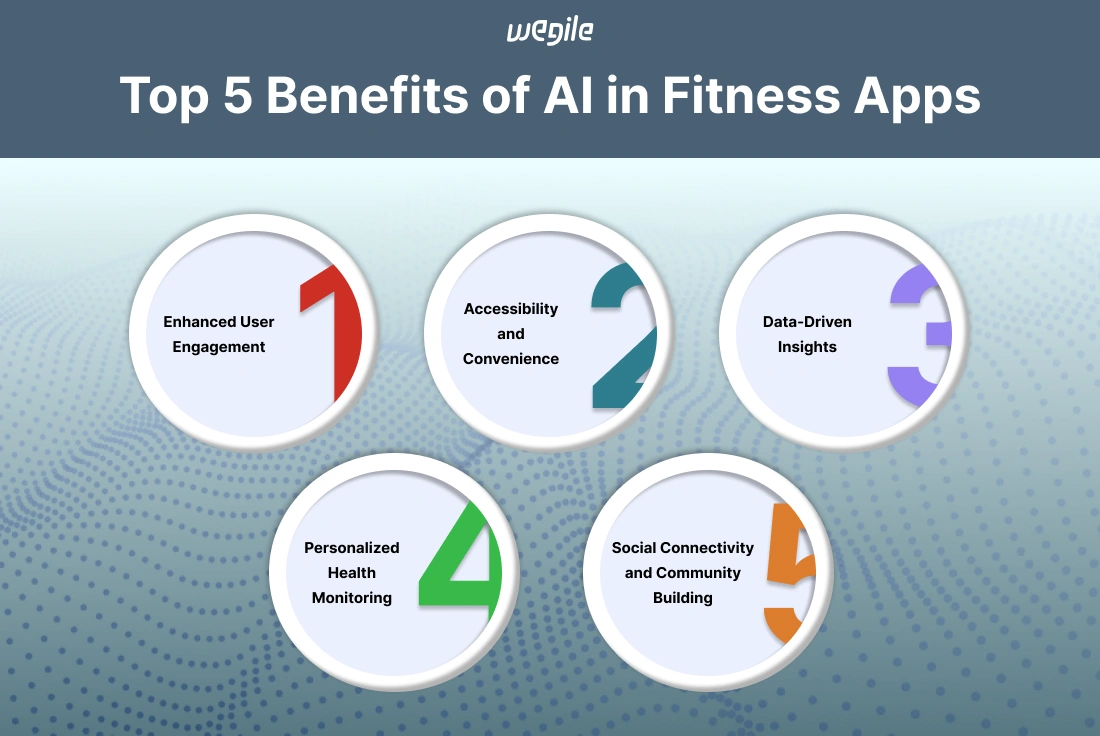
Enhanced User Engagement
AI boosts user engagement in fitness apps by incorporating interactive challenges and rewards. These
extra perks make the exercise journey enjoyable, interactive, and motivating. Through gamification,
apps transform boring workout routines into exciting and competitive activities. Take the app
Runkeeper, which uses AI to personalize fitness plans for runners. It adjusts routes and challenges
based on the user’s performance and goals. It allows for a tailored fitness experience that
motivates individual progress and adaptation. The app’s dynamic interface and engaging visuals
guarantee that workouts remain stimulating and focused on personal development.
2.
Accessibility and Convenience
AI also increases the accessibility and convenience of personal fitness training. It democratizes
access to personalized fitness advice, which makes it available to a broader audience. It includes
those in remote or underserved locations. AI-powered fitness apps can directly present customized
workout and nutrition plans to users’ devices. This cuts the need for physical gym visits or
face-to-face consultations with fitness trainers. For example, apps like Peloton use AI to adapt
workout plans to the fitness level and progress of the user. It provides a personalized training
experience that one would typically only expect from a personal trainer at a gym. This feature makes
high-quality fitness guidance sorted and accessible from the comfort of one’s home.
3.
Data-Driven Insights
AI in fitness apps presents data-driven insights that improve users’ health outcomes. AI can present
comprehensive health advice and predictive analytics by collecting and analyzing vast data on user
activity, dietary habits, and physiological responses. This approach is essential for injury
prevention and better health management because AI is a master that can identify patterns and
indicate a risk of injury before it happens. Plus, AI can suggest diet and exercise modifications to
match health goals or recovery needs better. For example, advanced wearables that monitor biometric
data can foresee cardiovascular health issues. It analyzes heart rate variability, sleep quality,
and activity levels. This allows users to make intelligent decisions about their health and fitness
strategies.
4.
Personalized Health Monitoring
AI enhances fitness apps with personalized health monitoring features that channel and analyze
individual health metrics over time. This functionality allows for a more tailored approach to
fitness and wellness. AI algorithms are smart in detecting subtle changes in physiological data.
They suggest clever modifications to exercise and diet plans when necessary. For example, AI-backed
apps can monitor resting heart and recovery rates to advise when to intensify training or rest.
These advanced features optimize both performance and recovery. This proactive health monitoring
ensures that users can maximize their fitness results while minimizing the risk of burnout or
overtraining. All this combines, eventually making the personal health journey safer and more
effective.
Social Connectivity and Community
Building
Another leading boon of AI in fitness apps is its power to enrich social connectivity and nurture
community among users. AI algorithms can match users with similar fitness goals and preferences.
They help create virtual workout groups that provide motivational support and a sense of community.
Apps like Strava use AI to connect runners and cyclists within their locality and globally. This
allows for shared experiences and competitions, regardless of geographical boundaries. This feature
boosts motivation through community support and puts in a layer of social interaction often missing
in solitary fitness routines. Such social connectivity is vital in maintaining long-term engagement
and enthusiasm in personal fitness endeavors. It ultimately leads to sustained health benefits and a
more enjoyable fitness experience.
The Bottom Line
Artificial intelligence is reshaping the fitness industry by introducing advanced, personalized
training solutions. AI is not just a fleeting trend but a fundamental shift in how we view health
and fitness. With AI-driven smart innovations, fitness apps are transforming from simple tracking
tools to comprehensive wellness platforms. They offer personalized workout plans, real-time
performance feedback, and nutrition management explicitly tailored to the user’s needs. The
involvement of AI in fitness apps brings many benefits that enhance user engagement. It eventually
unpacks many more features, such as improving accessibility, and provides valuable data-driven
insights for healthier lifestyle choices.
Are you ready to conquer the power of AI in the fitness industry and see how users engage with your
fitness app? We at Wegile are a top-rated fitness app development
company. We have mastered
incorporating leading AI solutions to make fitness apps more interactive, personalized, and
powerful. Partner with us today to reap the potential of AI and construct fitness apps that meet and
exceed user expectations in this extensive digital landscape. Say hello to the future of fitness
with Wegile and start building your smarter fitness solution today. Let’s innovate, inspire, and get
fitter together in the world of fitness technology.
Leave a Reply