Imagine having a smart technology that records your heart rate, sleep, and injuries. Sounds
futuristic? Welcome to the reality of the Internet of Things in sports and fitness! IoT is changing
how we keep ourselves healthy. These gadgets are your new best workout buddies. Smartwatches that
track vitals and fitness trackers that tally steps and calories are fantastic. These technologies
offer infinite and interesting possibilities! Consider smashing your fitness objectives with
real-time feedback from wearables that tailor your workout regimens and measure your progress with
pinpoint accuracy. With IoT, you’re not just exercising; you’re unlocking your full potential. Who
wouldn’t want a personal coach on their wrist? Ready to explore how IoT is transforming the sports
and fitness landscape? Let’s dive into the world where technology meets athleticism and see how you
can take your game to the next level!
What is IoT?
The Internet of Things is a technology that links devices to the internet. This enables them to
collaborate and share information easily. IoT enhances the intelligence and efficiency of various
systems. This ranges from lighting and thermostats to industrial machines and healthcare devices.
It’s similar to a network of interconnected tools that can easily communicate, gather information,
and cater to your requirements. It’s something that often happens without you even realizing it. IoT
is revolutionizing our daily lives and professional environments. This makes the world more
connected and intelligent in ways that make our daily lives easier and more enjoyable.
Must Read: The Future of
Fitness
App
Development Top Trends to Watch in 2024 and Beyond
The
Evolution of IoT in Fitness
Apps
The rise of IoT in fitness apps is transformative. The original tracking technologies have evolved
into a linked ecosystem that provides real-time insights and personalized health data. Back in the
day, fitness apps were quite simple. They were mostly about counting steps, tracking calories, and
maybe logging a workout or two. But these early apps were more than just tools; they were the first
steps toward a bigger and more connected future. They laid the groundwork for what was to come by
getting people comfortable with using technology to manage their fitness goals.
Later, smart exercise equipment and wearable tech changed everything. Your watch now tracked your
heart rate, sleep, and even reminded you to stand up and move. Smart
treadmills integrate with applications for a more tailored
workout. These linked devices make fitness more interactive and data-driven, letting you track
progress and make health decisions.
Fitness apps are fully adopting the IoT to enhance user experiences with a more interactive and
tailored approach. Take MyFitnessPal as an example. It seamlessly syncs with a range of IoT devices.
This allows you to effortlessly monitor your daily steps and keep tabs on your caloric intake. It
provides up-to-the-minute insights and assists users in staying on track with their fitness
objectives by seamlessly integrating with smart wearables. Yet another fantastic example is the Nike
Training Club. It utilizes IoT technology to offer tailored workout suggestions that align with your
progress and preferences. These apps have done a great job of using IoT technology to make fitness
more convenient, engaging, and personalized, which has really raised the bar in the industry.
Must Read: Top 5
Leading
Fitness Apps
Developed by Wegile
Benefits
of IoT in Sports and Fitness
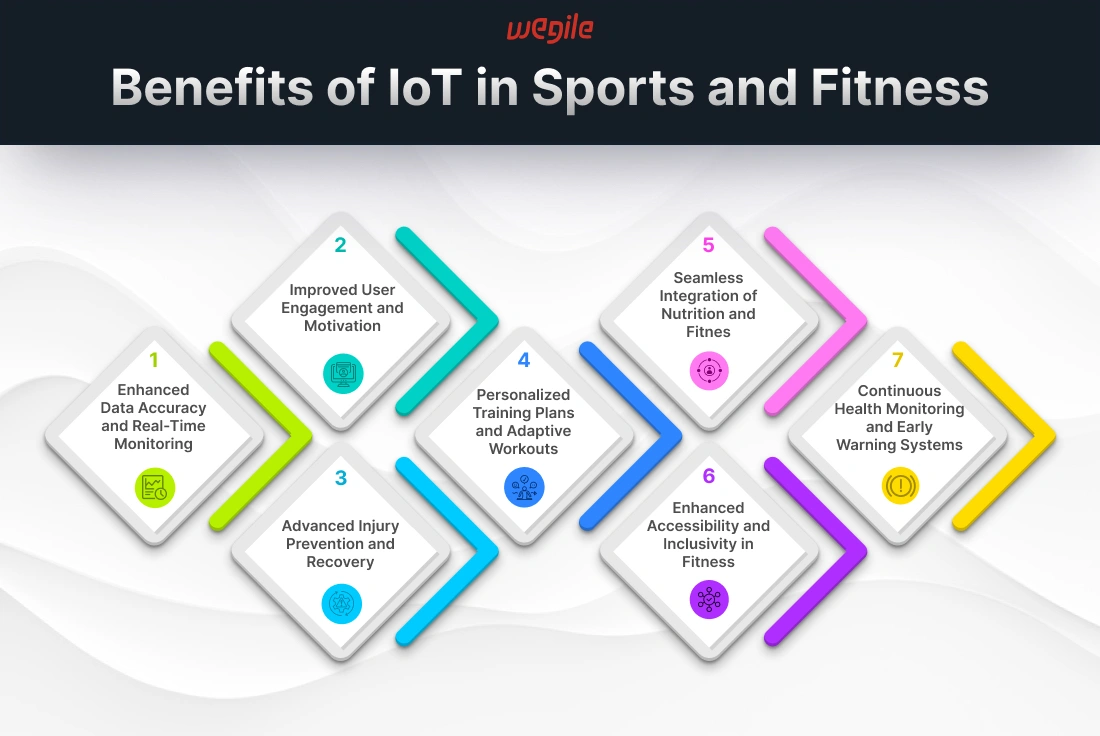
1. Enhanced Data Accuracy and
Real-Time Monitoring
Gone are the days of guesswork in fitness! IoT devices are like mini-scientists following you. These
sophisticated devices track your heart rate and burpees with exact accuracy. IoT is similar to a
fitness buddy who never misses a beat! Real-time monitoring means you get instant feedback on your
performance. It’s like having a coach whisper in your ear to push harder or ease off. Further,
immediate data helps you make on-the-fly adjustments to your workout. This ensures you’re always in
the sweet spot for maximum gains. The best part? All this data feeds into personalized
recommendations. Your IoT fitness ecosystem learns your patterns and quirks. On the basis of the
same, it offers tailored advice that fits you like a glove. It’s not just about working out; it’s
about working out smarter!
2.
Improved User Engagement and
Motivation
Let’s face it: sometimes, the hardest part of fitness is just showing up. That’s where IoT comes in
like a peppy workout partner! Many IoT-enable fitness apps use gamification to turn your sweat
sessions into a fun challenge. Earn points, unlock achievements, or compete with friends. Hence,
suddenly hitting the gym feels more like leveling up in your favorite video game. Personalized
feedback is another motivation booster. Your IoT devices don’t just collect data; they talk back!
These gadgets will celebrate your wins and gently nudge you when you’re slacking! It’s like having a
supportive friend who always knows the right thing to say to keep you going. Sharing progress and
competing with friends is possible using social media. Why not get up from the couch with some
friendly competition? Connecting with other fitness lovers can also give you a boost when you need
it.
Must Read: Custom Fitness App
Features: 19
Important Features in 2024
3.
Advanced Injury Prevention and
Recovery
Here’s where IoT really flexes its muscles. They’re known to keep you safe and sound. These smart
devices are constantly monitoring your body’s signals and looking out for any red flags. Notice how
your smartwatch sometimes tells you to breathe? That’s just the tip of the iceberg! IoT can track
things like your heart rate variability, sleep quality, and even your running form. If it spots any
worrying trends, it gives you a heads-up before a small niggle turns into a full-blown injury. It’s
like having a super-attentive personal trainer and a medical team rolled into one. IoT is your new
best friend when it comes to recovery. It can help you optimize your rest days by suggesting the
right balance of activity and relaxation based on your recent workouts and recovery patterns. Some
advanced systems can even guide you through proper cool-down routines or recommend specific
stretches tailored to your needs.
4. Personalized Training Plans and
Adaptive Workouts
IoT doesn’t just track your fitness; it learns from it! Imagine having a coach who remembers every
rep, every mile, and every heartbeat. That’s what IoT brings to your training plan. These smart
technologies create personalized training regimens based on performance data, fitness levels, and
goals. The problem is that these plans aren’t definitive. They adapt on the fly! Had a rough sleep
last night? Your IoT system might suggest a lighter workout. Crushing your goals? It’ll ramp up the
challenge. It’s like having a fitness plan that grows with you to make certain that you’re always in
the zone of maximum potential; not too easy, not too hard, but just right.
5. Seamless Integration of
Nutrition and Fitness
IoT goes beyond the gym and workout scene; it’s bringing the kitchen into the fitness equation, too!
Smart devices can now track your nutrition alongside your workouts and give you a complete picture
of your health. Some IoT systems can even sync with smart kitchen appliances or food-tracking apps.
Imagine getting personalized post-workout meal advice based on what’s in your fridge or your fitness
app encouraging you to consume more protein on strength training days. It’s like having a
nutritionist and a fitness coach tag-teaming to keep you on track.
6. Enhanced Accessibility and
Inclusivity in Fitness
IoT is democratizing fitness in order to make it widely accessible to everyone. IoT-based devices can
provide adapted fitness tracking and customized workout suggestions for people with specific
conditions. They can also offer alternative exercise options or modified movements based on
individual needs. IoT can be like training wheels for a beginner’s fitness journey. It can guide you
through proper form, suggest appropriate workout intensities, and provide encouragement every step
of the way. And for busy professionals or parents? IoT makes it easier to squeeze in effective
workouts anytime and anywhere and with minimal equipment.
7. Continuous Health Monitoring and
Early Warning Systems
IoT in fitness is your 24/7 health companion, besides being a workout tracker. These smart devices
can track vital signs and health indicators every day, irrespective of whether you exercise or not.
This continuous monitoring can pick up on subtle changes in your body that you might not notice. For
instance, your fitness tracker may detect tiny changes in your resting heart rate or sleep patterns
that suggest stress or disease. Some advanced IoT systems can even monitor more complex health
markers like blood oxygen levels or skin temperature. This constant health oversight acts like an
early warning system for your body. It can alert you to potential health issues before they become
serious problems. Imagine receiving a gentle reminder to rest because your body is overtraining or
to see your doctor because your heart rate has altered.
Challenges
and Considerations in IoT Integration
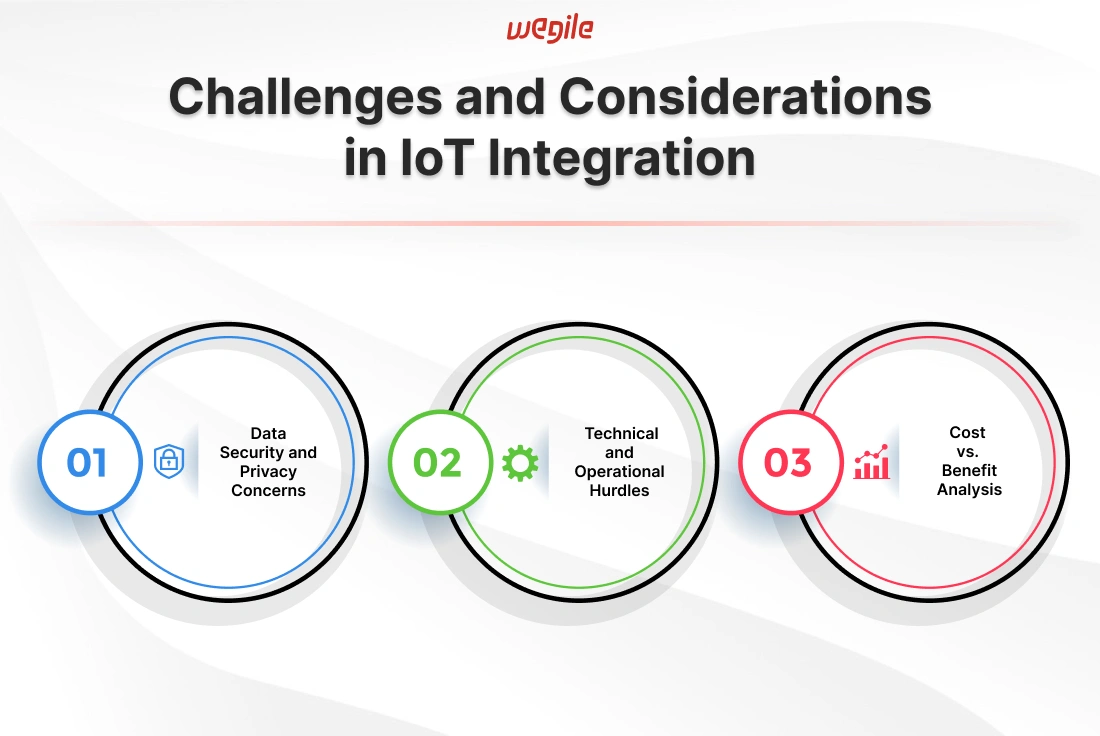
1. Data
Security and Privacy
Concerns
Privacy and data security are important concerns with IoT devices. Personal data like workouts,
health stats, and location should be protected. Unsecured IoT devices can be easily hacked and
accessed. Fitness companies and users must be aware of these hazards and protect their data. This
includes strong encryption, software updates, and data sharing with caution. Remember that data is
valuable and should not be compromised at any cost!
2.
Technical and Operational
Hurdles
Integrating IoT into fitness systems isn’t always smooth sailing. Companies might face several
technical and operational challenges.
This
includes ensuring device compatibility and
managing large amounts of data. For example, getting different IoT devices to work together
seamlessly can be tricky. This is especially true when they come from various manufacturers.
Additionally, maintaining the infrastructure to support these devices requires significant effort
and expertise. Fitness companies need to plan carefully to make certain that they have the right
technical support and resources in place. This will help them overcome the hurdles and make the most
of IoT technology.
Must
Read:
Explore the Key Tech Stack for
Fitness App Development
3.
Cost vs. Benefit Analysis
Implementing IoT solutions comes with costs. However, it’s essential to weigh these against the
benefits. The initial investment in devices, software, and infrastructure can be large, regardless
of how capable they are of improving data insights, customer engagement, and tailored experiences.
Businesses must undertake a detailed cost-benefit analysis. This is done to evaluate if long-term
benefits like customer pleasure, loyalty, and revenue growth
justify upfront costs. In some cases, the benefits will far outweigh the costs. Yet, it’s important
to approach the decision with a clear understanding of both sides.
Future
Trends: The Next Frontier of IoT in Fitness
1.
Emerging Technologies and
Innovations
New technologies and advancements in fitness IoT are offering interesting opportunities. We can
expect to see even more advanced wearables that track your physical activity and monitor your
emotional and mental well-being. For example,
VR and AR
offers immersive training experiences that make exercise more
pleasant and engaging. This is why it’s becoming part of fitness routines. Imagine hiking in the
mountains online or taking a live fitness class from home. These emerging trends will likely reshape
how we approach fitness and make it more personalized, interactive, and enjoyable.
2. The
Role of AI and Machine
Learning
Artificial intelligence and machine learning are set to take IoT in fitness to the next level. AI
can
use massive volumes of IoT data to create tailored workout routines, predict fitness
trends, and make real-time performance modifications.
Machine learning algorithms can learn from your habits and preferences. This continuously refines
your fitness experience. For instance, if your device notices that you perform better in the
morning, it might suggest shifting your workout time to maximize results. The integration of AI and
IoT will drive smarter and more efficient fitness solutions. This will make it easier for everyone
to achieve their health goals.
Must Read:
Monetization Strategies for
Fitness Apps
Wrapping
As we conclude our exciting exploration of IoT in sports and fitness, technology is no longer just a
part of our lives. It’s changing how we approach fitness and well-being. IoT is altering the fitness
industry by introducing wearables that monitor and analyze every movement, as well as applications
that provide personalized coaching. This technology is making fitness more intelligent, enjoyable,
and effective. Now, imagine taking your fitness game to the next level with a custom app tailored to
your unique needs. Wegile is here to help you bring your special idea
into existence, whether it’s creating the next big fitness tracker or a smart workout companion.
We’re experts at creating leading-edge fitness
apps that go above and beyond to
help you achieve your goals. Let’s create something amazing together! Ready to turn your fitness
idea into reality? Reach out to us at Wegile, and let’s build the future of fitness, one app at a
time!
Leave a Reply