Fitness enthusiasts, tech lovers, and everyone in between; something exciting is happening in the
fitness world, and it’s right on your wrist. Fitness apps and wearable technology are no longer just
gadgets. These gadgets are becoming an essential part of our daily routines, and they’re redefining
how we stay active and healthy. These devices now track more than steps and heart rates. They now
offer real-time feedback, customized workout regimens, and recovery suggestions depending on your
body’s unique needs.
Apps and wearables integrate seamlessly for a dynamic exercise experience. It’s similar to having
personalized coaching, motivating progress tracking, and smart reminders to keep you on track
without lifting a finger. It’s fitness that fits into your life perfectly. Ready to see what this
powerful pairing can do for you? Let’s examine how fitness applications and wearable technology are
improving user experiences and fitness journeys. Time to turn your tech into your fitness ally!
Understanding Wearable Technology in Fitness
Types of
Wearable Technology
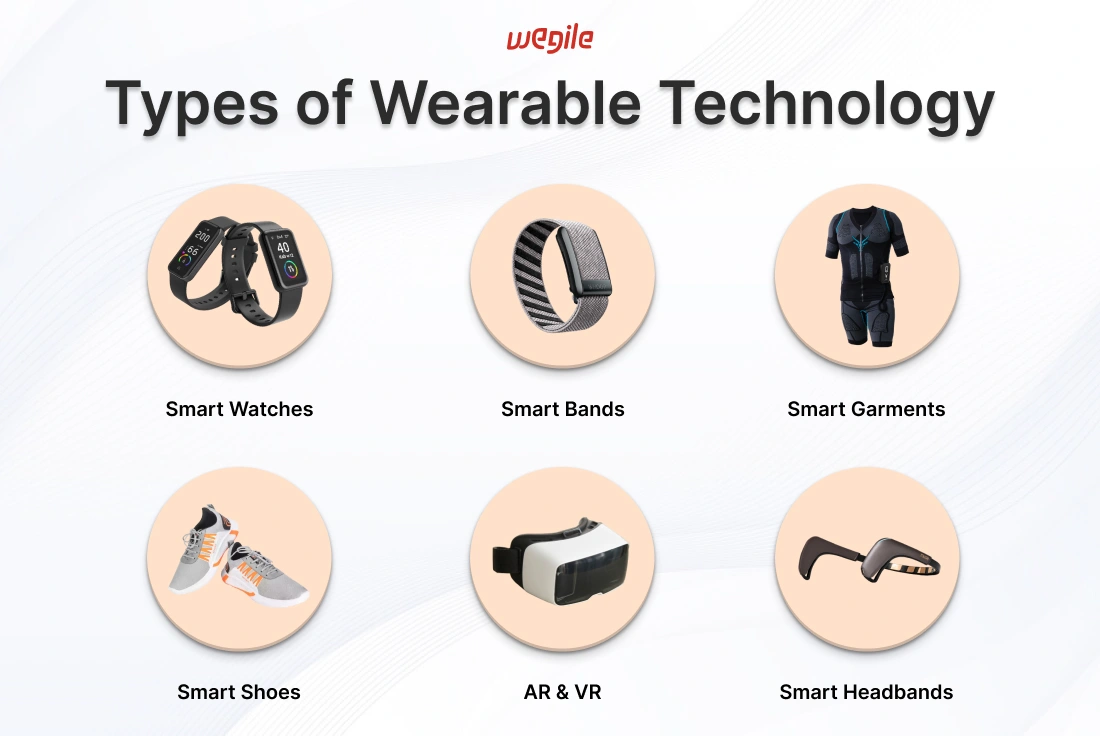
Fitness wearable technology has advanced greatly. It’s no longer just about counting steps but about
going beyond and enhancing the workout experience. Let’s explore the different types of wearable
devices that are revolutionizing fitness:
-
Smartwatches
These are your ultimate exercise buddies. Smartwatches track heart rate, steps, sleep, and
notifications and calls. Brands like Apple, Fitbit, and Garmin have made smartwatches
essential for anyone serious about staying fit. -
Fitness Trackers
Fitness trackers are ideal for simple and concentrated fitness tracking. Their specialty is
tracking steps, calories, and heart rate. They are stylish and have long battery lives,
making them ideal for daily wear. -
Augmented Reality Gadgets
AR devices combine the physical and digital worlds to improve your exercises. Gadgets like
smart glasses and heads-up displays offer a real-world view of data like your jogging route,
pace, and motivational texts. This technology uses interactive, real-time feedback to make
workouts more fun and productive. -
Virtual Reality Gear
VR is finding a home in the fitness sector as well as in video games. The Oculus Rift and HTC
Vive allow users to do yoga and boxing in VR without leaving their headsets. This makes
staying fit fascinating, especially for folks who dislike traditional routines. Virtual
reality fitness apps are growing. Users can choose from virtual cycling lessons and
immersive fitness games.
Data
Collection Capabilities
-
Heart Rate Monitoring
Nearly every wearable device on the market today monitors heart rate. This tool shows how
your body reacts to different levels of activity, not just how quickly your heart is
pumping. In high-intensity interval training or calm yoga, heart rate data lets you optimize
workout intensity for the best results -
Step Counting
The simple step counter is a key element of wearable technology. Tracking your daily steps
can encourage you to stay active and attain healthy lifestyle goals. -
Sleep Tracking
Wearables with sleep monitoring capabilities can monitor your sleep patterns and provide
insights into the deep or light sleep you’re getting. This data is essential for assessing
sleep quality, which affects energy and overall well-being. Better sleep often leads to
better workout performance. -
Advanced Metrics
Wearables can collect advanced metrics, including such as oxygen saturation (SpO2), stress
levels, and even electrocardiogram (ECG) readings. Beyond exercise tracking, these advanced
measures reveal your total health. -
Interactive Feedback through AR/VR
With AR and VR gadgets, data collection goes a step further by providing real-time,
interactive feedback. For example, while using AR glasses during a run, you might receive
live updates on your pace and heart rate directly in your field of view. VR workouts can
adjust the difficulty level based on your performance, offering a tailored experience that
keeps you engaged and challenged.
Wearables provide significant data for fitness apps. It allows fitness apps to provide personalized
recommendations, track your progress, and motivate you. With the right data, you can fine-tune your
fitness plan to match your unique needs, making every workout more effective and enjoyable.
Must Read: Fitness App
Development Cost:
Essential Insights
The Benefits of Integrating Fitness Apps with
Wearable Technology
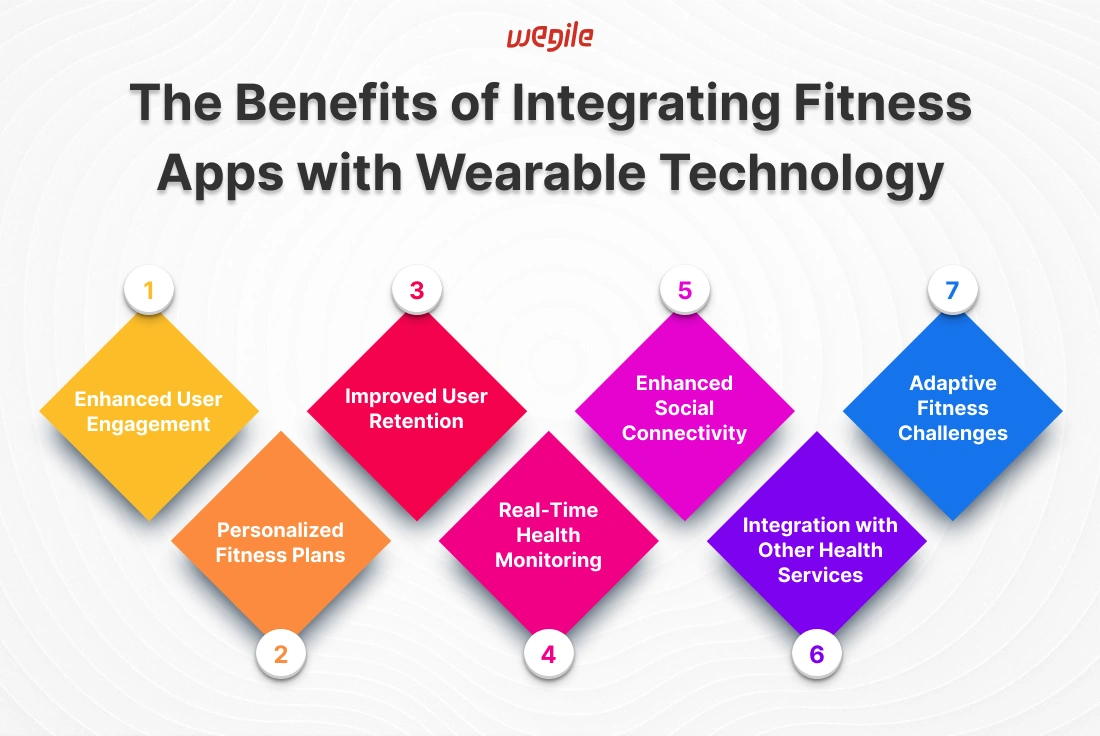
1.
Enhanced User Engagement
Wearable technologies are playing a vital role in fitness applications to boost user engagement.
Imagine having a personal trainer who is constantly available to give criticism, track progress, and
motivate you. That’s exactly what this integration offers. Real-time feedback is having an instant
report card on the wrist. Small interactions, like a gentle push to speed up during a run or an
acknowledgment for hitting a new personal best, such aspects keep users interested and motivated.
Set goals, track them, and get fast feedback for a dynamic, rewarding, and captivating experience.
Moreover, the integration allows fitness apps to offer personalized recommendations based on the data
collected by wearables. For example, if your fitness app or smartwatch detects a regularly high
heart rate during particular activities, it may suggest reducing your workout intensity or
attempting new routines. This level of personalization helps users feel understood and supported and
also increases the possibility of users sticking to apps. Regular goal-setting, real-time feedback,
and customized ideas keep users coming back. It makes a workout fun and participatory, turning
casual exercisers into fitness enthusiasts
2.
Personalized Fitness Plans
Fitness trackers and smartwatches constantly track your activity, heart rate, sleep, and more. This
data is the gold of fitness apps. It lets them create a workout plan that matches their fitness
level and goals. For instance, if the app notices that you’re constantly hitting your step count but
struggling with cardio, it may add more heart-pumping activities.
Yet, it’s more than just about adjusting the workout intensity. Integrating wearable tech also means
that your fitness plan can evolve as you do. If you observe benefits
like a lower resting heart rate or better sleep, the
app can adjust your plan to keep you challenged and on track. It’s like having a personal trainer
that monitors your progress and adjusts your workout regimen for the best outcomes.
This level of personalization ensures that your fitness journey is effective and enjoyable. Thus,
your motivation and commitment are higher when your training plan feels like it’s tailored to you,
resulting in better results.
Must Read: Fitness App
Development Stats to
Achieve Success in 2024
3.
Improved User Retention
In the world of fitness apps, keeping users engaged and committed is the name of the game. This is
where wearable technology shines. It creates a smooth and enriching experience that keeps consumers
coming back. Integrating fitness apps with wearables creates an intuitive and immersive experience.
Users feel in control of their fitness journey because data syncing, real-time feedback, and
progress monitoring are easy. This convenience is crucial to user retention. Thus, users are likely
to stick when the experience is smooth and effortless.
Moreover, the steady supply of real-time data-based insights and recommendations helps users feel
appreciated. It does not just tell them what to do but shows them that their wants and aspirations
are being considered. This personalized attention makes the app more personal, turning it from
merely a tool to a vital part of the user’s daily routine. Additionally, gamification components
like badges, streaks, and buddy competitions bring fun and competition to these connections.
These features might motivate users
to keep using the app and invest
in their success. Ultimately, users are less likely to truly adapt to apps that support their goals
and make fitness easier and more pleasant. This leads to higher retention rates and a more loyal
user base.
4. Real-Time
Health Monitoring
Real-time health monitoring is a major benefit of merging fitness apps with wearable technologies.
This feature is about overall well-being and proactive health management, not just fitness. Wearable
gadgets continuously collect data by tracking metrics such as heart rate, oxygen levels, and stress.
This data, combined with top fitness apps, gives customers a real-time health picture. Further,
constant monitoring lets users make informed decisions regarding their activities, such as
determining workout intensity or taking a break when stress levels rise.
Fitness performance and early health issue detection are both enhanced by real-time health
monitoring. For example, a sudden heart rate jump during a typical workout may lead the app to
recommend a medical checkup, preventing serious concerns. Similarly, tracking sleep patterns over
time can help identify sleep disorders or chronic fatigue, which promotes medical attention.
Users can rest easy knowing their vital signs are being monitored in real-time. It empowers people to
manage their health and make necessary changes. This proactive approach to health management is a
key factor in why so many users are turning to integrated fitness apps and wearables as essential
tools for their daily lives.
5. Enhanced
Social Connectivity
Integrating fitness apps with wearable technology goes beyond improving your workouts. It also brings
a social element into the mix. Having the ability to easily share your fitness progress opens up a
world of possibilities for connection, friendly rivalry, and supportive friendships. Users can
effortlessly update their social network followers and friends on their accomplishments, such as
reaching a new fitness goal or finishing a particularly difficult workout.
But it’s not just about sharing progress. The integration also allows users to compete with friends,
join virtual fitness groups, and participate in community challenges. This
social connection creates a sense of community,
making exercising more pleasant and less lonely. Motivating yourself to surpass your friends’
progress or getting a friendly nudge to beat their step count can be a strong boost in your fitness
journey. This sense of camaraderie can motivate you to exercise even on days you’d rather skip a
workout.
6. Integration with Other Health Services
Fitness apps are more than counting calories and steps. They’re becoming part of a broader health
ecosystem. Integration with telehealth services and other health-related apps means users can have a
more holistic view of their health in one place. Envision a world where your telehealth
appointments, nutrition plans, mental health data, and exercise records are all in sync with each
other. This creates a comprehensive health management system that’s tailored to your needs.
For instance, the app could suggest a virtual consultation with a healthcare provider if your
wearable device detects an unusual heart rate pattern. Alternatively, if you’re using a nutrition
app to monitor your food intake, your fitness app can modify your exercise routine to complement
your nutritional objectives. This seamless connectivity makes fitness apps excellent health
management tools, helping users stay engaged and informed about their wellness.
7. Adaptive Fitness Challenges
Adaptive fitness challenges combine personalization with technology
to provide customers with a dynamic training
experience that changes as they improve. These obstacles can change in real time depending on your
performance, all because of the combination of fitness applications with wearable tech. The app can
probably introduce increasingly difficult tasks to you if you have been regularly achieving your
objectives. However, you can adjust the level of difficulty so that you remain motivated without
becoming overwhelmed in case you’ve been struggling.
This personalized approach keeps users engaged by continuously offering new goals that are just
within reach. Rather than feeling monotonous or stagnant, the tasks evolve as you progress. This
adds an element of excitement to your fitness journey. Further, the adaptive experience keeps your
motivation high and your workouts successful by continually setting reachable yet demanding goals.
Must Read: AI in Fitness App: Transforming
the Fitness Industry with Smart Technology
Wrapping Up
In conclusion, fitness applications and
wearable technology are changing health
and wellness. This dynamic duo offers real-time data, personalized coaching, and interactive
experiences that keep us motivated and on track. From measuring steps to monitoring sleep and gently
nudging us to move, these technologies are becoming our personal trainers, cheering squads, and
health advisors. Remember, the true magic happens when your app and wearable are so perfectly in
sync that you can focus on your goals. That’s where the right fitness app development
company comes into play. You need
professionals who understand how technology, user experience, and motivation interact.
Wegile can be your partner in creating the next big thing in fitness app development. With our
experience creating intuitive and engaging fitness solutions, we’ll make sure your app interacts
with wearable gear to deliver an unforgettable user experience. Ready to make your move? Get in
touch with us to get started!
Leave a Reply