In an era where technology continually reshapes our world, the healthcare industry is no exception. The
integration
of chatbots, those intelligent and ever-available digital companions, has ushered in a new era of healthcare
accessibility and efficiency. While there are pros and cons of AI in healthcare, these digital allies have proven to be pivotal. They excel at providing real-time
assistance, enhancing patient care, streamlining administrative processes, and offering crucial support in the
ever-evolving world of healthcare.
Benefits of ChatBots in
Healthcare
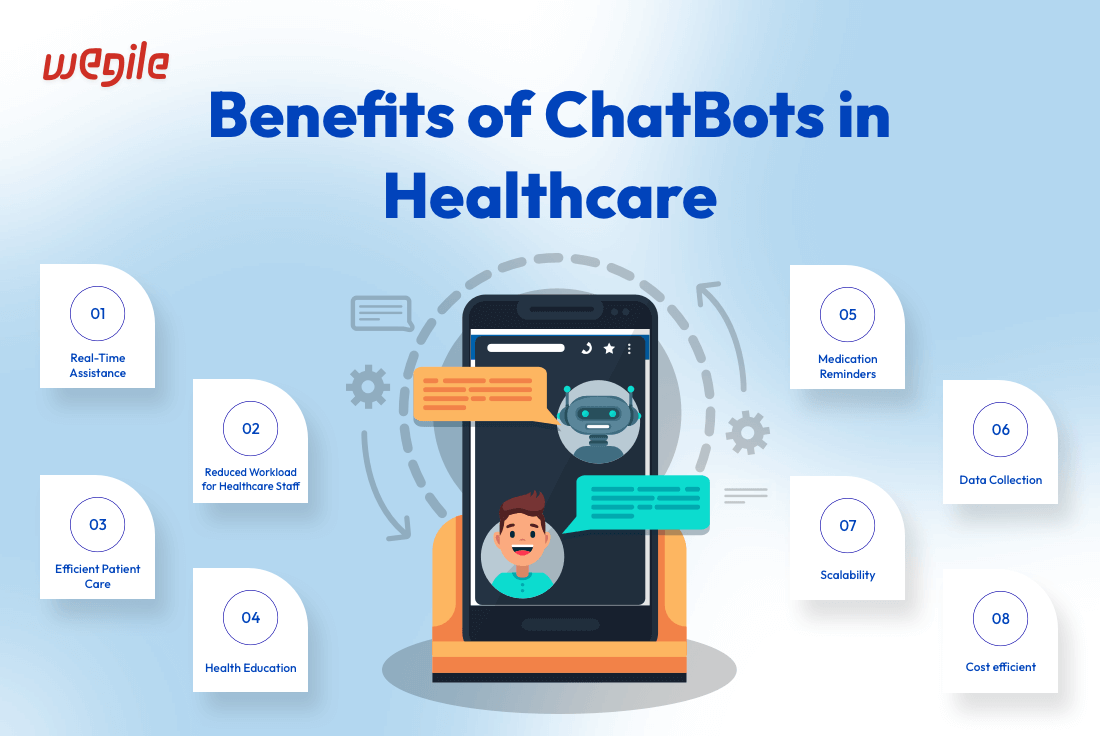
In the fast-paced world of healthcare, chatbots are emerging as superstars, bringing a world of benefits to the
table. These digital assistants work around the clock, providing real-time assistance, and are not just a boon
for
healthcare staff but a lifeline for patients. Let’s explore them!
-
1. Real-Time Assistance
Imagine having a healthcare companion available 24/7, tirelessly offering immediate responses to your
inquiries. Whether you’re grappling with worrisome symptoms in the middle of the night or simply seeking
guidance on a routine health matter, chatbots stand ready to respond promptly, making healthcare more
accessible and convenient than ever before.Picture this: You wake up at 2 AM with a persistent cough and concerns about your health. With a
healthcare
chatbot at your fingertips, you can instantly receive guidance on whether your symptoms warrant
immediate
medical attention or if it’s safe to wait until the morning. This instant support can be a game-changer,
especially in urgent situations. -
2. Reduced Workload for Healthcare Staff
Chatbots empower patients to become active participants in their healthcare journey. They facilitate
essential self-service functions such as appointment scheduling, prescription refills and even provide
valuable health education. Do you need advice on managing your diabetes, or perhaps you require dietary
recommendations? A chatbot is there to assist you, even sending medication reminders to ensure you never
miss a dose.Imagine you’re a diabetic patient. With a healthcare chatbot, you can not only conveniently schedule
your
regular check-ups but also access valuable education on managing your condition. It can offer dietary
advice, remind you to take your insulin, and empower you to proactively manage your health, all from the
comfort of your own home. -
3. Efficient Patient Self-Service
Chatbots empower patients to take charge of their health. They can assist you in scheduling
appointments,
refilling prescriptions, and even provide health education. Need to know how to manage your diabetes?
Just
ask the chatbot, and it can provide tips, diet recommendations, and even remind you to take your
medication.Let’s say you’re a diabetic patient. A healthcare chatbot can not only help you schedule regular
check-ups
but also educate you on managing your condition, offering dietary advice and reminding you to take your
insulin, all from the comfort of your home. -
4. Health Education
Chatbots are becoming essential health educators, offering easy-to-understand information to individuals
of
all backgrounds. They provide insights into managing chronic conditions, offering dietary
recommendations,
and explaining the importance of preventive measures.For instance, a chatbot can educate a newly diagnosed diabetic on managing the condition and send
regular
updates. Moreover, they can proactively reach out to individuals, informing them about vaccination,
healthy
living, and disease early warning signs. Chatbots adapt content for different age groups and
backgrounds,
ensuring a tailored educational experience. Whether you’re a young adult, parent, or senior, chatbots
empower individuals to make informed health choices. -
5. Medication Reminders
Medication adherence can be a significant challenge in healthcare. Missed doses or errors in medication
can
have serious consequences. Chatbots come to the rescue as reliable medication companions. They send
timely
reminders for taking your pills and refilling prescriptions, significantly reducing the risk of missed
doses
and medical errors.For instance, if you’re prescribed daily medication, a healthcare chatbot can send you friendly
reminders at
the same time each day, ensuring you never forget to take your meds, which is crucial for managing
chronic
conditions and improving your overall health. -
6. Data Collection
In the healthcare industry, data is undeniably a precious resource. Chatbots play a pivotal role in
gathering essential health data, including symptoms, medication history, and lifestyle information. This
data isn’t just sitting idle; healthcare providers can harness it for improved patient care, medical
research, and insightful analytics, leading to potential medical breakthroughs.Consider a chatbot conducting a patient assessment, asking about symptoms and medical history. This data
can
be aggregated to track the spread of diseases, identify emerging health trends, and ultimately enhance
the
healthcare system’s ability to respond to outbreaks and epidemics. It’s a data-driven approach that
promises
to save lives. -
7. Scalability
Healthcare organizations often contend with fluctuating demands for their services. Chatbots bring a
solution to this challenge by offering scalability. They can seamlessly handle a large volume of users,
whether it’s a slow day or a sudden surge in inquiries. This adaptability ensures that no patient is
left
waiting, improving the overall patient experience.Think about a bustling flu season, with a sudden influx of patients seeking information or advice.
Chatbots
can efficiently manage this surge in demand, preventing long wait times and ensuring that patients
receive
timely assistance, even during the most hectic periods. -
8. Cost Efficient
The cost of running a healthcare facility can be astronomical, making cost efficiency a critical
consideration. Chatbots provide a helping hand by managing routine tasks and offering cost-effective
healthcare solutions. By doing so, they help reduce operational costs, which can ultimately translate
into
better services and lower healthcare expenses for patients.Are you worried about the rising costs of healthcare? Chatbots are poised to make a difference by
streamlining processes, enhancing accessibility, and ultimately making healthcare more affordable and
sustainable for everyone.
What are the
Positive Effects of Chatbots?
Now that we’ve explored the incredible benefits of chatbots in healthcare let’s dive even deeper into the
specific
and profound positive effects they bring to the table. From enhancing the patient experience to offering
valuable
insights, chatbots are transforming healthcare in ways that are not just beneficial but essential.
-
Improved Patient Experience
One of the most significant positive effects of chatbots in healthcare is their ability to enhance the
patient experience in a remarkable way. They serve as dedicated, always-available healthcare companions
that
offer not just instant responses but personalized and empathetic interactions. This level of engagement
makes patients feel like they have a caring and supportive healthcare partner available 24/7.Imagine being in a situation where you’re feeling unwell, and uncertainty looms. Should you rush to the
hospital or wait? A healthcare chatbot can swiftly provide you with personalized information, helping
you
make an informed decision and reducing anxiety. This one-on-one, customized support goes a long way in
improving the overall patient experience. -
Increased Efficiency
Efficiency is the heartbeat of modern healthcare, and chatbots play a crucial role in making healthcare
processes more streamlined and time-efficient. By handling administrative tasks, reducing wait times,
and
ensuring rapid access to essential information, chatbots make the entire healthcare experience smoother
and
less time-consuming for both patients and healthcare providers.Picture a bustling hospital waiting room with a long queue of patients waiting to check-in. A chatbot
can
efficiently manage the check-in process, verify insurance details, and provide estimated wait times,
transforming what could be a stressful experience into a seamless and efficient one for everyone
involved. -
Remote Monitoring
The positive effects of chatbots extend beyond in-person interactions. They have the capability to
provide
remote monitoring services, which means that even from the comfort of your home, you can receive
continuous
healthcare support. Chatbots can keep a vigilant eye on your health data and promptly notify healthcare
providers in case of any concerning changes. This form of remote monitoring is particularly valuable for
patients with chronic conditions.Imagine a patient with heart disease who needs ongoing monitoring. A healthcare chatbot can continuously
monitor their vital signs, such as blood pressure and heart rate, and send alerts to the healthcare team
if
there’s a sudden spike in these readings. This proactive approach can lead to early intervention and
improved outcomes. -
Data Insights
The data collected by chatbots is not just about answering patient inquiries; it’s a goldmine of
information
that can be used for better decision-making in healthcare. With data-driven analytics, healthcare
organizations can identify trends, assess patient needs, and make more informed decisions about their
services. This results in a more patient-centric and efficient healthcare system.Imagine a healthcare chatbot collecting data on the most common symptoms reported by patients in a
specific
region. This data can help healthcare authorities detect emerging health trends, allocate resources more
effectively, and respond to potential outbreaks with agility, ultimately saving lives and resources. -
Language Support
Healthcare is a universal need, and language barriers should never stand in the way of accessing quality
care. Chatbots offer multilingual support, ensuring that individuals from diverse linguistic backgrounds
can
communicate their health concerns and receive assistance effectively. This inclusive approach opens
doors to
healthcare for a broader spectrum of the population.Consider a non-English-speaking patient who visits a hospital or healthcare facility. A multilingual
chatbot
can bridge the communication gap, allowing them to explain their symptoms and understand the provided
medical advice, ensuring that language is not a barrier to quality care. This linguistic inclusivity is
a
key step in making healthcare accessible to all. -
Reduced Errors
In healthcare, precision is paramount, and chatbots contribute significantly to reducing human errors.
They
provide accurate information and guidelines, consistently following protocols without experiencing the
fatigue or distractions that can affect human healthcare providers.Imagine a scenario where a healthcare professional is prescribing medication. A chatbot can assist by
double-checking the dosage and cross-referencing it with the patient’s medical history, reducing the
risk of
prescription errors and potential harm. This layer of accuracy and reliability is indispensable in
maintaining high healthcare standards. -
Privacy and Confidentiality
Healthcare data is highly sensitive, and privacy is non-negotiable. Chatbots are designed with stringent
data security measures to ensure the utmost confidentiality. This level of data protection aligns with
healthcare regulations and gives patients peace of mind when using these digital healthcare companions.Now, imagine a patient discussing a sensitive medical condition with a chatbot. They can rest assured
that
their information is safe and will not be accessed or shared without their explicit consent. This
emphasis
on privacy and confidentiality is essential to fostering trust in healthcare interactions.
Use Cases
and Examples of Chatbots in Healthcare
-
1. Symptom Assessment
Chatbots are assisting in assessing symptoms and providing initial triage for patients. They help
individuals understand the severity of their condition and whether they should seek immediate medical
attention.Example: Babylon Health’s chatbot asks
users
about their symptoms, medical history, and lifestyle to provide personalized health advice and recommend
appropriate treatments or the need for medical attention. -
2. Medication Management and Reminders
Chatbots are becoming reliable medication companions, sending reminders for dose refills and offering
information about medications to improve patient adherence and safety.Example: Medisafe is a
well-known
platform that utilizes chatbot technology to deliver medication management and reminders. It assists
users
in keeping track of their medication schedules, offers pill reminders, and provides educational
information
about the medications they are taking. -
3. Health Education
Chatbots are valuable sources of health education and information. They can offer insights on various
health
topics, provide dietary recommendations, and help patients better understand their medical conditions.Example: Zocdoc, which is one of the best healthcare apps, uses a chatbot
to
help patients find and schedule appointments with nearby doctors. The chatbot guides users through the
process, offering available time slots and helping with insurance verification. -
4. Appointment Scheduling and Management
Healthcare chatbots streamline appointment scheduling and management, assisting patients in booking,
rescheduling, or canceling appointments, reducing the workload on administrative staff.Example: The Ada chatbot allows
users
to schedule appointments with healthcare providers and provides notifications for upcoming appointments,
ensuring patients don’t miss their visits.
How Can
Wegile Help With Integration of Chatbots?
As a healthcare technology solutions provider, Wegile excels at seamlessly integrating chatbots into healthcare
systems. We begin by understanding your unique requirements, customizing chatbots to address specific
challenges,
and ensuring alignment with your organizational objectives.
Our user-friendly interfaces guarantee effortless interactions for patients and healthcare staff, and our robust
data security measures ensure regulatory compliance, safeguarding patient information.
We go further by offering training, post-implementation support, and continuous monitoring and improvement,
making
chatbots indispensable tools in streamlining healthcare processes, enhancing patient care, and improving the
overall
healthcare experience.
Wrapping Up
The integration of chatbots into the healthcare landscape is not merely a technological advancement; it’s a
transformation of how we approach and experience healthcare. The impact is evident in streamlined administrative
processes, improved patient care, and enhanced overall healthcare experiences.
As we look to the future, the seamless integration of chatbots promises a healthcare ecosystem that is not just
responsive to patient needs but actively anticipates and fulfills them, providing a healthier and more
accessible
healthcare world for all. With support from organizations like Wegile, the healthcare landscape is poised for a
more
accessible and patient-centered future through chatbot integration
Leave a Reply