Have you ever felt like your exercise app is missing the mark? You follow its plan, but it doesn’t
respond to the way you feel, progress, or even fitness goals. The chances are higher that the
digital coach lacks personality and personal touch. And let’s be honest, a generic solution won’t
motivate anyone for a longer period of time. If your app feels like it’s made of everyone, it may
lack the spark that motivates you. It’s high time that our fitness trackers truly recognized who we
are and what we need, isn’t it? This has become possible due Machine learning and AI. The
revolutionary technological advances are transforming fitness apps from trackers to personalized
advisors! These tools allow apps to adapt in real time, making each workout feel personalized. Get
ready to be amazed by how AI and ML is revolutionizing fitness app development and delivering the feel of a personal
trainer directly to your screen.
The Need
for AI and ML in Fitness Apps
Traditional fitness apps can’t keep up with the need for personalized, efficient, and interactive
experiences. Users want apps that understand their fitness journeys and not just any generic
solution. This is where AI and ML thrives, stepping into to design intelligent, adaptable fitness
experiences that cater to each user’s unique needs, fitness goals, and progress. AI and ML turn
fitness applications into dynamic health partners, making them essential for modern users seeking
results and inspiration.
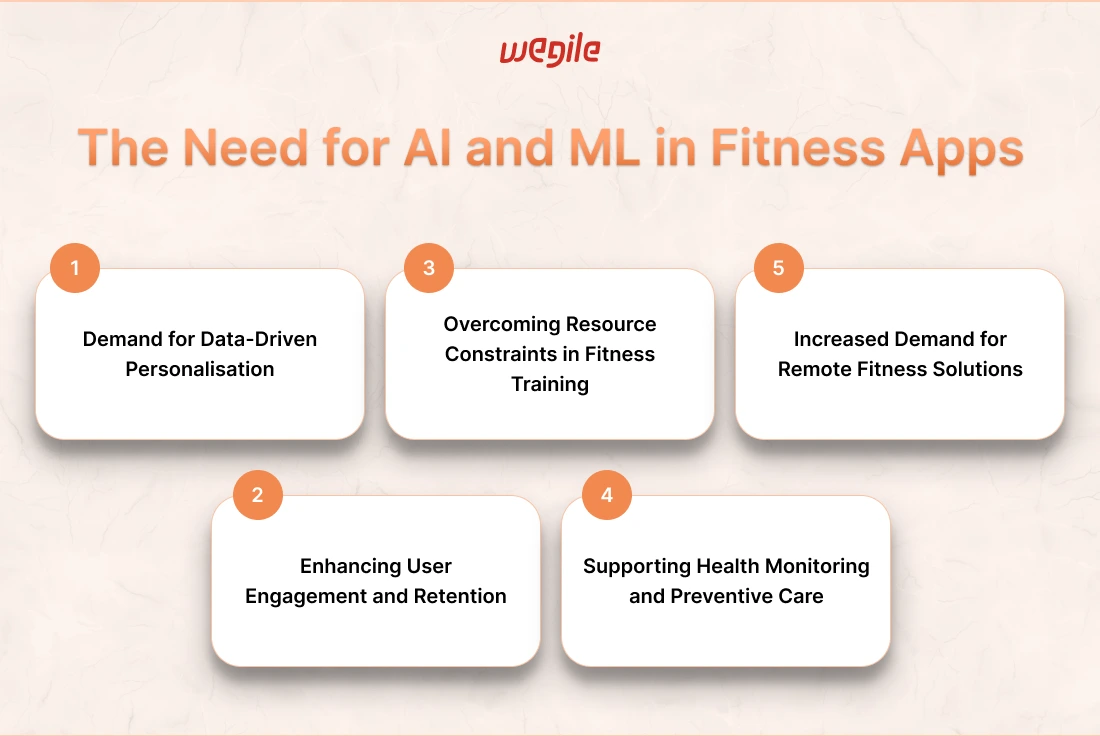
1.
Demand for Data-Driven Personalization
Personalization is what fitness fanatics crave for. Users are seeking workouts and diet plans that
match their fitness objectives, body types, and lifestyles, rejecting one-size-fits-all solutions.
This customization is powered by AI-driven analysis of user habits, health metrics, and feedback.
The app adjusts exercise, diet, and recovery techniques in real time based on this data. For
instance, if a user’s energy drops mid-week, an app may recommend lighter workouts or more protein
intake. These adaptive personalizations motivate and engage users, enabling long-term growth.
2.
Enhancing User Engagement and Retention
Keeping users engaged is a core challenge for fitness apps. AI and ML ease this struggle by tailoring
app content and feedback according to each user’s journey. Think of an app that tracks daily
activities, provides positive feedback, and adjusts based on user success. Such adaptive responses
can make fitness goals feel achievable and sustainable, turning casual users into loyal ones. Each
engagement is impactful, thanks to AI-driven suggestions like progressive goal-setting and reminders
to hydrate and rest. This enhanced engagement reduces dropout rates, fostering greater commitment
from both users and developers, and contributing to long-term success.
3. Overcoming Resource Constraints in
Fitness Training
Not everyone has the means to join a gym, hire a personal trainer, or follow a predetermined exercise
regimen. AI-powered fitness applications address these issues by providing inexpensive,
anytime-accessible alternatives to in-person coaching. AI-based apps can recommend bodyweight
workouts or utilize smartphone sensors to track form and provide feedback for users that don’t have
access to gym. AI replicates a personal trainer’s advice to give users a personalized training
experience. This democratization of fitness resources makes structured training accessible to
anyone, allowing users to stay fit without the need for expensive subscriptions or visits to fitness
centers.
4. Supporting Health Monitoring and Preventive
Care
When it comes to fitness, AI-powered applications go beyond incorporating vital health monitoring features to keep users informed and safe. These apps track
health metrics like heart rate, sleep quality, and stress to detect overtraining or stress. They
recommend rest and injury-prevention changes to maintain a balanced training routine. AI can even
identify health risks, allowing users to take preventive measures or consult a doctor. This holistic
health monitoring keeps app users safe whilst they reach their fitness objective.
5. Increased Demand for Remote Fitness Solutions
Remote and flexible exercise solutions are becoming increasingly popular as individuals are
preferring home workouts. AI-driven workout applications meet this need by providing customized,
on-the-go workouts that fit users’ schedules. These apps provide in-person workout training with
adjustable routines and on-demand classes. AI further improves the experience by adjusting routines
based on equipment, space, and user feedback. This versatility allows users to stay active and
focused regardless of location or schedule.
Key AI and ML Applications in Fitness App Development
Fitness apps have become cognitive platforms with AI and ML, going beyond simple workout routines.
These technologies customize each user’s fitness path with tailored
coaching, real-time feedback, improved health tracking, and mental wellness. Let’s explore how these
cutting-edge apps make fitness apps smarter, more responsive, and more effective to help users
attain their goals.
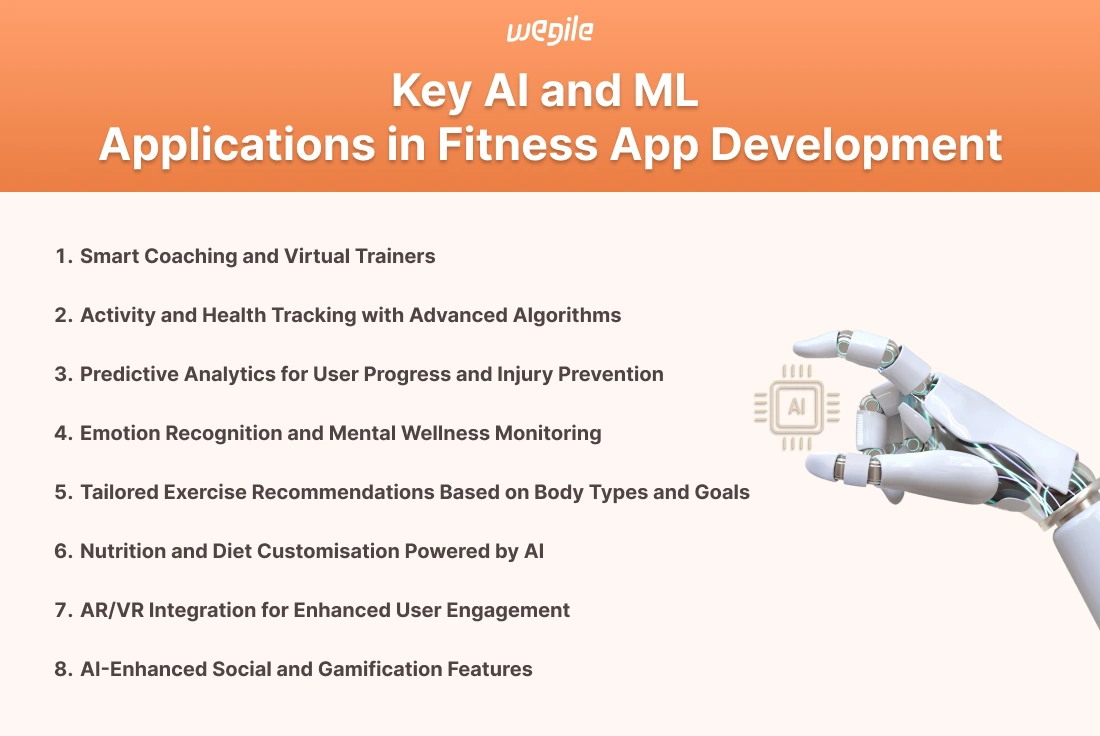
1. Smart
Coaching and Virtual Trainers
Virtual trainers leverage AI to bring the similar expertise offered by a personal coach to the user’s
device, creating a personalized fitness experience. These digital trainers assess the user’s
motions, provide instant feedback on form, and personalize the intensity of the workout to meet the
user’s goals. Smart coaching systems simulate in-person training to help users reach their goals
securely and successfully. For instance, the AI coach can offer immediate comments or suggestions
for changes if the user is having trouble with form during a particular exercise. This tailored
approach improves confidence and commitment, making every workout feel customized.
2. Activity and
Health Tracking with Advanced Algorithms
With the help of AI, fitness applications have gone a long way from simple activity tracking to a
full-fledged health assessment tool. These algorithms evaluate wearable and in-app tracker data to deliver precise insights
regarding heart rate variability, sleep quality, and recovery rates beyond steps and calories. Users
get customized information with such accurate tracking. For instance, an app may identify low energy
patterns and recommend rest days. These insights highlight health trends, enabling users to make
informed fitness and lifestyle changes for better outcomes.
3. Predictive Analytics for User Progress and
Injury Prevention
Fitness apps benefit from predictive analytics, which predicts user progress
and risks. These algorithms anticipate a user’s fitness path based on workout data, health habits,
and external factors like climate. Predictive algorithms advise adjustments to prevent setbacks if
data shows a higher risk of injury, such as overtraining or insufficient recovery. This foresight
helps users train smarter, not harder, for continuous, injury-free growth. This way, AI and ML based
apps give users confidence to focus on their goals because their workout regimen is designed for
long-term success.
4. Emotion
Recognition and Mental Wellness Monitoring
Advanced AI algorithms in certain fitness apps address mental health as well as physical health. AI
and ML-based fitness apps can detect stress, low motivation, and mental exhaustion using voice
analysis, text inputs, or biometric data. Based on these observations, the app may recommend
meditation, motivational content, or lighter activities for betterment of mental health. This
emotional responsiveness engages people while also acknowledging the overall aspect of health. Thus,
AI-driven apps help users have a balanced body and mind by combining mental wellness and fitness.
5.
Tailored Exercise Recommendations Based on Body Types and Goals
Machine learning models customize workouts for each user’s body type, fitness level, and goals. A
person seeking muscle gain might receive a different regimen than one seeking flexibility. ML models
develop safe, effective, and demanding routines by examining body composition, past workout
performance, and endurance levels. This personalized approach helps users stay consistent by
providing faster, more relevant results for their health journey.
6.
Nutrition and Diet Customization Powered by AI
AI has revolutionized nutrition guidance by creating meal plans that align with users’ specific
health goals, dietary preferences, and activity levels. An app can now consider a user’s current
activity, metabolic rate, and even any existing health conditions to offer daily meal suggestions
that support fitness progress. If a user needs a high-protein meal post-workout or a low-carb meal
for dinner, AI-driven apps can suggest recipes that hit the mark. This level of customization not
only simplifies healthy eating but also educates users about making nutrition choices that
complement their fitness efforts, creating a well-rounded wellness experience.
7.
AR/VR Integration for Enhanced User Engagement
Augmented
and virtual
reality are making exercise apps more fun and immersive. Users can train in a variety of
virtual settings, such as a futuristic boxing arena or a beautiful mountain route, thanks to
AI-powered AR/VR. This augmented fitness approach makes training enjoyable and thrilling, motivating
users to keep going. VR can provide step-by-step instructions and real-time feedback for home
workouts. This engaging, interactive involvement helps users stick to regular exercising.
8.
AI-Enhanced Social and Gamification Features
AI-powered social and gamification elements in fitness apps boost user engagement and motivation.
These community-like aspects help users meet others with similar goals, encouraging bonding and
accountability. Additionally, AI has the ability to create unique challenges for users, create leaderboards, and suggest exercise
partners according to fitness levels. Adding badges, prizes, and challenges keeps users interested
and promotes friendly competition. This social aspect and engaging element drive users to keep going
and be consistent, making fitness a fun and shared experience.
Privacy and Ethical Considerations in AI-Driven
Fitness Apps
Privacy and ethical consideration are crucial for AI-powered fitness apps that manage sensitive
consumer data. Users trust these apps with personal data, therefore data transparency is crucial.
Ethical AI approaches promote inclusive and unbiased algorithms, while strong privacy protocols
secure user data. These steps promote trust and a safer, more respectful user experience.
1.
Managing Data Privacy and User Consent
Since AI-driven fitness apps collect sensitive health metrics, data protection is paramount. Apps
must inform users about data collection, storage, and use. This requires transparent consent
mechanisms that inform users about data-sharing practices. Personal data is protected through encryption and
restricted access. In addition, users are empowered by clear and frequent changes to our privacy
policies and easy ways to opt-out. This way, they can feel in control of their information while
they enjoy personalized fitness experiences driven by AI.
2. Ethical AI: Avoiding Bias in Recommendations
AI-driven fitness apps in order to be effective must accommodate all users, regardless of their body
type, fitness level, or cultural backgrounds. Diverse users may have negative experiences due to
bias in AI recommendations. Training AI algorithms to recognize and adapt to various body
compositions, exercise goals, and health concerns ensures inclusiveness. This requires training the
AI with varied datasets and frequently checking for biases. By resolving these ethical issues,
fitness applications can provide fair, suitable recommendations that respect user identity, creating
an inclusive fitness environment.
Future Trends: Where AI and ML are Heading in Fitness
App Development
The future of AI in fitness apps is bright, with breakthroughs offering even
more personalized and predictive insights. In the future, AI and ML will make fitness apps smarter
and more proactive, assisting users with physical fitness, long-term health management, and mental
wellness.
1. Advancements in Predictive Health and
Fitness Outcomes
Future fitness apps may use AI to anticipate long-term health and fitness outcomes, making them
valuable proactive health tools. AI could predict health trends by evaluating user data and notifying users about risks
or lifestyle changes to prevent muscle strain or high blood pressure. The app can track heart rate
or sleep patterns that recommend rest days or alternative exercises. Users can make informed choices
with this foresight, turning their fitness app into a personal wellness adviser that improves health
longevity.
2. Expanding AI’s Role in Mental Wellness
Features
The incorporation of mental wellbeing with physical fitness is leading to advancements in AI within
fitness apps that can provide emotional support. Future apps may detect stress, sleep, and emotional
cues to recommend relaxation, guided breathing, or mindfulness practices. This AI-driven mental
health approach can reduce stress, improve focus, and boost well-being. By including mental health
in fitness, AI-driven apps can help people take care of their bodies and brains.
Wrapping Up
In summary, AI and machine learning have impacted fitness app development, not just tech trends. AI
has made fitness more accessible and enjoyable with personalized workout routines, real-time
feedback, and motivation. The focus has shifted from simple step counting to creating experiences
that inspire users to consistently show up and reach their objectives. And the best part? Wegile can
help you integrate these amazing capabilities into your app. As a leading fitness app development company, we specialize in building
smart, engaging apps that use cutting-edge AI and machine learning. Are you prepared to shake up the
fitness industry? Let’s build something amazing together!
Leave a Reply