
In the fast-paced digital landscape, where content is king, a reliable Content Management System
(CMS) is crucial. It serves as the foundation that upholds the power of this domain. Although CMS is
often associated with website development and maintenance, its significance in the ever-growing
world of social media is usually overlooked. Selecting a CMS for managing social media content isn’t
merely a technical decision; it’s a strategic move that can significantly influence a brand’s
engagement, reach, and overall digital presence. When choosing a CMS for social media content
management, it’s essential to have a deep understanding of content dynamics, user interaction, and
multi-platform distribution. Unlike traditional CMS usage focused on SEO and website performance,
this requires a more nuanced approach. This complexity is frequently disregarded, resulting in
missed opportunities in the digital realm. In this blog, we will explore the critical factors and
often unnoticed details when selecting a CMS for social media apps.
Understanding the Role of CMS in the Social Media
Landscape
CMS is renowned for its adaptability and versatility, essential for maintaining current and dynamic
content. This system is widely recognized for its expertise in social media content management and
advanced content personalization capabilities. In addition to the fundamental tasks of scheduling
and posting, an advanced CMS enables content creators to tailor messages according to their audience
segments’ unique tastes and behaviors. This level of personalization is achieved through advanced
algorithms and data analytics tools embedded within the CMS, which analyze user interactions and
engagement patterns.
Furthermore, the integration capacity of a CMS extends beyond mere compatibility with social media
platforms. It requires a strong integration with CRM systems, email marketing tools, and advanced
content enhancement technologies. This interconnected network allows for a more unified and vibrant
content strategy that connects with the audience personally, creating a sense of community and
loyalty. This holistic approach to content management, facilitated by a carefully chosen CMS, allows
brands to navigate the complexities of social media landscapes with greater ease and achieve greater
success. It ensures that their digital presence is heard and leaves a lasting impact.
Key
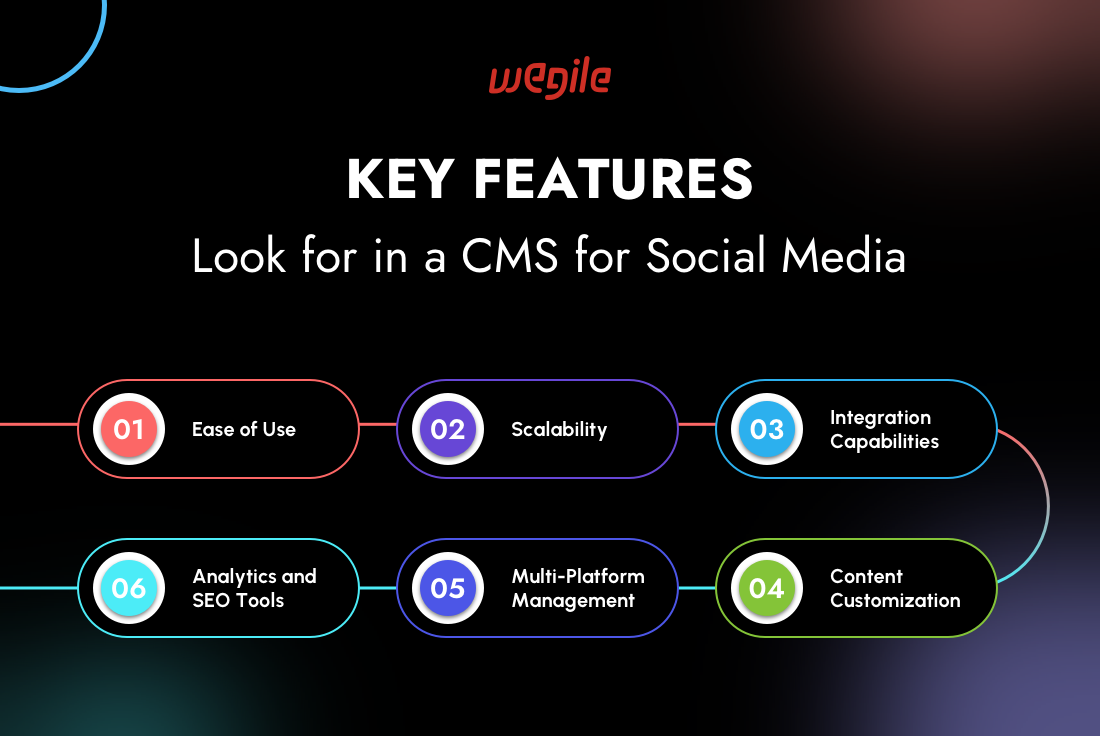
Features to Look for in a CMS for Social Media
-
1. Ease of Use
In the fast-paced world of social media, where trends can change in the blink, the
user-friendliness of a CMS is crucial. A platform that provides a user-friendly interface
and simple content management processes enables brands to respond to new trends quickly,
ensuring their content stays current and captivating. The ability to quickly and easily
adapt content without sacrificing quality is essential for content creators who want to
maintain a strong connection with their audience. Having an easily navigable CMS is a
valuable asset in achieving this swiftness. -
2. Scalability
As brands evolve and their online presence grows, the ability to scale a CMS becomes an
essential factor to consider. A CMS that can effortlessly handle an increasing content
volume and a growing audience is necessary for sustained social media success. This
encompasses the capacity to accommodate a more significant number of users or a greater
amount of content and the versatility to adjust to emerging social media platforms and
technologies. Scalable CMS solutions ensure that as your brand’s reach grows, your content
management system will continue to support and drive your evolving social media strategy
without missing a beat.Must Read: 8 Social Media App Development Strategies for Success
-
3. Integration Capabilities
A CMS with solid integration capabilities serves as a lynchpin, seamlessly connecting
different tools and platforms to establish a unified content strategy. The seamless
integration with social media platforms, analytics tools, CRM systems, and even emerging
technologies like AI and machine learning can elevate a CMS from a content repository to a
dynamic command center. The seamless integration of different platforms simplifies workflows
and allows for valuable insights to be shared and utilized across multiple channels. This
collaborative approach enhances the impact of your social media efforts. -
4. Analytics and SEO Tools
One of the critical features of a CMS for social media is its comprehensive suite of
analytics and SEO tools. While SEO is critical for enhancing the visibility and reach of
content across web and social platforms, the power of analytics extends even further. A
robust CMS offers in-depth analytics that provides valuable insights into content
performance, audience behavior, and engagement metrics. This data empowers content creators
to make informed decisions, fine-tune their strategies, and maximize impact. Additionally,
SEO tools tailored for social media enhance content optimization, improving discoverability
and ensuring that messages resonate with and reach the intended audience. Together, these
tools create a robust ecosystem for effectively managing and optimizing social media
content. -
5. Multi-Platform Management
An effective CMS should provide the ability to manage content across various platforms,
making it easier to publish, monitor, and oversee content on different social networks from
one central dashboard. This ensures a cohesive and unified brand message. It eliminates the
need to switch between multiple tools, saves time, and reduces potential errors.
Furthermore, a CMS that facilitates cross-platform content optimization, taking into account
each platform’s unique formats and best practices, can significantly enhance audience
engagement and content reach. -
6. Content Customization
The ability to customize and personalize content for different audience segments directly
within the CMS is a game-changer for social media engagement. This advanced feature goes
beyond basic demographic targeting, enabling content creators to tailor messages based on
user behavior, preferences, and engagement history. Personalized content resonates more
deeply with the audience, fostering a stronger connection and increasing the likelihood of
engagement. A CMS that supports dynamic content customization empowers brands to be more
relevant and engaging and additionally leverages the power of personalization to stand out
in a crowded social media landscape.
The
Impact of the Right CMS on Social Media Success

-
1. Enhancing Engagement through
Effective Content ManagementA CMS tailored for social media fundamentally transforms how content connects with
audiences.
By enabling timely and relevant content delivery, it fosters enhanced user engagement. Such
a system allows for quickly adapting content strategies based on real-time feedback and
analytics, ensuring the content remains engaging and resonates with the audience’s latest
interests and needs. -
2. Streamlining Collaboration and
WorkflowAn effective CMS enhances productivity and collaboration among content creation teams.
Features such as role assignments, content calendars, and workflow approvals guarantee that
all team members are in sync and that content production runs seamlessly without any
interruptions. The seamless coordination within the organization is evident in the high
caliber and unwavering nature of the social media content delivered to the audience.
Must Read: Revolutionizing Social Apps with Real-Time Communication
-
3. Driving Growth with Data-Driven
InsightsAn advanced CMS with powerful analytics tools can provide valuable insights for driving
strategic growth on social media platforms. By understanding which content performs best, at
what times, and with which audience segments, brands can make informed decisions that drive
engagement and growth. This allows brands to convert data into actionable strategies
effectively. -
4. Amplifying Brand Voice and Cohesion
Ensuring a brand’s voice remains consistent across all social media channels is crucial for
establishing brand recognition and fostering trust. An advanced CMS supports this by
providing templates and guidelines that ensure all content, regardless of the creator,
aligns with the brand’s voice and message, amplifying brand presence in a crowded digital
space. -
5. Future-Proofing Social Media
StrategiesIn the ever-evolving landscape of social media, the adaptability provided by a
forward-thinking CMS is invaluable. Such a system is designed to accommodate new social
media platforms, content formats, and audience engagement strategies, ensuring that a
brand’s social media presence remains relevant and continues to thrive in the future.
How to
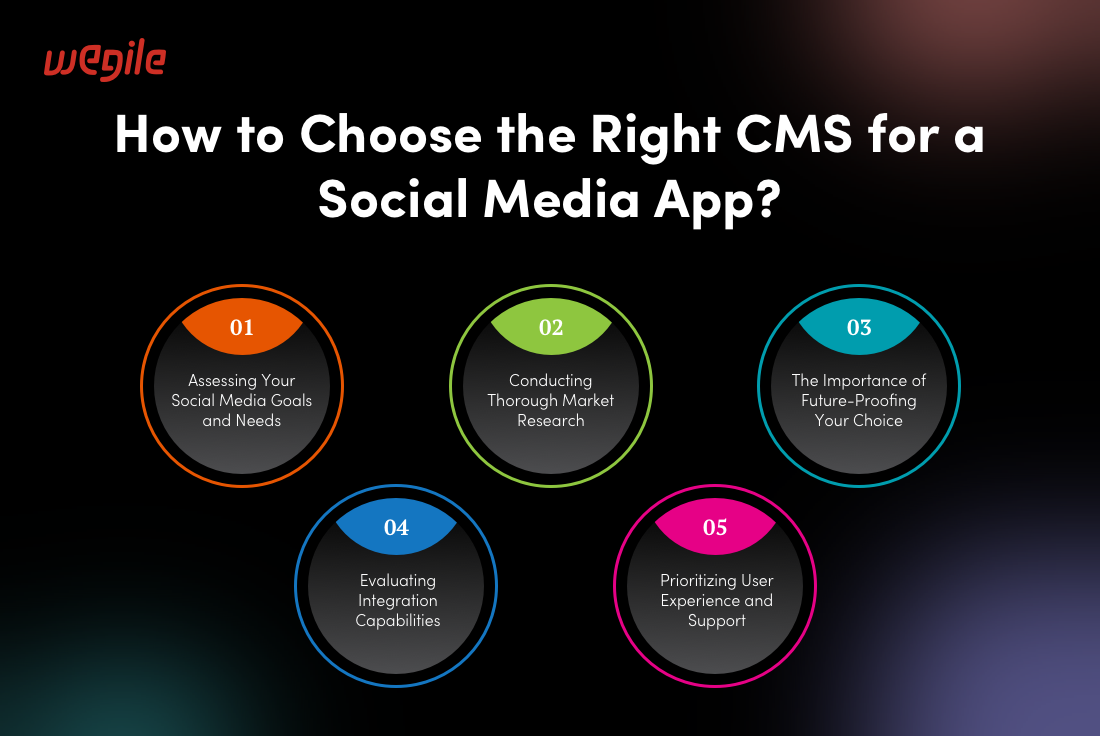
Choose the Right CMS for a Social Media App
-
1. Assessing Your Social Media Goals and
NeedsBefore delving into the wide variety of CMS options, it is essential to establish a solid
foundation for your strategy by clearly outlining your social media objectives and
requirements. Take into account the nature of your content, the frequency of updates, the
level of interaction you want to achieve with your audience, and the specific features you
may require for campaigns or analytics. This initial step guarantees that the CMS you select
perfectly aligns with your strategic goals, allowing for a customized approach to content
management that connects with your desired audience and enhances your brand’s online
visibility. -
2. Conducting Thorough Market Research
The digital landscape is repleted with CMS options, each boasting unique features and
capabilities. Conducting thorough market research is akin to mapping the terrain, enabling
you to navigate numerous choices with informed precision. Look beyond the surface-level
functionalities and delve into user reviews, case studies, and expert analysis. This
thorough exploration assists in discovering the complex details of how various CMS platforms
perform in real-world scenarios, especially when managing social media content. It directs
you towards a solution that fulfills your specific needs and possesses the agility to adapt
to future trends.
Must Read: How To Make A Social Media App: Step By Step Guide
-
3. The Importance of Future-Proofing
Your ChoiceIn the fast-paced world of social media, choosing a CMS that only meets your current
requirements is not a wise decision. Ensuring the longevity of your decision requires a
forward-thinking approach, where you proactively consider shifts in social media patterns,
user habits, and technological progress. Choose a consistently updated CMS that supports the
latest formats and platforms and allows you to expand as your brand grows. This
forward-thinking approach ensures that your social media strategy stays strong and flexible,
prepared to seize future opportunities without the hassle of frequent, disruptive platform
changes. -
4. Evaluating Integration Capabilities
The marketing ecosystem is deeply interconnected, with social media at its core. An advanced
CMS that seamlessly integrates with various marketing tools and platforms, including CRM
systems, email marketing software, and analytics tools, can greatly improve workflow
efficiency and provide a comprehensive overview of your marketing efforts. Assess the ease
with which the CMS can integrate with existing tools and its potential to accommodate new
technologies, ensuring a seamless flow of information across your marketing channels. -
5. Prioritizing User Experience and
SupportThe user experience of a CMS isn’t just about its interface; it encompasses the support and
resources offered by the vendor. An intuitive CMS design, comprehensive documentation, and
responsive customer support greatly enhance the learning experience and enable your team to
utilize the platform’s capabilities fully. Furthermore, the CMS’s community and ecosystem
are worth noting, including forums, user groups, and third-party resources which can be
invaluable for troubleshooting, learning, and exploring innovative uses of the platform.
Prioritizing these aspects ensures that the CMS meets your technical and strategic needs and
provides a supportive environment for your team to thrive.
Wrapping Up
Selecting the appropriate CMS for managing social media content is more than a technical choice. It
is a strategic decision that significantly impacts how your content connects with your audience. An
ideal CMS aligns with your brand’s identity, expands the reach of your content, and seamlessly
integrates with the dynamic world of online marketing tools. Finding a solution that resonates with
your current needs and prepares you for future trends is crucial, as well as ensuring your social
media strategy stays strong, flexible, and ahead of the game. If you’re venturing into developing a
social media app, contact Wegile. As an experienced
social media app development company, we will help you create an app that stands out digitally, ensuring your
app stays ahead of the curve.
Leave a Reply