In this digital age, the fusion of bricks and code unlocks unprecedented possibilities for those
venturing into the dynamic realm of property and technology. Whether you’re a seasoned real estate
professional or a tech enthusiast looking to innovate, the development of a real estate app offers a
gateway to redefine industry standards. Join us as we uncover the essentials, from defining goals
and market research to designing a compelling user experience and launching your application. This
guide isn’t just about building an app; it’s about reshaping the future of real estate through the
lens of technology. Let’s dive into the intricacies and seize the opportunities that await in the
ever-evolving landscape of real estate app development.
Scope of
Real Estate App Development
The future appears incredibly promising in the dynamic landscape of the real estate app development
market. Statista suggests that the projected value of the Real Estate market, poised to reach an
impressive US$613.60
trillion by 2023, underscores the immense scope and potential within the industry. Residential Real
Estate, in particular, emerges as a dominant force, projecting a market volume of US$498.60 trillion
in 2023. With an anticipated annual growth rate (CAGR 2023-2028) of 3.52%, the market is expected to
surge further, reaching a substantial volume of US$729.40 trillion by 2028. These statistics reflect
the market’s current vigor and its resilience and potential for sustained growth in the coming
years. As the real estate sector continues to evolve, developing innovative and user-centric real
estate apps becomes increasingly pivotal in capitalizing on these expansive opportunities.
Types of Real Estate
Apps
-
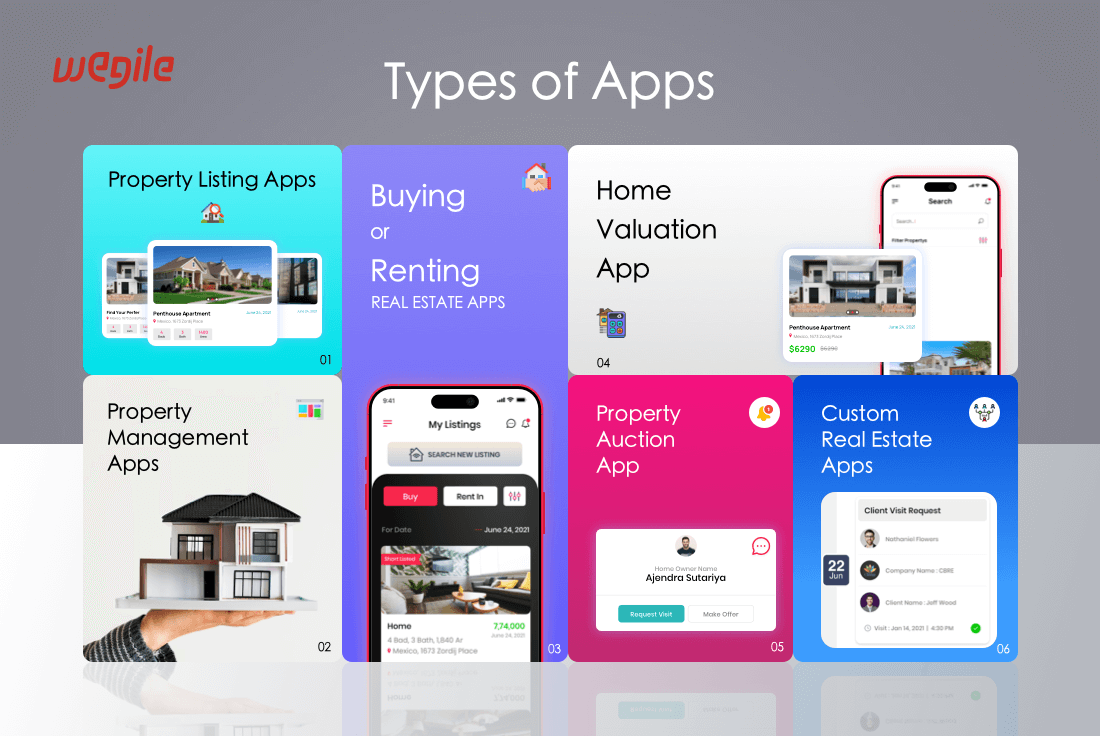
1. Property Listing Apps
Imagine having a powerful tool that showcases your property listings to potential buyers in a
visually appealing and organized manner. Property listing apps do just that. These apps
provide a user-friendly interface for buyers to explore properties, complete with vivid
images, detailed descriptions, and contact information. Take inspiration from popular
platforms like Zillow, where users can effortlessly
navigate through various properties. -
2. Property Management Apps
As a real estate professional, managing properties efficiently is key to success. Property
management apps simplify tasks related to property maintenance, and tenant communication,
and financial management. Apps like Buildium and AppFolio empower property managers by centralizing
crucial information and automating routine processes, enhancing overall productivity. A
robust property management app not only streamlines operations but also ensures a seamless
experience for both property owners and tenants. -
3. Buying or Renting Real Estate Apps
Make the process of buying or renting properties a seamless experience for your clients.
Develop an app that offers advanced search filters, mortgage calculators, and virtual
property tours. Buyers and renters can explore potential homes at their convenience. Think
about creating a personalized app for your agency to provide a tailored experience. By
integrating real-time market data and property insights, your app can become a trusted
companion for users making crucial decisions about their next home. -
4. Home Valuation App
Have you ever wondered about the value of a property in real time? Home valuation apps
leverage data analytics and market trends to provide users with estimates of their property
values. Take a cue from Zillow’s Zestimate, offering homeowners insights into the current
market value of their homes. A home valuation app can go beyond estimates by incorporating
predictive analytics, helping users make informed decisions about selling or refinancing
their properties. -
5. Property Auction App
Bring the excitement of property auctions to your fingertips with a property auction app.
Potential buyers can participate in auctions, place bids, and secure properties in a
transparent and engaging way. Imagine the possibilities of reaching a broader audience
through a digital auction platform. Incorporate features like real-time bidding
notifications and secure payment gateways to enhance the user experience and encourage
active participation in property auctions. -
6. Custom Real Estate Apps
Tailor-made solutions are often the key to addressing specific business needs. Consider a
custom real estate app designed to meet the unique requirements of your agency, whether it’s
client management, analytics, or other specialized functionalities. A personalized app can
set your business apart in the competitive real estate landscape. Custom real estate apps
also provide the flexibility to scale and adapt as your business evolves, ensuring a
long-term technological investment that grows with your success.
Crucial
Features of Your Real Estate App
-
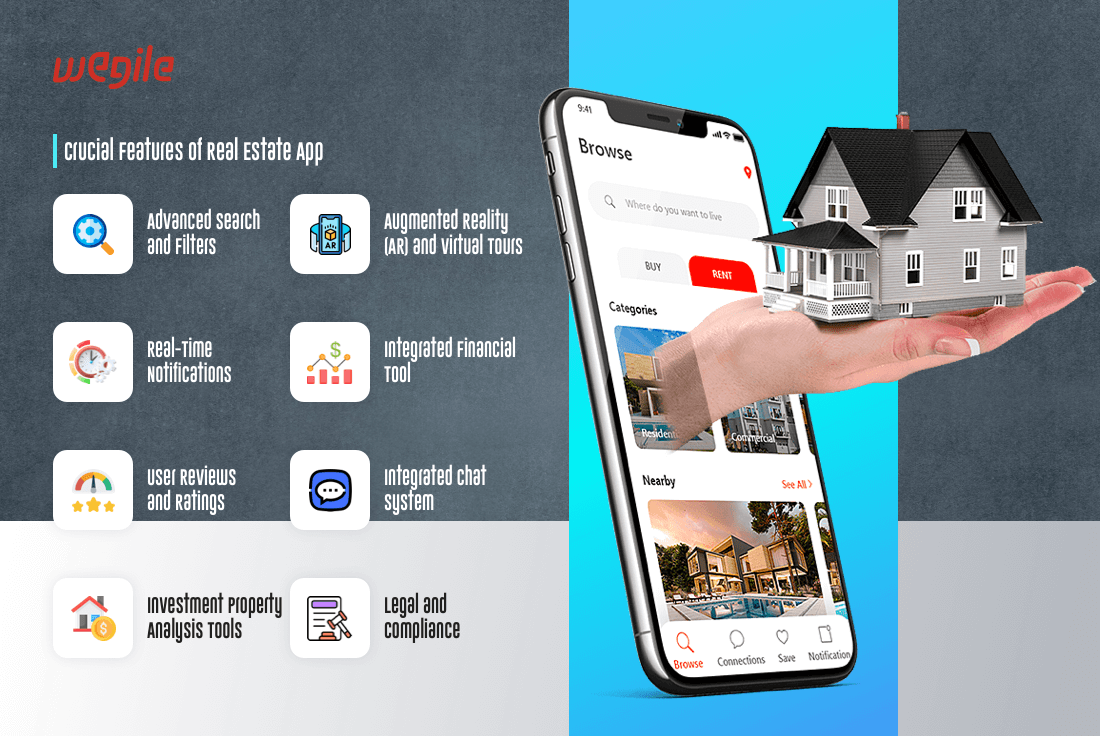
1. Advanced Search and Filters
Set your app apart by offering users a sophisticated search experience. Implement advanced
search filters that allow users to narrow down their options based on criteria such as
location, property type, price range, and amenities. Make sure your app provides an
intuitive interface, making property discovery a seamless process for potential buyers and
renters. Additionally, consider adding AI-driven search capabilities that learn from user
preferences, providing more accurate and personalized results over time. -
2. Augmented Reality (AR) and Virtual
ToursElevate the property viewing experience with cutting-edge technology. Augmented Reality (AR)
and Virtual Tours enable users to virtually explore properties from the comfort of their
homes. Consider integrating AR features that overlay property details when users point their
devices at a property. Virtual tours provide a realistic feel of the property, fostering
genuine interest and engagement. Enhance this experience by incorporating interactive
elements within virtual tours, allowing users to visualize customization options or gather
more detailed information about specific features. -
3. Real-Time Notifications
In the fast-paced world of real estate, staying informed is crucial. Enable real-time
notifications to keep users updated on new property listings, price changes, and relevant
market trends. Whether it’s a potential buyer receiving updates on a property of interest or
an agent staying informed about client interactions, timely notifications enhance user
engagement and satisfaction. Extend this feature to include personalized notifications based
on user preferences, ensuring a tailored and valuable experience. -
4. Integrated Financial Tool
Empower users to make informed financial decisions with an integrated financial tool.
Features like mortgage calculators, loan qualification assessments, and affordability
calculators add immense value to your app. Buyers can assess their financial capabilities,
leading to more qualified leads and a smoother transaction process. Additionally, consider
partnering with financial institutions to provide real-time interest rates and financing
options directly within the app, streamlining the decision-making process. -
5. User Reviews and Ratings
Build trust within your real estate community by incorporating user reviews and ratings.
Allow previous clients to share their experiences, providing valuable insights for potential
buyers or renters. Positive reviews contribute to a positive brand image, while constructive
feedback offers opportunities for improvement. Implementing a reliable review system
strengthens your app’s credibility. Encourage user engagement by introducing a reward or
loyalty program tied to leaving reviews, fostering a sense of community within your app. -
6. Integrated Chat System
Facilitate seamless communication between clients and agents with an integrated chat system.
Real-time messaging allows for quick responses to queries, scheduling property viewings, and
negotiating deals. A user-friendly chat system enhances the overall user experience,
fostering transparent and efficient communication within the app. Extend this feature by
incorporating chatbots powered by AI to handle common queries and provide instant responses,
ensuring users receive immediate assistance even outside regular business hours. -
7. Investment Property Analysis Tools
For clients interested in real estate investment, provide specialized tools for property
analysis. Features like ROI calculators, cap rate analysis, and property appreciation
projections assist investors in making informed decisions. These tools position your app as
a valuable resource for individuals exploring real estate as an investment avenue. Enhance
these tools by incorporating real-time market data and trend analysis, helping investors
stay ahead of market fluctuations and make data-driven decisions. -
8. Legal and Compliance
Navigate the complexities of real estate transactions with a legal and compliance section.
Offer users access to legal resources, guides, and compliance checklists. This feature
ensures that users are well-informed about legal procedures and requirements, fostering
transparency and mitigating risks in real estate transactions. Expand this section by
providing regularly updated legal news and articles related to the real estate industry,
ensuring users stay informed about any changes in regulations that may impact their
transactions.
How to Build a
Real Estate App?
-
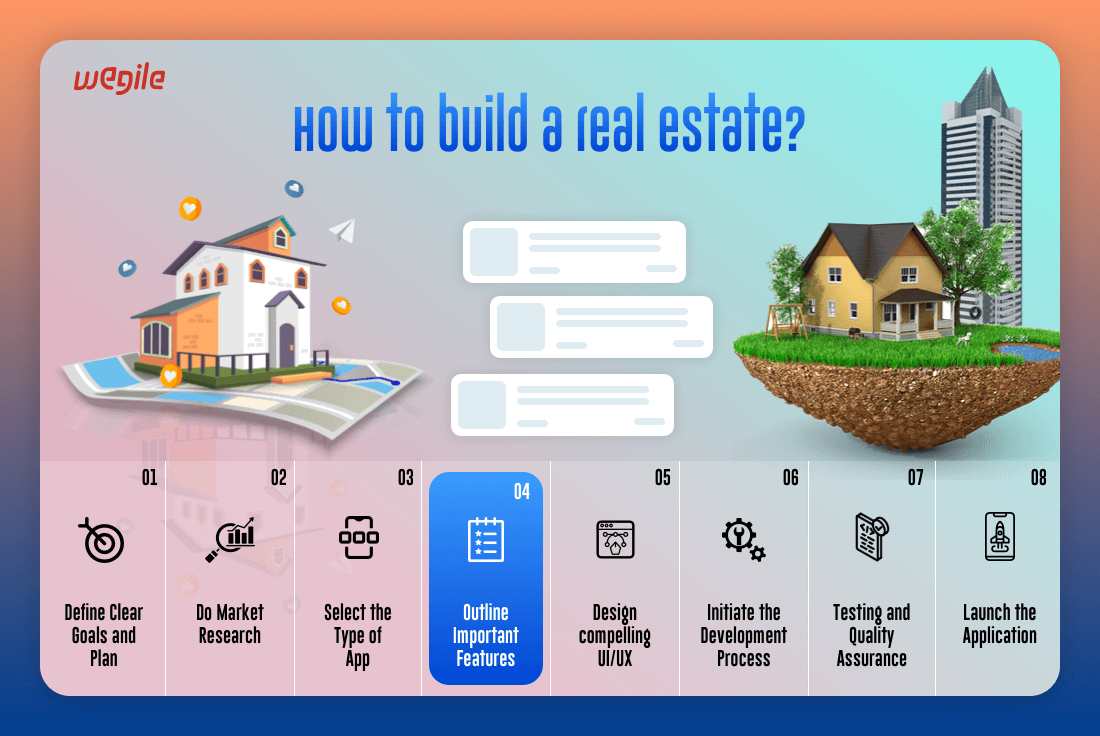
1. Define Clear Goals and Plan
Begin with a crystal-clear vision of your app’s purpose and objectives. Define the goals you
aim to achieve, whether it’s enhancing user experience, streamlining property transactions,
or revolutionizing property searches. Outline a detailed plan encompassing project goals,
timelines, and budget considerations. A well-defined plan serves as a roadmap that ensures
strategic decision-making and purposeful progress throughout the development process. -
2. Do Market Research
Gain a deep understanding of the real estate market landscape by conducting thorough market
research. Analyze current trends, identify competitors, and recognize gaps in the market
that your app can address. Understand the needs and preferences of your target audience to
tailor your app to their requirements. Market research provides valuable insights that shape
your app’s unique selling propositions and sets it apart in a competitive market. -
3. Select the Type of App
Real estate apps come in various types, each catering to specific needs within the industry.
Determine the type of app that aligns with your goals and market research findings. Whether
it’s a property listing app, a comprehensive property management tool, or an innovative
buying or renting platform, choosing the right type ensures your app meets the demands of
your target audience. -
4. Outline Important Features
Identify the features that will make your real estate app stand out. Consider essential
functionalities such as advanced search and filters, augmented reality for virtual property
tours, real-time notifications, an integrated financial tool, user reviews, an integrated
chat system, investment property analysis tools, and a legal and compliance section.
Prioritize features based on user needs and market trends to deliver a compelling and
user-friendly experience. -
5. Design Compelling UI/UX
Craft an intuitive and visually appealing user interface (UI) and user experience (UX)
design. Ensure seamless navigation and an aesthetically pleasing layout that enhances user
engagement. Pay attention to the user journey, making it easy for users to find properties,
access information, and interact with the app. A well-designed UI/UX contributes
significantly to user satisfaction and the overall success of your real estate app. -
6. Initiate the Development Process
With a solid plan, market research insights, chosen app type, and outlined features, initiate
the development process. Collaborate with a skilled development team or engage a reputable
real estate app development company. Leverage industry-standard technologies and frameworks
to bring your app to life. Regular communication and collaboration with developers ensure
that your app aligns seamlessly with the planned features and functions. -
7. Testing and Quality Assurance
Prior to the app’s launch, conduct rigorous testing to identify and rectify any bugs,
glitches, or issues. Comprehensive testing ensures a smooth user experience and prevents
potential setbacks post-launch. Perform usability testing, functionality testing, security
testing, and performance testing to guarantee that your app meets the highest standards of
quality and reliability. -
8. Launch the Application
The culmination of meticulous planning and execution, the launch is a strategic milestone
that requires a holistic approach. Develop a compelling marketing strategy encompassing
social media campaigns, influencer collaborations, and optimization of app store listings to
create a buzz and drive initial downloads. Post-launch, monitor user feedback for swift
responses to concerns and ongoing improvements. A dynamic post-launch strategy, inclusive of
updates and enhancements, ensures your real estate app remains adaptive to evolving user
needs, securing its position for long-term success in a competitive market.
How Can Wegile
Help You with Real Estate App Development?
Navigating the intricacies of real estate app development requires a strategic partner by your side.
At Wegile, we stand as your reliable ally, guiding you through the entire journey of creating a
bespoke real estate application. As a leading Real Estate
App
Development Company, we
bring expertise, innovation, and a commitment to delivering solutions that resonate with the dynamic
needs of the industry. From defining clear goals to crafting a seamless user experience, our
dedicated team ensures that your real estate app stands out in a competitive market.
Wrapping Up
As we wrap up this insightful journey, the world of real estate app development unveils boundless
opportunities for innovation and growth. By incorporating the right features and embracing
cutting-edge technologies, you can propel your real estate business to new heights. We at Wegile are
here to guide you every step of the way, transforming your vision into a powerful and user-centric
real estate app that stands out in the dynamic market!
Leave a Reply