Introduction
Have you ever been on a mobile app and felt utterly lost? You weren’t sure what to do next or even
why the app was relevant to your needs. The experience felt overwhelming, confusing, or useless –
and you probably deleted it before exploring further. That, my friend, is the result of poor
onboarding!
Onboarding is like greeting visitors at your home – it sets the tone for how they experience
everything else in their time as guests. And just as important—it makes them feel comfortable in an
unfamiliar environment while guiding important areas of curiosity within a new product/app. Good
Mobile App Onboarding can make users fall head over heels for using your application. Otherwise,
success quickly falls flat if users don’t know how to set up or operate an Application properly (and
thus meaning fewer conversions!)
What is App Onboarding?
App onboarding is like a first introduction for your customers – they get acquainted with the product
from their very first experience with it and decide if this is something they’d like to use in the
future or delete after one go. According to Wyzowl, 80% of people have deleted an app because they
didn’t know how to use it. Developers and designers need to prioritize user experience and create
seamless app onboarding best practices that are easy for users to understand and operate. Failure to
do so may result in decreased adoption rates and negative reviews.
Let us explore more about effective Mobile App Onboarding best practices so that we can help all our
apps reach their goals by assisting customers in having incredible experiences when first installing
a new app!
How Many Types of Mobile App
Onboarding Best Practices Are There?
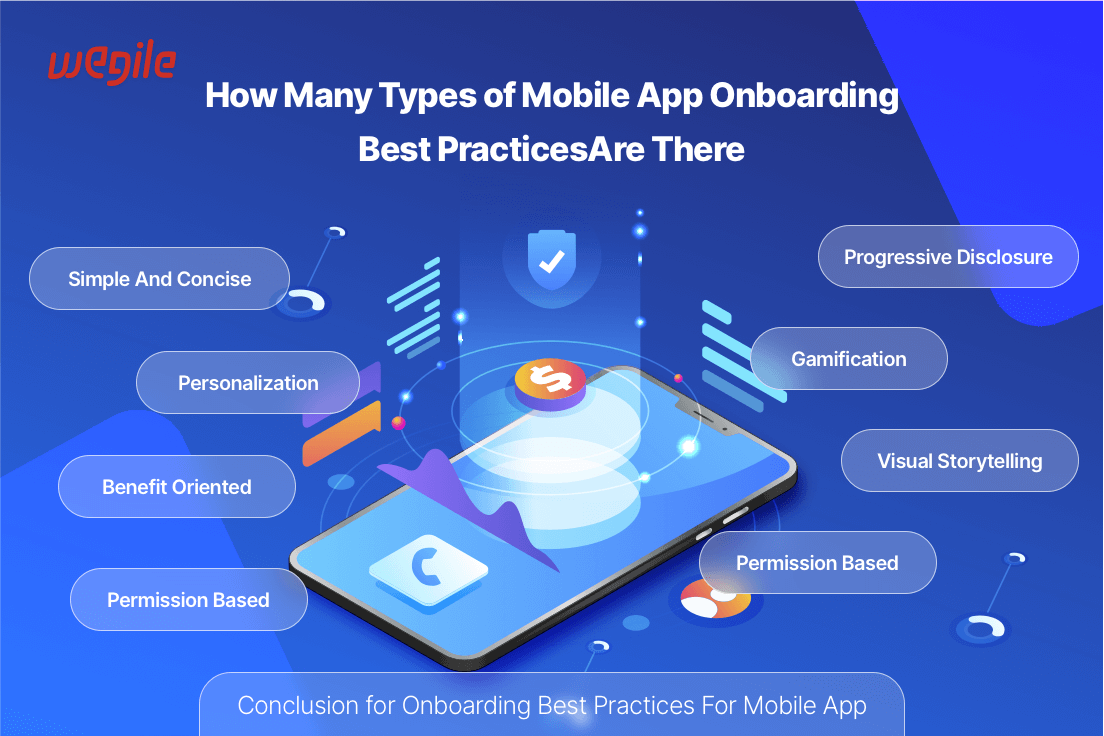
There are various types of mobile app
onboarding best practices, and some of them are:
-
1. Simple and Concise
When it comes to onboarding best practices for mobile apps, brevity and clarity should be
paramount. Excessive complexity or information can prove intimidating and overwhelm new
users, hindering the adoption of your product. Instead, strive for maximum simplification,
elucidating the process concisely and straightforwardly that enables individuals to
acclimate to the app and begin utilizing its features quickly. -
2. Progressive Disclosure
Progressive disclosure is a type of mobile app onboarding best practice that involves
presenting users with information and prompts step-by-step. This approach emphasizes clarity
by focusing on essential core features while avoiding cognitive overload through the
progressive presentation of options to complete tasks. It ensures your users understand how
an interface works without having access to all possible content at once – allowing them to
learn as they go instead. -
3. Personalization
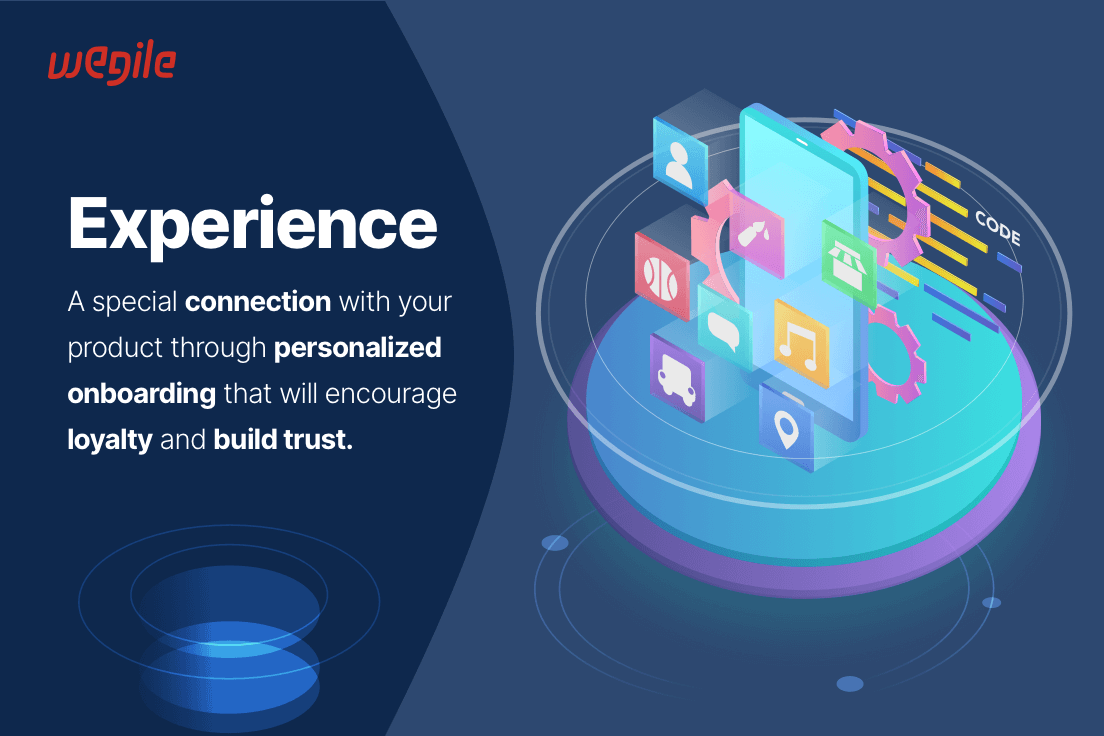
Personalization
is one of the most effective mobile app onboarding best practices. By leveraging
personalized messaging, companies can identify and segment their customers by specific
targets or interests they hold in order to create more tailored experiences for them. This
approach helps maintain user engagement throughout each step of an app’s process—from
installation through continued use—and encourages users toward conversion objectives like
registration, subscription purchase completion, etc. Not only do these mobile onboarding
best practices tactics make it easier for people to interact with your product, but if done
correctly can also build trust between you and your audience over time. -
4. Gamification
Gamification is an effective mobile onboarding best practice. It leverages the natural
psychological desire for rewards and competition to increase user engagement in business
applications. By making the onboarding process fun, intuitive, and rewarding through
elements such as level-ups, leaderboards, or virtual goods used within a game environment –
companies can not only drive adoption of their apps but also set up users with deeper
insights into how they use these services on an ongoing basis. This encourages exploration
and reinforces key product features that may have otherwise been skipped due to boredom or
long setup times contributing towards better overall results from using these solutions. -
5. Visual Storytelling
Visual storytelling is a robust mobile app onboarding best practice that captures users’
attention and encourages engagement. This technique uses visuals such as images, animations,
or videos to tell stories through more explicit user interfaces than traditional text-driven
techniques. Graphical demos walk new users step by step through the essential features of an
application during their first interactions, allowing them to quickly discover critical
elements which will help simplify use in later stages.At its core, visual storytelling increases user comprehension and information processing,
presenting complex topics in simple terms for quicker understanding, leading to more success
with your product or service within the given time frame for exploring – creating higher
retention rates along the way! -
6. Benefit-Oriented
Mobile app onboarding is a process that helps users become familiar with the product, its
features, and its functions. One of the best practices for mobile app onboarding is
Benefit-Oriented (BO) flow which presents all key benefits in an easy to comprehend format.
This BO approach includes keeping the text concise while also addressing essential topics
such as 1) How experienced should you be with this particular type of application? 2) What
are some valuable insights related to using it late in the day? 3). Why might customers find
value in downloading it now rather than later?By showcasing these core points highlighted by interactive screens instead of walls full of
unorganized words, white noise, or long user journeys — your potential audience will quickly
understand what makes them use your product! When creating a successful BO Flow, make sure
every screen provides usable tips & advice encouraging users to take smart actions more
often without having prior experience within specific app fields. In conclusion, designing
mobile app onboarding flows strategically based on understanding which elements connect
beneficial experiences seamlessly together, resulting in smooth progression through each
platform leading towards user engagement and satisfaction levels continuously growing over
time. -
7. Permission-Based
Onboarding best practices for mobile apps that focus on permission-based experiences are now
in high demand. Permission-based marketing requires users to opt into pushes, messages, or
grants app access before they can continue the journey of exploration within it. Ensuring
users are not overwhelmed but rather respected when pairing their personal data with an
application is key!This method ensures that apps respect user privacy while ensuring an engaging experience from
start to finish — allowing them to get up and running quickly so they can enjoy all of its
offerings in no time!
Conclusion For Onboarding Best
Practices For Mobile App
Onboarding is crucial to any mobile app to ensure user engagement and retention. Creating an
intuitive and straightforward onboarding experience that guides the user through critical features
will help ensure success in reaching those goals.
Additionally, gathering user feedback is equally important as it provides valuable insights into the user experience.
This information can be used to make necessary improvements and updates to enhance the app’s
functionality and overall usability. It also gives users a voice, making them feel appreciated and
heard by the developers.
In conclusion, implementing effective onboarding best practices and prioritizing user feedback are
essential elements in creating a successful mobile app that meets the needs of its users.
Leave a Reply