Developers build open-source web tools for all kinds of reasons, solving personal pain points, learning new
frameworks or giving back to the community. What starts as a simple weekend project often grows into something
people rely on. However, many developers never take the next step: making their open-source work financially
sustainable.
Monetizing open-source web tools is not about turning a free product into a paid one. It is about creating value
around the tool, offering services, and building a model that rewards time, effort and support. With the right
approach, developers can transform their side projects into dependable income streams without compromising their
principles.
This guide explains how to monetize open-source web tools, what strategies actually work and how to build
something sustainable without draining the joy from development.
Why Monetization Matters for Open-Source Developers
>Open-source projects require maintenance, documentation and long-term updates. While passion fuels early progress,
maintaining tools at scale demands time and resources. Monetization offers a way to fund continued development while
staying independent.
Let us understand why monetizing open-source tools is worth considering.
-
Sustainability Supports Continued Innovation
When developers receive compensation, they can justify investing more hours. This means better features,
fewer bugs and more long-term stability. -
Users Benefit From Paid Support Options
Some users need fast responses, onboarding help or integration support. Paid options allow these users to
get what they need while still benefiting from open-source foundations. -
Community Trust Increases With Consistency
When a project has reliable funding, users trust that it will not disappear. Monetization signals that the
tool has a future and a steward who will keep it alive.
Common Misconceptions About Monetizing Open-Source
Many developers hesitate to add pricing around their open-source tools. They fear community backlash or worry about
losing users. Most of these concerns are based on myths.
Here are some misconceptions worth clearing up.
-
“If It Is Open-Source, It Must Be Free Forever”
The code may be open and accessible, but that does not mean the entire experience must be free. Hosting,
support, advanced integrations or add-ons can be monetized responsibly. -
“People Will Stop Using It If I Monetize”
Users do not abandon useful tools because of monetization. They leave when monetization adds friction
without value. A clear and fair model keeps trust intact. -
“Only Large Projects Can Monetize”
Even niche tools with small user bases can generate revenue through sponsorships, services or custom work.
Monetization does not require scale, it requires clarity.
Monetization Models That Work for Open-Source Web Tools
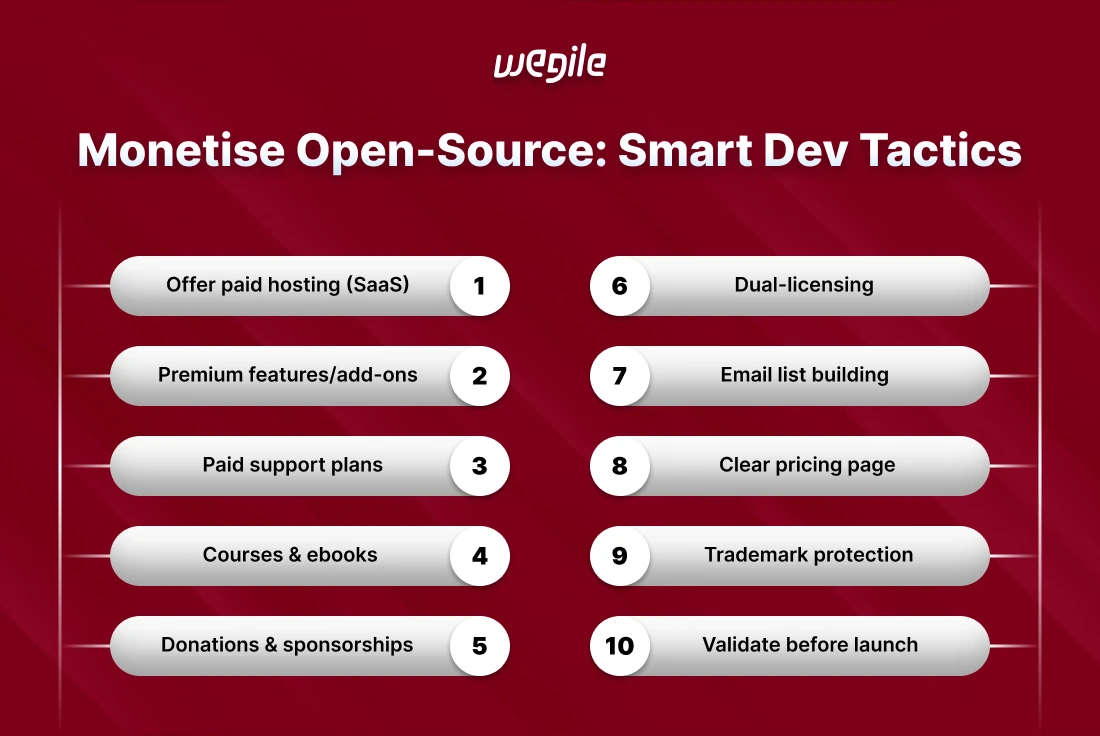
Choosing the right revenue model depends on the tool’s use case, audience and your long-term goals. A flexible
approach often works best, mixing multiple strategies to create sustainable income.
Let us explore monetization options developers are using successfully today.
-
Offer Hosted Versions for Non-Technical Users
Running open-source tools often requires command line experience, configuration and server knowledge. Many
users prefer a hosted version that just works. This convenience is something people will pay for.For example, form tools, analytics dashboards or CMS frameworks can be offered as hosted SaaS versions. The
core remains open, but users pay for uptime, updates and hosting. -
Sell Premium Extensions or Add-Ons
If your tool solves one core problem well, you can offer optional features through paid extensions. These
might include integrations, additional themes or advanced analytics.This model allows the free version to remain valuable while rewarding users who want more control or
customization. -
Provide Paid Support and Onboarding
Organizations using your tool in production environments may need help with implementation. Offering paid
support plans gives them peace of mind and gives you recurring income.This works well for libraries, dev tools and infrastructure utilities that are mission-critical but need
guidance during rollout. -
Create Educational Material and Paid Courses
If your project has traction, others want to learn how to use it effectively. Offering in-depth tutorials,
screencasts or project-based learning paths can generate income and increase adoption.Developers trust resources made by the creators of a tool. A paid course or ebook can introduce new users
while funding development. -
Launch a Dual-License Model for Commercial Users
For tools that target enterprises, a dual-license model allows personal or nonprofit use under a permissive
license and commercial use under a paid license.This works well for backend frameworks, security libraries or tools that enterprises rely on for compliance
or SLAs.
Platforms and Tools That Help Monetize Open-Source Projects
Building a tool is only one part of the puzzle. Monetization also requires payment systems, documentation, user
management and access controls.
Here are platforms that help turn side projects into professional offerings.
-
GitHub Sponsors and Open Collective
These platforms allow community members to fund your work directly through recurring donations. They offer
transparency and support
collaborative development. -
Gumroad and Lemon Squeezy
For one-time payments like course sales, ebooks or licenses, these platforms offer fast setup and flexible
payment management without needing to build a custom billing system. -
Stripe and Paddle
If you want full control over billing, subscriptions and checkout flows, Stripe or Paddle allow deeper
integration into hosted platforms or SaaS versions. -
Gumroad + Notion for Paid Documentation
Offering premium guides or starter templates behind a paywall is easy with tools like Notion for content and
Gumroad for access.
Marketing and Community Building for Monetization
Even great tools go unnoticed without visibility. To monetize successfully, you must create awareness, build a
community and guide users toward the value you offer.
Let us look at how to make that happen without relying on traditional advertising.
-
Write Use-Case Based Blogs and Tutorials
Blog posts that explain how to use your tool in real-world scenarios drive traffic and help users understand
its value. These can rank in search engines and generate steady interest. -
Share on Developer Communities and Forums
Communities like Reddit, Dev.to, Hashnode and Hacker News offer organic visibility. Focus on education, not
sales. Let the tool’s value show through helpful discussion. -
Collect Emails and Share Updates Regularly
Email lists allow you to communicate with users when you launch new features, add support tiers or release a
hosted version. Updates build trust and keep users engaged. -
Create a Clear Website With Pricing and Features
A clean website that outlines what your tool does, who it is for and how users benefit helps convert
visitors into users, and users into customers.
Real Examples of Open-Source Web Tools That Monetize Successfully
Plenty of open-source projects have found success with revenue without going closed. These examples show what is
possible with the right structure and mindset.
-
Ghost: Open-Source Publishing Platform
Ghost offers its platform freely but makes money by providing a premium hosted version. Developers can
self-host, but many choose the convenience of Ghost(Pro), its fully managed option. -
Tailwind CSS: Utility-First CSS Framework
Tailwind is open-source, but its team offers a paid UI component kit and courses. The open-source tool fuels
growth, while premium content funds further
development. -
Posthog: Product Analytics Platform
Posthog offers an open-source core but monetizes through cloud hosting and enterprise features. It combines
transparency with enterprise readiness and full control.
Mistakes to Avoid When Monetizing Open-Source
While monetizing is rewarding, it can backfire without clear communication and planning. Many developers learn the
hard way by losing trust or confusing users.
Here are mistakes worth avoiding.
-
Surprising Users With Sudden Paywalls
If users expect your tool to be fully open-source, changing access rules later damages goodwill. Be clear
about the monetization path early, even in the README. -
Offering Too Little Value in Paid Tiers
People only pay when the offer is worth the cost. Paid plans should include real enhancements, better
performance, time savings or expanded capabilities. -
Overbuilding Without Validation
Do not spend months creating a hosted version, only to find no one wants it. Test pricing and concepts early
using landing pages and feedback.
Building for the Long Term: Balancing Community and Profit
Long-term sustainability comes from a balanced approach. The community must feel valued, and your time must feel
respected. A clear boundary between open and paid helps maintain both.
Let us comprehend what balance looks like.
-
Keep the Core Open and Useful
The core tool should remain stable and powerful. Do not cripple the open version to drive sales. Instead,
offer meaningful upgrades around performance, support or integration. -
Listen to Feedback Across All Users
Paying users deserve service, but non-paying users often offer critical ideas. Involve both groups in
roadmap planning and bug fixing. -
Reinvest Earnings Into Documentation and Features
Revenue should not go only to profit. Reinventing in better docs, translations, stability and testing
benefits everyone and increases future growth potential.
Legal Considerations When Monetizing Open-Source Tools
Monetizing open-source web tools also means understanding how your license impacts what you can offer and charge
for. Developers must choose licenses carefully if they plan to build commercial offerings around their code.
Know more about licensing decisions and their implications for monetization.
-
Understand the Difference Between Permissive and Copyleft Licenses
Permissive licenses such as MIT or Apache allow others to use, modify and even resell your code with minimal
restrictions. These licenses offer more freedom for commercial use. Copyleft licenses like GPL require that
any derivative works remain open, which limits how paid services or proprietary add-ons can be structured. -
Clarify Contribution Ownership in Your Terms
If others contribute to your project, you must specify how contributions are handled. Use a
Contributor
License Agreement
(CLA) or
Developer Certificate of
Origin (DCO)
to retain clarity. This prevents future legal confusion if you offer a paid version or license your tool
commercially. -
Protect Branding With Trademarks
While code can be open, your name, logo and project branding can be protected. Registering trademarks allows
you to prevent unauthorized commercial use of your tool’s identity—even if the code itself remains open.
How to Evaluate Demand Before You Monetize
Not every project is ready for monetization. Some tools solve niche problems or serve very small audiences. Before
adding pricing, it helps to validate whether there is real demand and paying intent.
Here are methods to assess readiness for monetization.
-
Look for Signs of Production Usage
If companies or teams are using your tool in production systems, they likely have budgets for reliability,
support or hosted offerings. GitHub stars are nice, but mentions in job postings or issue trackers from
companies signal real business use. -
Run Interest Tests Before Building Paid Versions
Create a waitlist page or pricing mockup to gauge demand before writing a single line of code for a paid
plan. Tools like Carrd or Framer let you build these pages quickly. This saves time and prevents wasted
effort on features no one values enough to pay for. -
Ask Your Community Directly
If you have an active community, survey them. Ask what features they want most, and whether they would pay
for support, hosting or training. Community feedback often reveals surprising opportunities for monetization
that do not conflict with open access.
Open-Source Web Tools as a Personal Brand Platform
Beyond revenue, open-source tools can become a launchpad for your personal brand. They showcase your thinking, code
quality and problem-solving ability. Monetization can grow in parallel with career opportunities, recognition and
influence.
Let us look at how open-source work supports broader professional growth.
-
Demonstrate Technical Leadership Publicly
Building and maintaining open-source tools signals that you can ship, iterate and lead. This earns
credibility with clients, employers or collaborators. Your GitHub presence becomes your portfolio—visible
proof of what you can design and scale. -
Attract Freelance or Contract Work Naturally
Developers often report that paid consulting requests begin after they release popular tools. Companies
using your project may ask for help with implementation, audits or custom features. These gigs offer
high-value work without traditional job-seeking. -
Build Thought Leadership With Educational Content
Writing blog posts, publishing walkthroughs or giving talks about your tool positions you as a subject
matter expert. This increases speaking invites, newsletter subscribers and course enrollments. The brand
equity created through open-source work compounds over time.
Conclusion
Monetizing open-source web tools is not about turning community work into paywalled products. It is about finding
ways to support development with funding that reflects the tool’s real-world value. Whether through hosted versions,
premium add-ons, support plans or educational content, developers can earn from their work while keeping it open.
Successful monetization begins with clear communication, a real value exchange and respect for your users. With the
right strategy, your side project can evolve into a sustainable source of income and long-term growth.
If you are planning to scale your open-source project into a sustainable digital product, work with experts who
understand code quality, platform readiness and business alignment. Access to the
top IT software
development and consulting services
can help you transform your idea into a dependable, revenue-ready platform.
Right from infrastructure planning to custom backend systems and secure deployment workflows, the right partner
makes your monetization journey faster and more reliable. Build smarter and grow sustainably with solutions tailored
to your open-source goals.
Leave a Reply